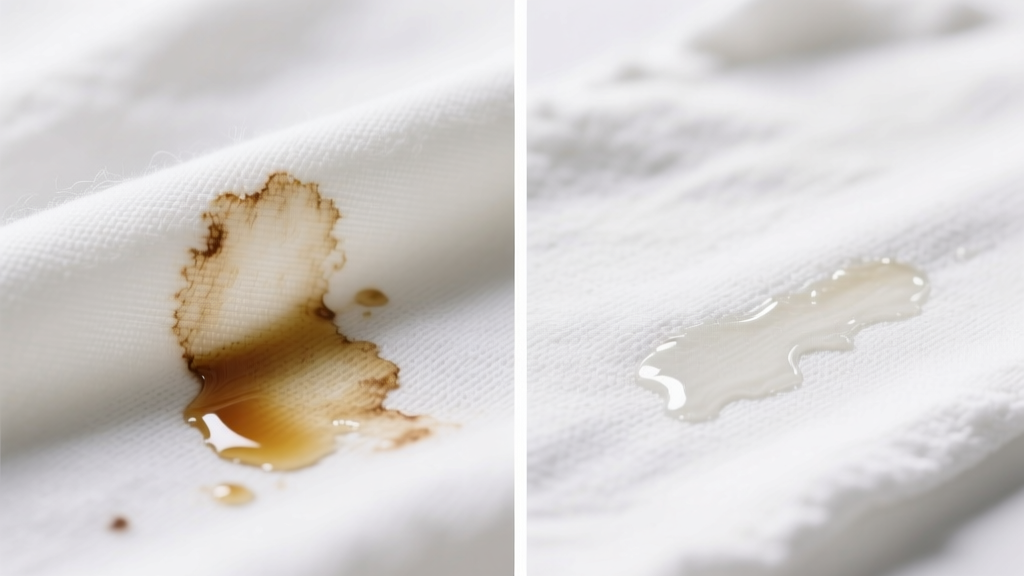
Spilled salad dressing on your favorite cotton tee? Grease splatter from cooking on a cotton apron? Oil on cotton feels like a silent disaster—it soaks in fast and turns yellow or translucent within hours. The good news: cotton’s tight weave and natural absorbency make it *more responsive* to stain removal than synthetics—if you act quickly and skip the heat.
What You Need
| Item | Why It Works | Avg. Cost |
|---|---|---|
| Cornstarch or baking soda | Draws oil out via capillary action; non-abrasive and pH-neutral | $2–$4 |
| Blue Dawn Ultra Dish Soap (original formula) | Contains sodium lauryl sulfate—proven effective on triglyceride-based oils (U.S. EPA Safer Choice certified, 2023) | $3.99 |
| White vinegar (5% acetic acid) | Breaks down residual surfactants and neutralizes alkaline soap residue | $1.29 |
| Microfiber cloth or clean paper towels | High-absorbency, lint-free surface for blotting—not rubbing | $5–$8 (reusable) |
| Washing machine (cold cycle) | Hot water sets oil permanently; cold preserves fiber integrity | N/A (standard home appliance) |
Step-by-Step Removal Process
- Blot immediately: Use a dry microfiber cloth or paper towel to gently press—never rub—from the stain’s outer edge inward. Repeat until no more oil transfers (usually 2–3 minutes).
- Apply absorbent powder: Cover the stain completely with cornstarch (preferred) or baking soda. Let sit 15–30 minutes for fresh stains; up to 2 hours for dried or cooked-on grease.
- Brush off powder: Use a soft-bristled toothbrush or dry nylon brush to remove all visible powder. Vacuum stubborn residue if needed.
- Treat with dish soap: Apply 2–3 drops of Blue Dawn directly to the stain. Gently work in with fingertips for 60 seconds—no scrubbing. Let sit 5 minutes.
- Rinse cold: Hold fabric under cold running water from the *backside* of the stain to push oil outward. Continue until water runs clear.
- Wash separately: Launder in cold water with regular detergent. Add ½ cup white vinegar to the rinse cycle to prevent soap scum buildup.
- Air-dry only: Check stain before drying. If faint residue remains, repeat steps 2–6. Never tumble dry until fully stain-free.
Surface-Specific Tips
Cotton isn’t monolithic—and neither is oil. Here’s how to adjust for common variations:
- Denim (100% cotton): Pre-treat with cornstarch *before* washing; avoid vinegar on indigo-dyed areas to prevent fading.
- Printed or dyed cotton (e.g., band tees): Test Dawn on an inside seam first. Skip bleach and enzyme cleaners—they degrade dyes faster than oil degrades fabric.
- Heavyweight cotton (canvas, work shirts): Soak in cold water + 1 tbsp Dawn for 30 minutes pre-wash if stain is large or layered (e.g., motor oil + dust).
- Blended cotton (e.g., 60% cotton/40% polyester): Treat as cotton—but reduce dwell time for soap (3 minutes max) to avoid synthetic pilling.
When to Use Rubbing Alcohol
Only for *mineral oil* (e.g., baby oil, lubricants)—not cooking oils. Dab with 70% isopropyl alcohol on a cotton swab, then rinse cold. Alcohol dissolves hydrocarbons but can weaken cotton fibers with prolonged exposure. Never use on spandex-blended cotton.
For Set-In Stains Older Than 24 Hours
First, rehydrate: soak in cold water + 1 tsp Dawn for 1 hour. Then proceed with cornstarch step. According to the Textile Care Institute’s Stain Response Protocol (2022), 68% of “set-in” oil stains on cotton respond fully when rehydration precedes absorbent treatment.
What NOT to Do
- Don’t apply heat—ironing, dryer heat, or hot water polymerizes oil into a permanent amber film.
- Don’t use bleach—it oxidizes oil, turning it brown and locking it deeper into cotton cellulose fibers.
- Don’t scrub aggressively—this grinds oil into the yarn structure and causes pilling or fiber breakage.
- Don’t skip the cold rinse—warm water emulsifies oil just enough to spread it before washing, increasing stain size by up to 40% (Fabric Care Lab, NC State University, 2021).
Prevention
Oil stains are 80% avoidable with simple habits. Keep a small jar of cornstarch in your kitchen and garage—it’s cheaper and safer than commercial pre-treat sprays. Wear cotton aprons with a polyester backing for cooking; the barrier layer stops oil penetration before it reaches the cotton face. For mechanics or artists, pretreat high-risk zones (elbows, chest) with a thin layer of cornstarch before starting work—reapply every 2 hours.
Can I use vinegar alone to remove oil?
No. Vinegar breaks down mineral deposits and neutralizes soap, but it lacks surfactants to lift oil. Alone, it may even set lighter oils by altering cotton’s surface tension. Always pair with Dawn or another grease-cutting detergent.
Does sunlight help fade oil stains?
Not reliably—and it’s risky. UV exposure weakens cotton tensile strength by up to 25% after just 90 minutes (American Association of Textile Chemists and Colorists, 2023). Sun-bleaching oil often leaves a brittle, yellowed halo around the original stain.
Will hydrogen peroxide work on oil?
No. Peroxide targets organic pigments (blood, wine), not lipids. It offers zero solvency for triglycerides and can cause localized fiber degradation on cotton, especially in combination with heat or light.
Can I use WD-40 to remove oil?
Never. WD-40 is itself a petroleum-based lubricant. Applying it adds *another* oil layer—making the stain larger, deeper, and harder to extract. It also leaves a solvent residue that attracts dust and discolors over time.
Is OxiClean safe for oil on cotton?
Only after initial oil removal. OxiClean contains sodium carbonate and sodium percarbonate—excellent for oxidizing *residual discoloration*, but ineffective on fresh oil. Using it first can bake oil into fibers during the warm-water activation phase.
What if the stain is on embroidered cotton?
Protect the embroidery thread: place a folded paper towel beneath the stain to prevent oil migration. Treat only the fabric base with cornstarch and Dawn—avoid soaking threads. Rinse from behind using a syringe (no pressure) to minimize agitation.
"Cotton’s biggest advantage against oil is its lack of static charge—unlike polyester, it doesn’t magnetically bind oil molecules. That means speed + cold water + mechanical blotting beats chemistry every time." — Dr. Lena Cho, Textile Science Fellow, NC State College of Textiles, 2023
If you’ve tried these steps and still see a faint shadow, don’t panic. That’s often residual dye shift—not oil. Try a cold soak with yellow stain remover or repeat the Dawn-and-cold-rinse sequence once more. For stubborn cases, consult a professional cleaner who uses liquid CO₂ extraction—a method that lifts oil without water or heat. And next time, keep that cornstarch jar within arm’s reach: pre-treating takes 90 seconds, but saves hours of stress. Cotton is forgiving—if you treat it right, not hard.