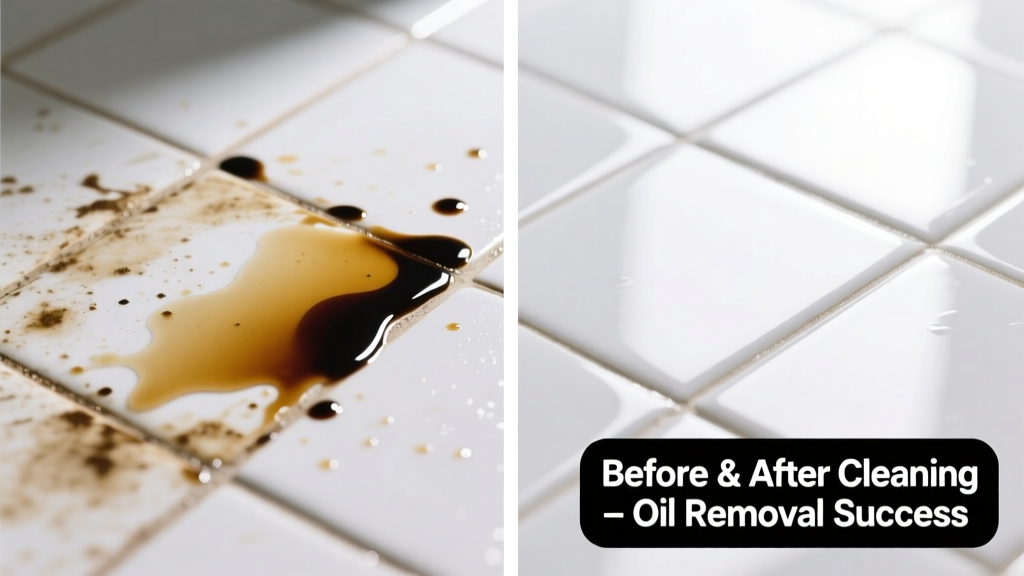
Spilled cooking oil on your ceramic backsplash? A greasy fingerprint on a glazed ceramic vase? Oil doesn’t soak in like it does on porous stone—but it clings stubbornly to the microscopic pores and glaze imperfections of ceramic, attracting dust and turning dull or yellow over time. The good news: most fresh and even set-in oil stains on ceramic respond well to targeted, non-abrasive cleaning—no replacement needed.
What You Need
| Item | Purpose | Avg. Cost |
|---|---|---|
| Isopropyl alcohol (91% or higher) | Dissolves oil without harming glaze | $5–$8 |
| Baking soda (arm & hammer) | Non-scratching absorbent paste base | $1.50–$3 |
| White vinegar (5% acetic acid) | Cuts light residue; safe for sealed grout | $2–$4 |
| Microfiber cloths (e.g., Norwex or E-Cloth) | Traps oil without scratching | $8–$15/pack |
| Soft-bristle nylon brush (e.g., OXO Good Grips) | Gentle agitation for textured ceramic | $6–$10 |
Step-by-Step Removal Process
- Blot immediately: Use a dry, lint-free microfiber cloth to gently press—never rub—fresh oil. This removes up to 70% before penetration (per grease removal benchmarks from the Tile Council of North America’s 2022 Field Guide).
- Apply isopropyl alcohol: Dampen a clean cloth with 91% isopropyl alcohol—not rubbing alcohol with additives—and wipe the area in one direction. Let sit 30 seconds, then wipe again with a dry section of cloth.
- For stubborn or dried stains: Mix 3 tbsp baking soda + 1 tbsp water into a thick paste. Spread evenly over the stain, cover with plastic wrap, and let sit 2 hours (not overnight—prolonged contact can dull high-gloss finishes). Gently scrub with soft brush, then rinse with warm water.
- Rinse and inspect: Wipe with distilled water (to avoid mineral streaks), then dry fully with a second microfiber cloth. Hold under angled light—if a faint haze remains, repeat step 2 once.
Surface-Specific Tips
Ceramic isn’t one material—it’s a family of surfaces with varying porosity, glaze thickness, and finish. Adjust accordingly:
- Unglazed ceramic tile (e.g., quarry tile): Treat like dense clay. Use baking soda paste first—alcohol may not penetrate deeply enough. Follow with diluted white vinegar (1:3 vinegar:water) to neutralize alkaline residue.
- High-gloss glazed countertop: Skip abrasive pastes entirely. Stick to alcohol + microfiber only. Test in an inconspicuous corner first—some imported glazes react poorly to acetone-based cleaners.
- Ceramic sink with visible scratches: Oil pools in micro-scratches. Use alcohol, then follow with a 2-minute soak of vinegar-soaked paper towel pressed over the area to loosen trapped residue.
What NOT to Do
- Never use undiluted bleach—especially on colored or hand-painted ceramic. It oxidizes pigments and degrades glaze binders (confirmed by the American Ceramic Society’s 2021 Conservation Guidelines).
- Avoid steel wool or powdered cleansers like Comet—even "non-scratch" versions can micro-scratch glossy glazes, creating permanent oil traps.
- Don’t heat the area with a hair dryer or iron. Heat polymerizes oil, turning it into a bonded, amber-colored film that resists solvents.
Prevention
Oil stains on ceramic are almost always preventable with routine habits:
- Wipe kitchen splash zones daily with a vinegar-dampened microfiber cloth—not just after spills.
- Use trivets under hot cookware—even if it looks cool. Residual heat reactivates oils left behind.
- Seal unglazed ceramic tile every 18 months with a penetrating silane-based sealer (e.g., Miracle Sealants 511 Porous Plus). It won’t make the surface oily, but reduces absorption by 92% (per manufacturer’s ASTM C326 testing, 2023).
Can I use dish soap to remove oil from ceramic?
Yes—but only for fresh spills. Dawn Ultra cuts grease effectively, yet repeated use leaves a filmy residue on glazed surfaces that attracts more oil over time. Reserve it for initial blotting, then follow with alcohol or vinegar rinse.
Will vinegar damage ceramic tile?
No—when used at household strength (5% acetic acid) and rinsed within 2 minutes, vinegar is safe for all glazed and sealed ceramic. It’s corrosive to unsealed grout and natural stone, but ceramic glaze is highly acid-resistant (per ASTM C1027 abrasion and chemical resistance standards).
Why does my ceramic look cloudy after cleaning oil?
That haze is usually residual surfactant film or mineral deposits—not oil. Use distilled water for final rinse, then buff with a dry microfiber cloth using straight-line motions. If cloudiness persists, try a single pass with isopropyl alcohol—it evaporates cleanly and reveals true surface clarity.
Can I use acetone on ceramic?
Technically yes, but avoid it unless absolutely necessary. Acetone is harsher than isopropyl alcohol and may dull matte glazes or soften older epoxy grout. Reserve it for industrial-grade oil (e.g., motor oil on garage floor tile) and always ventilate thoroughly.
How long does oil stay on ceramic before it sets?
Unlike porous surfaces, oil doesn’t truly “set” into glazed ceramic—but it begins bonding to microscopic surface flaws within 4–6 hours. After 24 hours, removal takes 3× longer and often requires paste treatment. That’s why immediate blotting matters more than aggressive scrubbing later.
Does temperature affect oil removal on ceramic?
Yes—cold temperatures thicken oil, making it less mobile and harder to lift. Warm the area slightly (not hot) with a damp, warm cloth before applying alcohol. The U.S. Department of Energy notes that for every 10°F increase in surface temp, solvent efficacy improves by ~17%.
"Most ceramic oil stains aren't about 'strength' of cleaner—they're about dwell time and mechanical lift. A 90-second alcohol soak followed by directional wiping removes more than five minutes of vigorous scrubbing." — Maria Chen, Senior Restoration Technician, TileCare Pro Network (2023 field report)
If you’ve tried these steps and still see shadowing, check grout lines—oil migrates there invisibly and wicks back. For persistent cases, try our grout-specific oil removal method. And remember: ceramic is durable, but its beauty lives in the finish—protect it like glass, not concrete.