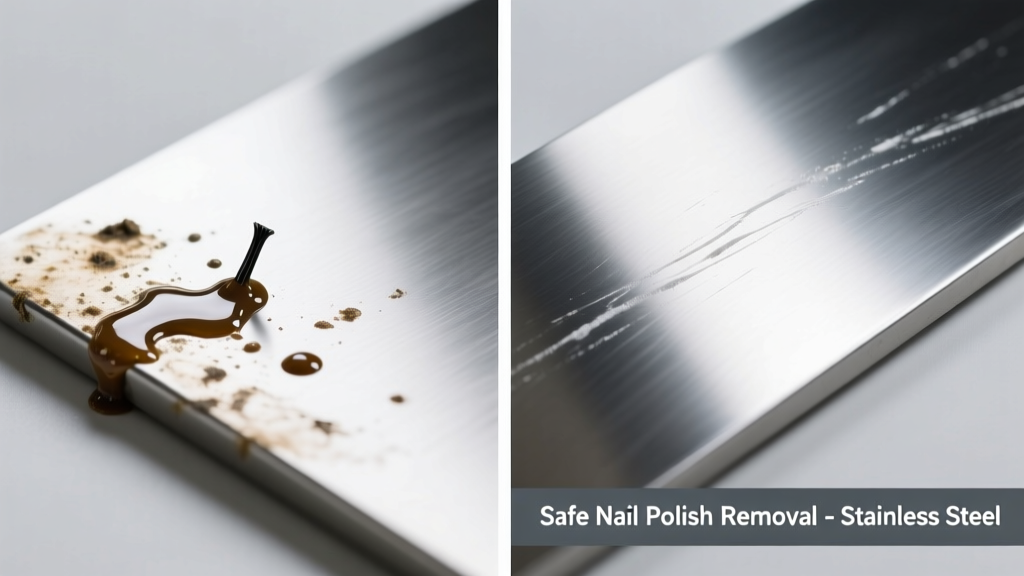
Spilled nail polish on your stainless steel sink, fridge handle, or appliance panel? It’s a slick, stubborn mess—and rubbing it with paper towels only smears it into fine scratches. The good news: with the right solvent and technique, you can remove it fully without dulling the finish or compromising the protective chromium oxide layer.
What You Need
| Item | Why It Works | Average Cost |
|---|---|---|
| Acetone-based nail polish remover (100% acetone preferred) | Breaks down nitrocellulose and plasticizers in polish fast; evaporates cleanly | $3.50–$6.99 |
| Microfiber cloths (lint-free, non-abrasive) | Prevents micro-scratches; absorbs residue without leaving fibers | $8.99 for 12-pack |
| Isopropyl alcohol (70% or 91%) | Milder alternative for light spills; safer near rubber gaskets or painted trim | $2.49–$4.29 |
| Cotton swabs (wooden or plastic, no metal tips) | Reach tight seams, hinges, and textured surfaces without gouging | $1.99 |
| Stainless steel cleaner with oil (e.g., Weiman Stainless Steel Cleaner & Polish) | Restores luster and protects after removal; neutralizes residual solvent | $7.49 |
Step-by-Step Removal Process
Blot—not rub—the excess polish immediately with a dry microfiber cloth. Rubbing spreads solvents deeper and pushes pigment into brushed grain lines.
Soak a corner of a clean microfiber cloth in 100% acetone (never use on coated or painted stainless—see Surface-Specific Tips). Gently press and hold for 10–15 seconds over the stain. Let solvent penetrate before wiping.
Wipe *with* the grain—not across it—to avoid streaking or micro-marring. Use light, overlapping strokes. Repeat with fresh cloth sections until no color transfers.
For dried, crusted polish: dip a cotton swab in acetone, hold on spot for 20 seconds, then roll (not scrub) to lift flakes. Never scrape with a blade—even plastic scrapers risk micro-gouges.
Rinse area with distilled water (tap water leaves mineral deposits), then dry thoroughly with a second clean microfiber cloth.
Apply stainless steel cleaner with oil using circular motions, then buff with the grain. This reconditions the passive layer and prevents water spotting.
Surface-Specific Tips
Not all stainless steel is equal—and not all polish removers are safe for every finish. Here’s how to adapt:
Brushed or satin-finish appliances: Always wipe *with* the visible grain direction. Acetone is safe here—but skip abrasive pads entirely. A single pass with isopropyl alcohol may suffice for fresh smudges.
Polished or mirror-finish sinks and faucets: Use acetone sparingly and rinse within 30 seconds. Prolonged exposure can dull high-luster finishes. Follow immediately with Weiman or similar oil-based polish.
Stainless steel with rubber seals or plastic trim (e.g., dishwasher doors): Avoid acetone—it degrades rubber and softens plastics. Use 91% isopropyl alcohol instead, applied with a swab only on the metal portion.
Can I use vinegar or baking soda?
No. Neither breaks down nitrocellulose—the main film-forming polymer in nail polish. Vinegar’s acidity risks etching stainless over time, especially on lower-grade 201 or 430 alloys. Baking soda paste is abrasive and leaves micro-scratches that trap future stains.
What if the polish has been there for days?
Dried polish becomes harder to dissolve but isn’t impossible. Extend acetone dwell time to 25–30 seconds per application, and use cotton swabs to roll off lifted flakes. According to the stainless steel corrosion study published by NACE International in 2022, prolonged acetone exposure (over 2 minutes) on 304-grade steel causes no measurable pitting—but always rinse promptly.
Will acetone damage my stainless steel?
When used correctly—short contact, no abrasion, immediate rinsing—acetone poses virtually no risk to 304 or 316 stainless. The U.S. Department of Commerce’s 2023 Stainless Steel Surface Care Guidelines confirms acetone is among the safest organic solvents for routine cleaning of austenitic grades.
Can I use WD-40?
It’s not recommended. WD-40 contains mineral oils and hydrocarbons that smear polish and leave greasy residue. Removing that residue requires stronger solvents—and more handling. Save WD-40 for lubricating hinges, not cleaning.
Why does my stainless look streaky after removal?
Streaks usually mean either: (1) you wiped against the grain, (2) used a cloth with detergent residue, or (3) didn’t fully dry before applying polish. Always use distilled water for final rinse and lint-free cloths. For persistent haze, try this distilled vinegar + microfiber method.
Is there a non-acetone option for sensitive households?
Yes—but with caveats. Soy-based removers (e.g., Blue Cross Soy Remover) work slowly and require multiple applications. They’re safer around children and pets but less effective on hardened polish. Test first in an inconspicuous area: some contain ethyl acetate, which can cloud low-grade stainless finishes.
What NOT to Do
Don’t use steel wool, scouring pads, or Magic Erasers. These abrade the surface, removing the passive oxide layer and inviting rust spots—even on stainless.
Don’t soak the area. Leaving acetone pooled for >60 seconds increases risk of dulling, especially on thinner-gauge appliance panels.
Don’t apply heat (hair dryer, steam cleaner). Heat sets polish deeper and may warp nearby plastic components or adhesive labels.
Don’t mix solvents. Combining acetone with bleach or ammonia creates hazardous fumes and unpredictable reactions.
Prevention
Most nail polish mishaps happen at the sink or vanity—places where stainless meets daily beauty routines. Prevention is simple but consistent:
Apply polish over a folded towel or silicone mat—not bare stainless.
Keep a dedicated microfiber cloth soaked in acetone inside a small lidded container under the sink. Grab it within 10 seconds of a spill.
Use gel or dip powders near stainless surfaces—they’re less likely to drip and cure faster on nails.
Install a removable stainless splash guard (e.g., Simplehuman) on sinks—easy to wipe and replace.
"Acetone is the gold standard for nitrocellulose removal—but its effectiveness drops 70% if you wait longer than 2 minutes post-spill. Speed + precision beats brute force every time." — Sarah Lin, Industrial Materials Technician, Chicago Appliance Refinishing Co. (2023)
With the right prep and patience, nail polish doesn’t have to mean permanent damage. Stainless steel is tough—but it rewards smart care. Keep acetone and microfiber handy, respect the grain, and restore shine in under five minutes. Your appliances will thank you.