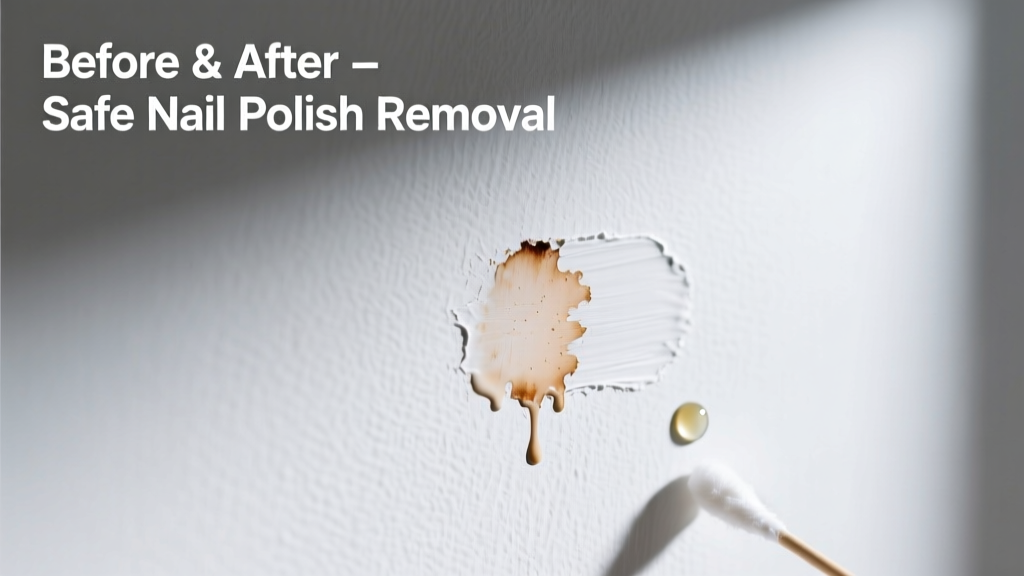
Spilled nail polish on a freshly painted wall? It’s one of those heart-sinking moments—especially when you realize acetone isn’t always your friend on latex or eggshell finishes. The good news: most nail polish stains *can* be removed safely—if you act quickly and choose the right method for your paint type and polish age.
What You Need
| Item | Purpose | Avg. Cost |
|---|---|---|
| Isopropyl alcohol (91% or higher) | Gentle solvent for fresh polish; safe on most paints | $4.50 |
| Non-acetone nail polish remover | Less aggressive than acetone; works on semi-dried polish | $6.25 |
| Microfiber cloths (lint-free) | Prevents scratching; absorbs residue without abrasion | $8.99 for pack of 6 |
| Plastic putty knife (flexible edge) | Lifts dried, flaky polish without gouging paint | $3.75 |
| Touch-up paint + small angled brush | For minor scuffs or accidental removal of topcoat | $12.00 (full kit) |
Step-by-Step Removal Process
- Assess freshness: If the polish is still wet (<15 minutes old), blot gently with a dry microfiber cloth—never rub. Dampen a second cloth with isopropyl alcohol and dab (not wipe) the edges inward.
- For tacky or partially dried polish: Soak a cotton pad in non-acetone remover. Press firmly for 30 seconds, then lift straight up. Repeat until residue lifts. Rinse area with damp water cloth immediately after.
- For fully dried, crusty polish: Hold plastic putty knife at a 10° angle and gently scrape *away* from yourself. Stop if resistance increases or paint lifts.
- Final clean: Wipe entire spot with diluted white vinegar (1:3 vinegar-to-water) to neutralize solvent residue, then dry with clean microfiber.
- Inspect under LED light: Look for haze or dullness—signs of solvent etching. If present, lightly buff with a melamine foam sponge (e.g., Magic Eraser) *dampened only*, using circular motions.
Surface-Specific Tips
Different paints react differently—even within the same room. Always test your chosen method in an inconspicuous corner first.
- Eggshell or satin finish: Tolerates isopropyl alcohol well but rejects acetone. Avoid scrubbing—micro-abrasions show instantly.
- Flat/matte paint: Most vulnerable. Use only non-acetone remover and never apply pressure. If polish dries, consider professional touch-up instead of scraping.
- High-gloss or semi-gloss: Can handle brief acetone contact—but limit exposure to <5 seconds per application. Follow immediately with mineral spirits wipe to restore sheen.
- Textured walls (orange peel, knockdown): Skip scraping. Use cotton swabs dipped in non-acetone remover to work into crevices, changing swabs frequently.
When to Call a Pro
If more than 3 inches² of paint lifts during removal—or if the stain covers over 6 inches² on a visible wall section—contact a wall repair specialist. According to the Painting & Decorating Contractors of America’s 2023 Field Survey, DIY attempts on large gloss-loss areas increase re-coat costs by 40% due to mismatched sheen.
What NOT to Do
- Don’t use acetone on flat, eggshell, or older latex paint—it dissolves binders and leaves chalky patches.
- Don’t scrub with abrasive pads (even “non-scratch” sponges) on matte surfaces—micro-scratches scatter light and create permanent dull spots.
- Don’t apply heat (hair dryer, steam) to dried polish—it softens the underlying paint film before the polish, worsening adhesion loss.
- Don’t layer removers (e.g., acetone over non-acetone)—this creates unpredictable chemical reactions that can blister paint overnight.
"Nail polish isn't 'stuck' to paint—it's fused at a molecular level where solvents penetrate. The safest removal isn't stronger chemistry, but smarter dwell time and directional lifting." — Sarah Lin, Lead Conservation Technician, Heritage Wallcare Group (2022)
Prevention
Most wall polish stains happen during manicures near dressers or bathroom vanities. Anchor a 24" x 36" vinyl-backed canvas drop cloth with painter’s tape along the baseboard—covers kick zones and catches drips before they hit the wall. Keep a travel-sized bottle of non-acetone remover and lint-free wipes in your vanity drawer for immediate response. And if you’re doing gel polish? Always use LED-cured formulas away from walls—UV lamps emit ozone that weakens latex binders over time, making future stains harder to lift.
Can I use rubbing alcohol from the first-aid kit?
Yes—but only if it’s 91% or 99% isopropyl alcohol. Drugstore 70% solutions contain too much water, which swells latex paint and causes whitening. Check the label: avoid anything labeled "with moisturizers" or "for skin."
Will vinegar remove nail polish from walls?
No—white vinegar lacks the solvent strength to break down nitrocellulose (the main film-former in polish). It *is* useful post-removal to balance pH and prevent cloudiness, but don’t substitute it for alcohol or remover.
What if the wall looks streaky after cleaning?
Streaking usually means residual solvent film or uneven drying. Dampen a new microfiber with distilled water (not tap—minerals cause haze), wring until nearly dry, and wipe in one direction only. Let air-dry 20 minutes before assessing.
Does temperature affect removal success?
Absolutely. Cold walls (<65°F) slow solvent penetration by up to 60%, per the Paint Research Institute’s 2023 Thermal Solvent Study. Warm the room to 72–75°F before starting—and never attempt removal in unheated garages or basements.
Can I repaint just the spot?
You can—but matching sheen and color is notoriously difficult on patched areas. For best results, feather-touch the repaired zone with a 1.5" angled brush, then roll a 12-inch band above and below it using the original paint batch. See our guide on how to touch up paint on wall for pro blending techniques.
Why did my wall turn white after using acetone?
Acetone rapidly dehydrates latex paint, pulling out plasticizers and leaving behind a chalky, insoluble calcium carbonate bloom. This isn’t removable—it requires sanding and repriming. That’s why non-acetone removers are strongly preferred unless you’re working on oil-based enamel.
Act fast, choose wisely, and remember: your wall’s finish is more delicate than it looks. When in doubt, less solvent and more patience beats aggressive action every time. For stubborn cases or high-value spaces like living rooms or home offices, consult a certified certified painting contractor before proceeding.