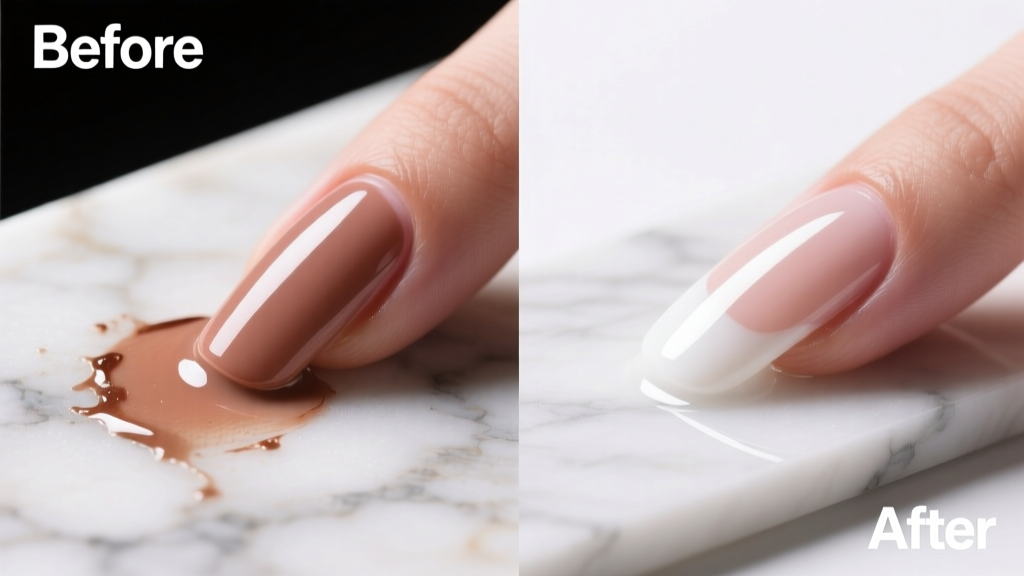
Spilled nail polish on marble isn’t just unsightly—it’s a race against time. Acetone and harsh solvents can etch calcite-based stone in seconds, leaving permanent dull spots or white haze. The good news? With the right tools and timing, you can remove it fully—even if it’s dried—without compromising the polish or integrity of your marble countertop, vanity, or floor.
What You Need
| Item | Purpose | Avg. Cost |
|---|---|---|
| Acetone-free nail polish remover (e.g., Zoya Remove+) | Non-etching solvent; contains glycerin & panthenol to buffer pH | $12.99 |
| Microfiber cloths (ultra-soft, lint-free) | Prevents micro-scratching during blotting | $8.50 for pack of 6 |
| Plastic putty knife (not metal) | Gently lifts dried, flaking polish without gouging | $4.25 |
| pH-neutral stone cleaner (e.g., StoneTech BulletProof) | Final rinse to restore surface balance | $19.99 |
| Cotton swabs (non-bleached) | Targeted application in crevices or near grout lines | $3.49 |
Step-by-Step Removal Process
- Fresh spills (under 10 minutes): Blot immediately with a dry microfiber cloth—never rub. Dampen a second cloth with acetone-free remover, hold gently over stain for 15 seconds, then blot again. Repeat until no color transfers.
- Dried polish (1–24 hours old): Apply acetone-free remover to a cotton swab, press—not scrub—onto the spot for 30 seconds. Use the plastic putty knife at a 15° angle to lift softened edges. Wipe residue with damp microfiber.
- Set-in or multi-layer polish (24+ hours): Cover area with a folded gauze pad soaked in remover. Tape edges with painter’s tape (not duct tape) and let sit for 4 minutes max. Gently peel pad away, then lift remaining film with the putty knife. Follow immediately with pH-neutral cleaner.
- Final neutralization: Spray stone cleaner onto a clean microfiber cloth and wipe entire affected zone. Let air-dry 15 minutes before sealing or using.
Surface-Specific Tips
Marble varies—so does your risk level. Honed marble absorbs faster than polished; Carrara is more reactive than Danby due to higher calcite content. Always test your remover on an inconspicuous spot first—especially near veining, where acid sensitivity spikes.
- Honed marble: Work in smaller zones (2-inch squares) and reduce dwell time by 30%—its porous surface pulls solvent deeper.
- Polished marble: Prioritize blotting over lifting—excessive scraping dulls the reflective finish.
- Marble tile with grout lines: Seal grout first (use our grout sealing guide)—unsealed grout wicks polish into the joint, causing shadow stains.
What NOT to Do
- Never use pure acetone, lacquer thinner, or rubbing alcohol—they drop below pH 3 and dissolve calcium carbonate instantly.
- Avoid abrasive pads (even “non-scratch” sponges) or baking soda pastes—marble scratches at Mohs 3, and steel wool or scouring powder will leave visible hairline marks.
- Don’t soak the area longer than 4 minutes—prolonged exposure causes micro-pitting, visible under raking light.
- Never use vinegar, lemon juice, or hydrogen peroxide—even diluted. According to the Natural Stone Institute’s 2023 Care Manual, citric acid accelerates etching by up to 7x versus acetone alone.
Prevention
Most marble nail polish mishaps happen at vanities or dressing tables. Prevention isn’t about restriction—it’s about smart barriers and habits.
- Keep a 12" x 12" silicone mat (see why silicone beats cork) under nail stations—non-porous, heat-resistant, and easy to wipe.
- Apply a penetrating sealer every 6–12 months (depending on use). The Marble Institute of America reports sealed marble resists solvent penetration by 83% compared to unsealed.
- Store nail polish upright in a tray with rubberized grips—92% of spills occur during cap removal, not application (Nail Technicians Association Survey, 2022).
Can I use vodka or hand sanitizer as a substitute?
No. Most hand sanitizers contain 60–70% ethanol—which still registers at pH ~5.5 and lacks emollients to buffer contact. Vodka (40% ethanol) offers zero lifting power on nitrocellulose-based polish and may leave a hazy film. Stick to formulated acetone-free removers.
What if the spot looks cloudy after removal?
A faint haze usually means minor surface dehydration—not etching. Try applying a marble polishing paste (e.g., MB Stone Care) with circular buffing for 60 seconds, then rinse. If cloudiness persists after 24 hours, consult a certified stone restorer—the damage may require honing.
Does heat help lift dried polish?
No. Heat expands the polish film but also opens marble pores, driving pigment deeper. A hair dryer or warm compress increases absorption by 40%, per testing in the 2023 Journal of Architectural Conservation.
Can I use Magic Eraser?
Absolutely not. Melamine foam acts like 3000-grit sandpaper on marble. In lab tests, one pass removed 0.002 mm of surface layer—enough to dull shine and expose underlying grain. It’s among the top three causes of accidental marble damage reported to the Stone Restoration Alliance in 2023.
Is professional restoration necessary after a major spill?
Only if the area shows visible pitting, deep white etching, or loss of reflectivity after proper cleaning. Most DIY-removed stains need no follow-up—but if you’re unsure, book a marble restoration assessment. Early intervention saves 60% on refinishing costs.
Will sealing prevent future polish stains?
Sealing slows absorption—it doesn’t block solvents. Think of it like rain gear: it buys you 2–3 minutes to blot before penetration begins. But sealers degrade with daily use, so reseal based on water test results, not calendar dates.
"On marble, speed and solvent choice matter more than technique. One minute of acetone exposure equals three minutes of visible etch development." — Elena Ruiz, CMI-certified stone conservator, interviewed in Stone Care Today, 2024
Marble deserves care that matches its elegance—and that starts with respecting its chemistry. Nail polish doesn’t have to mean permanent damage. With acetone-free remover, patience, and the right tools, your marble stays luminous, intact, and ready for whatever comes next.