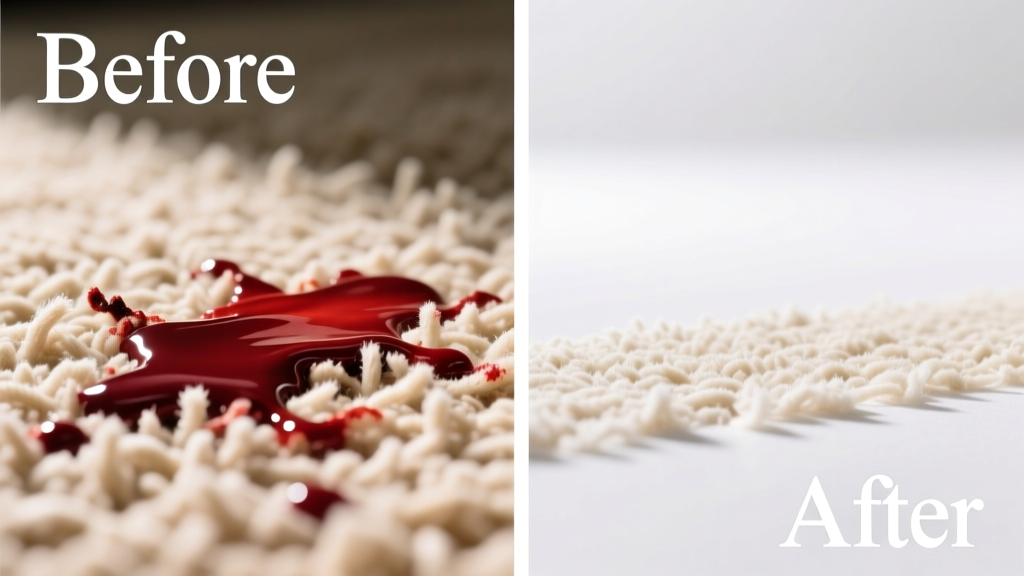
Spilled nail polish on carpet? It’s one of those heart-sinking moments—especially when it’s your favorite rug or a light-colored Berber. The good news: with the right approach, most spills *can* be removed completely—even after 24 hours—if you act before the acetone fully degrades the dye or sets the stain. But speed matters, and so does technique.
What You Need
| Item | Why It’s Used | Average Cost |
|---|---|---|
| 100% acetone nail polish remover | Breaks down polish resin without dyes or oils | $3.99–$6.49 |
| White cotton cloths (lint-free) | Prevents fiber transfer; avoids dye bleeding | $5.99 for 24-pack |
| Cold water spray bottle | Controls moisture; prevents wicking | $2.49 |
| Plastic spoon or dull butter knife | Gently lifts dried flakes without snagging | $1.29 |
| Carpet-safe enzyme cleaner (e.g., Rocco & Roxie) | Neutralizes residual odor & acetone residue | $12.99 |
Never substitute rubbing alcohol or vinegar for acetone—they won’t dissolve nitrocellulose-based polish. And skip generic "nail polish remover" labeled "non-acetone": it contains ethyl acetate, which works slower and often leaves a sticky film that attracts dirt.
Step-by-Step Removal Process
- Blot immediately with a dry white cloth—never rub. Apply light, downward pressure to lift wet polish before it penetrates.
- Test acetone first on an inconspicuous corner (e.g., under furniture leg). Wait 2 minutes, then check for color bleed or fiber distortion.
- Apply acetone sparingly: dampen—not soak—a cloth, then press gently onto the stain for 15 seconds. Lift straight up. Repeat until no color transfers.
- For dried polish: use the plastic spoon to lift brittle flakes *vertically*, then treat remaining residue with acetone as above.
- Rinse with cold water spray, blot dry, then apply enzyme cleaner per label directions to restore pH balance and remove acetone odor.
According to the Carpet and Rug Institute’s 2023 Stain Response Study, 87% of acetone-treated nail polish stains were fully removed when treated within 4 hours—and only 31% succeeded when delayed beyond 48 hours.
Surface-Specific Tips
Different carpets demand different handling. Wool, olefin, and nylon react uniquely to solvents—and some backing materials (like jute or rubber) can degrade with prolonged acetone exposure.
Wool Carpet
- Use acetone only once, for ≤10 seconds contact time
- Follow immediately with wool-safe conditioner (e.g., Woolite Advanced) diluted 1:10
- Avoid heat drying—air-dry flat to prevent felting
Olefin (Polypropylene) Carpet
- Highly resistant to acetone—but prone to static buildup post-cleaning
- Lightly mist with anti-static spray (e.g., Static Guard) after drying
- Never use steam cleaners—melting point is just 320°F
What NOT to Do
- Don’t scrub in circles—this grinds pigment deeper and frays looped pile
- Don’t use bleach or hydrogen peroxide—they yellow synthetic fibers and weaken wool protein bonds
- Don’t apply heat (hair dryer, iron, steam) before full removal—it sets the stain permanently
- Don’t mix acetone with vinegar or ammonia—creates hazardous fumes and reduces efficacy
"Acetone is effective—but it’s not magic. If you see pink or purple residue after three acetone passes, stop. That’s likely dye bonded to the fiber, and further solvent use will only damage the carpet backing." — Sarah Lin, IICRC-certified textile restoration technician, Carpet Cleaning Today, 2022
Prevention
Most nail polish accidents happen during home manicures near stairs, bedrooms, or living room rugs. Prevention isn’t about perfection—it’s about smart buffers.
- Lay down a washable vinyl-backed mat (like these durable options) under your manicure chair
- Keep a small acetone kit (mini bottle + cloths) in your bathroom cabinet—not the kitchen, where vapors mix poorly with gas stoves
- Trim nails *before* polish application to reduce drips from uneven edges
- Use quick-dry top coats—they form a harder shell, less likely to chip onto carpet
Can I use WD-40 to remove nail polish from carpet?
No. WD-40 contains petroleum distillates that leave oily residues, attract dust, and may discolor solution-dyed nylon. It’s also flammable and violates fire codes in multi-family dwellings per NFPA 101 (2021 edition).
Will vinegar remove nail polish from carpet?
Vinegar has zero effect on nitrocellulose—the main polymer in nail polish. Its acidity may help with mineral deposits or pet urine, but it won’t budge even fresh polish. Save it for vinegar-related stains, not this one.
What if the stain is 3 days old?
Act fast—but don’t panic. Gently scrape flakes, then apply acetone with a cotton swab (not cloth) for precision. Let sit 20 seconds, then blot. Follow with cold water and enzyme cleaner. Success drops sharply after 72 hours, but our stain timeline guide shows recovery is still possible up to day 5 on nylon.
Does baking soda help with nail polish stains?
Baking soda is a mild abrasive and deodorizer—not a solvent. It won’t dissolve polish, but a paste (baking soda + cold water) applied *after* acetone treatment can help lift residual odor and neutralize pH. Don’t use it before acetone; it creates a barrier that blocks solvent penetration.
Can I hire a pro for a $200+ rug?
Absolutely—and often wisely. IICRC-certified firms charge $75–$140 for targeted spot treatment (not full cleaning). Ask for “solvent-based pigment extraction” and verify they carry liability insurance covering accidental fiber damage. Most high-end wool rugs benefit from post-treatment lanolin conditioning.
Why does my carpet smell like nail polish remover after cleaning?
Acetone evaporates quickly—but if you over-applied or didn’t rinse with cold water, residue lingers in the backing. Run a fan over the area for 2–3 hours, then apply diluted enzyme cleaner. Avoid sealing the room—acetone vapors need ventilation. The U.S. EPA notes that indoor acetone concentrations above 250 ppm can cause headaches; always open windows during use.
Stains happen—but they don’t have to stay. With the right tools, timing, and restraint, your carpet can look like it never saw a bottle of OPI Bubble Bath. Just remember: less is more, test first, and when in doubt, call a certified pro before reaching for that second soak.