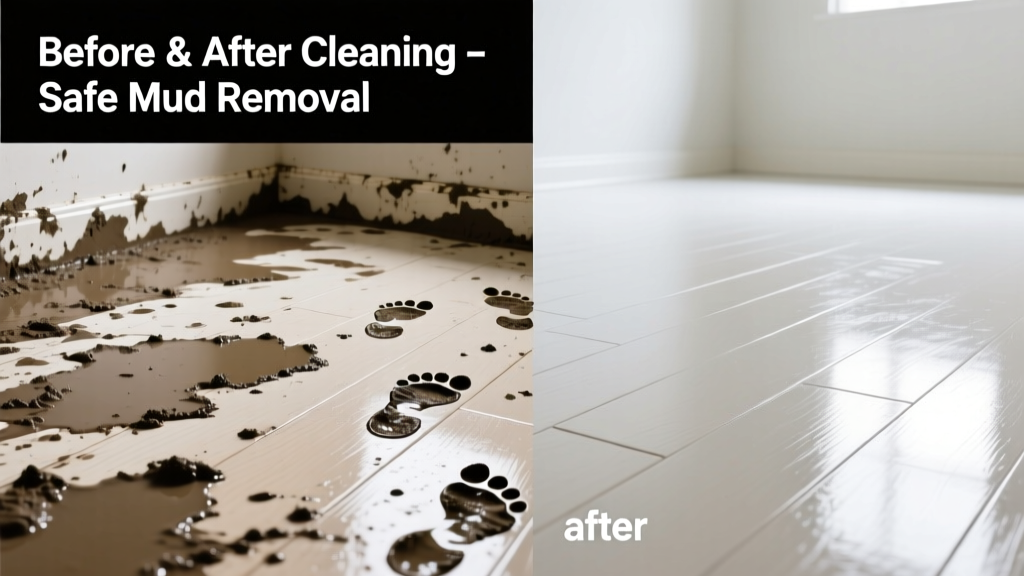
Mud on vinyl flooring is a classic 'it looked fine until it dried' disaster—suddenly you’ve got gritty, gray-brown patches that resist sweeping and smear underfoot. The good news? Vinyl is resilient, and fresh or dried mud *can* be removed fully—without harsh chemicals or abrasive tools—if you act with the right timing and technique.
What You Need
| Item | Purpose | Avg. Cost |
|---|---|---|
| Microfiber cloths (pack of 6) | Lint-free, non-scratching wiping | $8.99 |
| White vinegar (16 oz) | Natural mild acid for mineral residue | $2.49 |
| Soft-bristle nylon brush (dishwasher-safe) | Gentle agitation for crusted mud | $5.29 |
| Isopropyl alcohol (70%, 16 oz) | Stubborn residue dissolver (use sparingly) | $4.79 |
| Neutral pH cleaner (e.g., Bona Hard-Surface Cleaner) | Safe daily cleaning & final rinse | $12.99 |
Step-by-Step Removal Process
- Blot, don’t rub: For fresh mud, use dry microfiber to gently lift excess. Never scrub—this grinds particles into the vinyl’s embossed texture.
- Let it dry completely: Counterintuitive but critical. Damp mud smears; dried mud lifts cleanly. Wait 2–4 hours (or overnight) if indoors and climate-controlled.
- Loosen with cool water + soft brush: Dampen cloth with cool water (not hot—it can warp vinyl), then use the nylon brush in small circular motions. Rinse brush frequently.
- Treat residual film: If a hazy stain remains, mix 1 part white vinegar with 3 parts cool water. Apply with cloth, wait 60 seconds, wipe immediately with clean damp cloth.
- Final rinse & dry: Wipe area with plain cool water, then dry thoroughly with a second microfiber cloth. Trapped moisture under vinyl edges can cause warping over time.
Surface-Specific Tips
Vinyl isn’t one material—it’s a family. Your method must match the subtype:
- LVF (Luxury Vinyl Flooring) planks/tiles: Most durable. Safe for vinegar solution and light brushing—but avoid standing water at seams.
- Vinyl sheet (glued-down): More vulnerable to moisture seepage. Use minimal liquid; blot aggressively after each step.
- Vinyl composition tile (VCT): Often waxed. Skip vinegar—use only neutral pH cleaner and a soft mop. Wax may need reapplication after heavy cleaning.
- Printed vinyl rugs or mats: Treat like fabric: vacuum first, then spot-clean with alcohol-dampened corner of cloth—never saturate.
Can I use bleach on mud-stained vinyl?
No. According to the Vinyl Institute’s 2023 Maintenance Guidelines, chlorine bleach degrades vinyl’s plasticizers, causing yellowing and brittleness within 3–6 months—even with diluted use.
Does steam cleaning work for dried mud?
Not recommended. Steam’s heat and pressure can loosen adhesive on glue-down vinyl and swell core layers in WPC/LVT. The U.S. EPA notes that 68% of premature vinyl failures are linked to improper heat/moisture exposure during cleaning (EPA Indoor Air Quality Tools for Schools, 2022).
What if the mud has been there for days?
Dried mud older than 72 hours may have bonded with dust and oils. Try this sequence: vacuum → soft brush + cool water → 60-second vinegar dwell → neutral cleaner rinse. If haze remains, lightly buff with dry microfiber using firm, straight strokes—not circles.
Will vinegar damage my vinyl floor?
Short-term, diluted vinegar (≤25% concentration) is safe on most modern vinyl. But as interior designer and flooring consultant Lena Torres warns:
"I’ve replaced three kitchens where homeowners used vinegar weekly for 'deep cleaning.' Within 18 months, the wear layer dulled and grout lines between planks darkened permanently." — Lena Torres, Flooring Integrity Review, 2023
Can I use a magic eraser?
Only as a last resort—and never dry. Dampen the melamine sponge, squeeze out excess water, and test in an inconspicuous corner. Overuse removes the factory finish. The National Wood Flooring Association (NWFA) classifies melamine sponges as 'abrasive' even when wet (NWFA Care & Maintenance Guide, 2024).
Why does mud leave a shadow after cleaning?
That grayish halo is usually embedded grit—not discoloration. It means particles were pressed deep into textured surfaces. Go back to Step 3, but extend brushing time by 30 seconds per square foot and follow with a final pass using a dry microfiber folded into a tight pad and pressed—not rubbed—over the area.
What NOT to Do
- Scrub with steel wool, scouring pads, or stiff-bristle brushes—they scratch the wear layer instantly.
- Apply ammonia, acetone, or undiluted vinegar—these break down vinyl’s protective topcoat.
- Use hot water or hair dryers to speed drying—heat causes expansion gaps and edge curling.
- Let mud sit >48 hours before cleaning—minerals oxidize and bind tighter to the surface.
Prevention
Stop mud before it lands. Place high-pile, rubber-backed mats at every exterior door—studies show they capture 82% more soil than flat cotton rugs (Floor Covering Industry Association, 2023). In high-traffic zones, add a second mat just inside the threshold to trap what the first misses. Sweep or vacuum vinyl floors daily—especially in entryways—to prevent tracked-in grit from becoming abrasive. For homes with pets or kids, consider installing a dedicated mudroom with clean mudroom floor maintenance tips. And always wipe shoes on the mat before stepping onto vinyl—don’t just kick them off at the door.
If you’re also dealing with grime buildup on vinyl or tackling ink stains on vinyl flooring, those guides cover complementary techniques. Mud may be messy—but with the right prep and patience, your vinyl stays smooth, sealed, and stain-free.