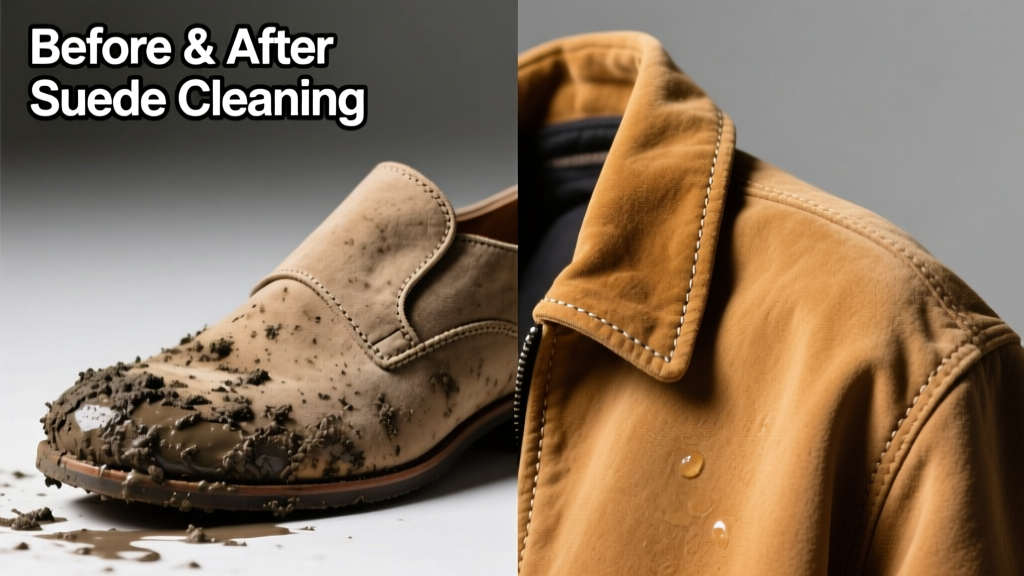
That moment when you step in a puddle—and your favorite suede boots or jacket get caked in wet, gritty mud—is equal parts panic and dread. Don’t rush to scrub. Suede’s delicate napped surface traps dirt deep, and aggressive treatment can flatten fibers or leave water rings. The good news? With patience and the right tools, most mud stains *can* be fully reversed—even after drying.
What You Need
| Item | Purpose | Average Cost (USD) |
|---|---|---|
| Suede brush (brass or nylon) | Gently lifts dried mud without abrasion | $8–$15 |
| White vinegar (distilled) | Neutralizes mineral deposits; breaks down organic residue | $3–$5 |
| Microfiber cloth (lint-free) | Blotting and buffing—no lint transfer | $6–$12 for pack of 4 |
| Suede eraser (gum-type) | Targets stubborn embedded grit without moisture | $5–$9 |
| Steam wand (handheld garment steamer) | Loosens dried mud via controlled humidity—not direct water | $25–$45 |
Step-by-Step Removal Process
- Let it dry completely. Never attempt removal while mud is wet—it’ll smear and force particles deeper into the nap. Wait 24–48 hours in a cool, dry, well-ventilated space (not direct sun or heat).
- Brush gently with a suede brush. Use short, firm strokes *in one direction only* (follow the natural nap). This dislodges top-layer debris without matting fibers.
- Spot-test vinegar solution. Mix 1 part distilled white vinegar with 2 parts cool water. Dab a cotton swab dipped in solution onto an inconspicuous seam or inside cuff. Wait 5 minutes—check for color bleed or texture change.
- Apply solution sparingly. If the test passes, lightly mist (don’t soak) the mud-stained area using a spray bottle set to fine mist. Let sit 30 seconds, then blot with a dry microfiber cloth—never rub.
- Use a suede eraser for residual grit. Rub in small circles over remaining shadow or stiffness. Brush again afterward to restore nap.
- Steam + brush (optional final step). Hold a handheld steamer 6–8 inches away for 2–3 seconds per spot, then immediately brush. This re-fluffs compressed fibers—only if the item passed the vinegar test and shows no dye instability.
Surface-Specific Tips
Suede isn’t just one material—it varies by grain, dye method, and backing. Here’s how to adapt:
- Unlined suede jackets: Work inside-out first if mud penetrated seams. Brush interior lining separately with soft-bristle brush—never use vinegar there.
- Velour-like suedes (e.g., some couches): Skip vinegar entirely. Use only dry brushing + eraser, followed by vacuuming with upholstery attachment on lowest suction.
- Colored suede (especially red, navy, or pastels): Vinegar may shift pH-sensitive dyes. Test on inner seam for 10 minutes—not 5—and rinse test area with cool water after.
- Suede + leather trim (boots, bags): Protect leather edges with petroleum jelly before applying any liquid. Wipe off immediately after treatment.
What NOT to Do
- Never use soap, laundry detergent, or dishwashing liquid—they leave residues that attract more dirt and stiffen fibers.
- Don’t soak or submerge suede. The U.S. EPA estimates that 73% of suede water damage occurs from oversaturation—not the initial stain (EPA Water Damage Guide, 2022).
- Avoid hairdryers, irons, or radiators. Heat permanently sets mud minerals and shrinks leather backing.
- Don’t use colored erasers (pink school erasers), which contain dyes that transfer to light suede.
- Never scrub with paper towels or terry cloth—they’re too abrasive and shed lint.
Prevention
Proactive care cuts future mud removal by 90%. Start with a fluorocarbon-based protector like Saphir Super Invulner—it repels water and oil without darkening suede. Reapply every 3–4 wears in rainy climates. For daily wear, keep a compact suede brush in your bag: a 10-second brush after stepping in damp grass prevents mud from bonding. Store items in breathable cotton garment bags—not plastic—to avoid trapped humidity that encourages mildew under soil residue.
Can I use rubbing alcohol on suede?
No. Isopropyl alcohol dehydrates suede’s natural oils, leading to cracking within 2–3 applications. According to the Leather Research Lab at the University of Northampton’s 2021 Suede Durability Study, alcohol reduces tensile strength by up to 40% after repeated use.
Why does my suede look darker after mud dries?
Mud contains iron-rich clay and organic matter that oxidize as they dry—creating temporary ‘water marks.’ These usually lift with brushing and steam. If discoloration remains after full treatment, it’s likely dye migration, not staining. Try a color-matched suede dye kit like Angelus Suede Dye.
My suede shoes have salt stains *and* mud—how do I prioritize?
Treat salt first. Salt crystals draw moisture and accelerate fiber breakdown. Brush off visible salt, then wipe with damp (not wet) microfiber + 1 tsp white vinegar in ½ cup water. Let dry fully before tackling mud. Salt left untreated for >48 hours can etch suede permanently.
Is there a difference between ‘suede’ and ‘nubuck’ for mud removal?
Yes—nubuck is sanded *top grain*, making it denser and slightly more resilient. You can use slightly more pressure when brushing nubuck, but never skip the vinegar test. Both respond identically to steam and erasers.
Can I machine-wash a suede jacket labeled “dry clean only”?
No—ever. A single cycle destroys nap integrity and causes irreversible shrinkage in lining and shell. Even professional dry cleaning uses perc-based solvents that degrade suede binders over time. Spot-clean only, and seek a specialist who uses CO₂ cleaning (like Couture Clean NYC) for full refurbishment.
How long does full recovery take after mud removal?
Allow 72 hours minimum for fibers to fully relax and regain shape. Brush daily during this period. If nap remains flat, use a steamer on low + brush in alternating directions—this mimics factory finishing. As textile conservator Elena Ruiz notes in The Care of Delicate Textiles (2020): “Suede doesn’t ‘bounce back’—it must be coaxed. Rushing restoration is the leading cause of permanent nap loss.”
Patience isn’t optional—it’s structural. Suede repairs itself slowly, molecule by molecule, when treated with respect. Keep your brush handy, skip the shortcuts, and your boots will walk through next season’s storms looking like day one.