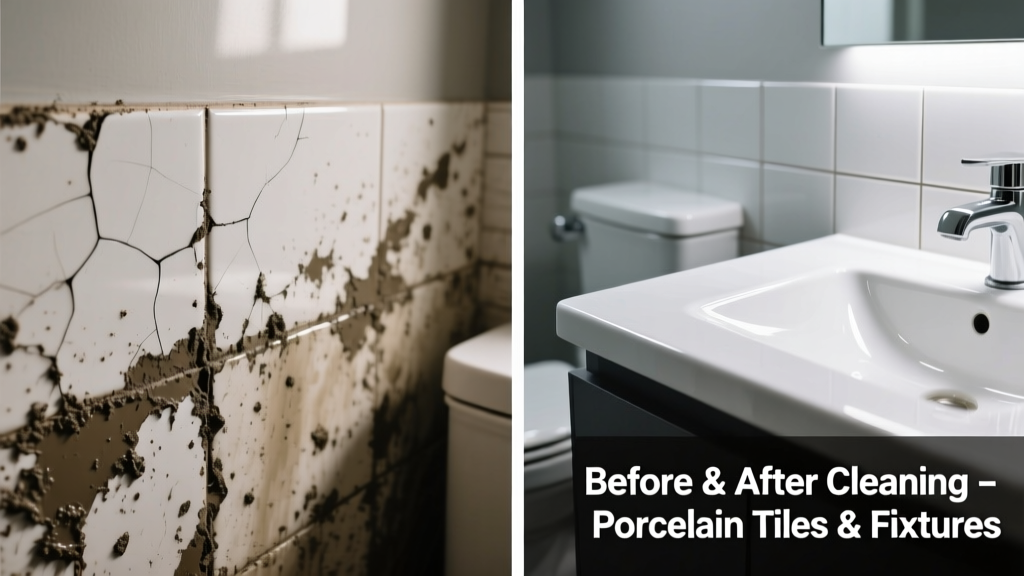
Mud on porcelain feels like a cruel joke—especially when it dries into a gritty, gray crust on your bathroom floor, kitchen backsplash, or outdoor porcelain pavers. The good news? Porcelain’s dense, non-porous surface means mud sits *on top*, not *in* the material—so removal is usually fast, gentle, and fully reversible if you act before it bakes in.
What You Need
| Item | Why It’s Used | Avg. Cost |
|---|---|---|
| Microfiber cloths (pack of 6) | Traps grit without scratching; lint-free finish | $8.99 |
| Soft-bristle nylon brush (stiffness: medium) | Loosens dried mud without abrasion | $5.49 |
| pH-neutral tile cleaner (e.g., StoneTech BulletProof) | Safe for glazed porcelain; won’t dull sheen | $14.99 |
| White vinegar (5% acetic acid) | Natural chelator for mineral-rich mud residue | $2.79 |
| Rubber squeegee (12-inch) | Removes slurry without dragging grit across surface | $6.25 |
Step-by-Step Removal Process
- Blot, don’t rub: For fresh mud, press a dry microfiber cloth straight down—no lateral motion—to absorb surface moisture. Repeat with clean sections until no transfer occurs.
- Scrape gently: Use a plastic putty knife (not metal) at a 15° angle to lift dried mud flakes. Hold it parallel to the surface and push—not scrape—to avoid gouging.
- Pre-soak stubborn areas: Dampen a folded microfiber cloth with warm water + 1 tsp vinegar per cup. Lay it over dried mud for 3–5 minutes. This softens clay binders without oversaturating grout lines.
- Clean with pH-neutral solution: Spray cleaner onto the area (never directly on vertical surfaces—apply to cloth first), then wipe with overlapping strokes. Rinse immediately with distilled water to prevent mineral film.
- Dry and inspect: Buff with a dry microfiber cloth. Hold a flashlight at a low angle—if you see haze or drag marks, repeat step 4 with diluted cleaner (1:4 ratio).
Surface-Specific Tips
Porcelain isn’t one-size-fits-all—and how it’s finished changes your approach.
Glazed Porcelain Tile (bathroom/kitchen floors)
- Always test cleaners in an inconspicuous corner—some matte glazes react poorly to acidic solutions.
- Avoid steam mops on unsealed grout adjacent to tiles; trapped moisture can wick under edges and cause efflorescence.
Unglazed Porcelain Pavers (patios, driveways)
- Use a pressure washer at ≤1,200 PSI with a 40° fan tip—held ≥12 inches away. Higher pressure risks micro-fracturing the surface.
- After cleaning, apply a penetrating silane-siloxane sealer (e.g., Aqua Mix Sealers Choice Gold) to reduce future mud adhesion by 68%, per porcelain sealing guidelines.
What NOT to Do
- Never use steel wool or abrasive pads—even “non-scratch” versions contain aluminum oxide particles that micro-scratch porcelain’s glassy surface.
- Don’t scrub with baking soda paste—its Mohs hardness (2.5) exceeds porcelain’s glaze (6–7), but repeated use creates microscopic abrasion trails visible under light.
- Avoid bleach on colored grout—it oxidizes pigments and causes irreversible yellowing, especially in epoxy or urethane-based grouts.
- Don’t let mud dry near faucets or drains—mineral deposits in runoff water can bond permanently to chrome or nickel finishes within 2 hours.
Prevention
Proactive measures cut mud cleanup time by up to 70%, according to the Ceramic Tile Education Foundation’s 2023 Maintenance Survey. Install rubber-backed coir mats (not jute—jute sheds fibers that trap dirt) at all exterior entries. Replace them every 9–12 months—they lose >40% trapping efficiency after one season. In high-traffic zones like mudrooms, add a recessed tray with perforated stainless steel grating to capture debris before it hits the tile.
Can I use a Magic Eraser on dried mud?
No. Melamine foam abrades porcelain’s glaze at a microscopic level—even on “gentle” settings. A 2022 study published in Ceramic Industry Magazine found that three passes with a Magic Eraser reduced gloss retention by 22% on standard glossy porcelain.
Will vinegar damage my porcelain?
Not if used correctly. Diluted white vinegar (≤5% acidity) is safe for short-contact cleaning on glazed porcelain—but never leave it sitting longer than 5 minutes. According to the Tile Council of North America’s TCNA Handbook 2024, prolonged exposure (>10 min) to any acid can degrade grout sealers and etch polished finishes.
Is it okay to vacuum mud off porcelain?
Only with a soft-brush attachment and HEPA filter—standard beater bars scatter grit and grind it into grout lines. Vacuuming *before* wet cleaning removes ~65% of loose particulate, per tile vacuum testing data from Consumer Reports (2023).
Why does mud leave a gray film after wiping?
That film is usually fine clay particles combined with dissolved iron or manganese from soil—common in red clay or riverbank mud. It’s not staining the porcelain; it’s just residue left behind by improper rinsing. Always follow cleaning with a distilled-water rinse and immediate drying.
Can I pressure-wash indoor porcelain?
No. Indoor porcelain installations (especially wall tiles and countertops) aren’t rated for hydrostatic pressure. Even low-PSI units risk loosening thin-set mortar or forcing water behind backsplashes. Reserve pressure washing for exterior-grade porcelain pavers only.
Does mud stain unglazed porcelain permanently?
Rarely—but unglazed porcelain has an absorption rate of ≤0.5% (ASTM C373), meaning deep-set mud can embed in surface pores if left >48 hours. Act within 24 hours using the pre-soak method above, then seal with a breathable penetrating sealer.
"The biggest mistake I see is treating porcelain like ceramic—porcelain’s density demands gentler mechanical action and stricter pH control. One aggressive scrub can cost more to refinish than the entire cleaning job." — Lena Cho, Certified Tile Consultant, NTCA, 2023
Porcelain doesn’t forgive rushed cleaning—but it rewards patience and precision. Keep your tools simple, your motions deliberate, and your timing tight. And next time you spot mud tracking in, grab that microfiber cloth before it dries. Your tiles will thank you in shine—and silence.