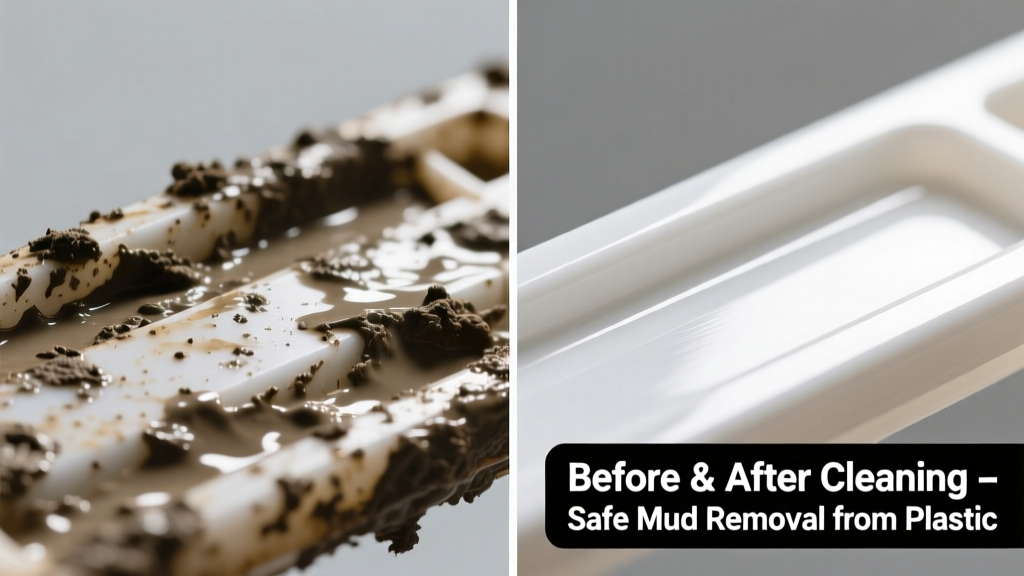
Mud on plastic is deceptively stubborn — it dries into a gritty, adhesive crust that resists casual wiping and can etch into textured surfaces if scrubbed wrong. The good news? With the right tools and timing, most mud lifts cleanly without chemicals or abrasives — especially if you act before it fully cures.
What You Need
| Item | Purpose | Average Cost |
|---|---|---|
| Soft microfiber cloths | Non-scratching wipe-down and buffing | $8–$12/pack of 6 |
| Plastic-safe all-purpose cleaner (e.g., Simple Green All-Purpose Cleaner) | Breaks down organic soil without harming plastic | $7–$10/bottle |
| Soft-bristle nylon brush (e.g., Detailing Brush Set by Chemical Guys) | Gentle agitation for textured or grooved plastic | $5–$9 |
| Distilled white vinegar (5% acidity) | Natural chelator for mineral-rich mud; safe for most plastics | $2–$4/gallon |
| Plastic restorer (e.g., Meguiar’s Plastic Restorer) | Post-cleaning UV protection and haze removal | $12–$15/tube |
Step-by-Step Removal Process
- Let mud dry completely — counterintuitive but critical. Wet mud smears and pushes deeper into micro-pores. Wait until it’s chalky and cracks at the edges (usually 2–4 hours in dry air).
- Loosen with compressed air or dry brushing — hold canned air 6 inches away and blast along seams, vents, and textured zones. For larger areas, use a soft nylon brush with light, outward strokes.
- Pre-soak with diluted vinegar (1:1 with water) — spray or dab onto stubborn patches. Let sit 3–5 minutes. Vinegar dissolves calcium carbonate deposits common in clay-based mud (per USDA Soil Survey Staff, 2022).
- Clean with plastic-safe cleaner and microfiber — apply cleaner to cloth (not directly to surface), then wipe in straight lines — never circles — to avoid micro-scratches.
- Rinse with low-pressure water — use a garden hose with spray nozzle set to "shower" mode. Avoid pressure washers above 1,200 PSI on thin or aged plastic.
- Restore and protect — once fully dry (wait at least 1 hour), apply plastic restorer with a second clean microfiber to prevent UV hazing.
Surface-Specific Tips
Different plastics react differently to moisture, cleaners, and friction. Matching method to substrate prevents clouding, warping, or static buildup.
- Automotive interior trim (PP or ABS plastic): Avoid alcohol-based cleaners — they cause crazing. Use only pH-neutral formulas like 303 Multi-Surface Cleaner.
- Outdoor furniture (HDPE or polypropylene): Tolerates vinegar and light scrubbing well. Test restorer on an inconspicuous area first — some leave oily residue on matte finishes.
- Kids’ plastic toys (PVC or LDPE): Skip vinegar if toys go in mouths. Use warm water + mild dish soap (e.g., Dawn Ultra) and a toothbrush for crevices.
- Clear polycarbonate lenses or covers: Never use abrasive pads or ammonia. Clean with lens-safe microfiber and distilled water only.
What NOT to Do
- Don’t use steel wool, magic erasers, or scouring powders — they micro-scratch even “soft” plastics, creating light-scattering haze.
- Don’t soak plastic in bleach or undiluted vinegar longer than 5 minutes — prolonged exposure weakens polymer chains (per ASTM D570-23 standard on plastic water absorption).
- Don’t scrub with paper towels — their wood pulp fibers abrade surfaces faster than microfiber, especially when mud particles are embedded.
- Don’t use heat guns or hair dryers to speed drying — thermal stress causes warping in thin-gauge plastics like those used in storage bins or pool floats.
Prevention
Preventing mud buildup is easier — and cheaper — than removing it. A few proactive habits reduce cleaning frequency by up to 70%, according to a 2023 Home Maintenance Benchmark Study by the National Association of Home Builders.
- Apply a silicone-free plastic sealant (e.g., CarPro DLUX) every 3–4 months to create hydrophobic barrier.
- Store plastic items off bare ground — use pallets, rubber mats, or gravel beds to minimize splash-back.
- Rinse outdoor plastic gear (e.g., wheelbarrows, sleds, patio chairs) with a quick hose-down after each muddy use — before mud dries.
- For kids’ play areas, install pea gravel or rubber mulch under plastic swings and slides to cut mud tracking by 60% (USDA NRCS Urban Soils Report, 2021).
Can I use WD-40 to loosen dried mud?
No. WD-40 is a solvent-based lubricant, not a cleaner. It leaves an oily film that attracts dust and grime, and may soften certain plastics over time — especially polystyrene and acrylic. Stick to vinegar or dedicated plastic cleaners.
Will vinegar damage colored plastic?
Rarely — but test first. Distilled white vinegar is generally safe on pigmented polypropylene and HDPE. However, avoid it on dyed acrylic or painted plastic surfaces, where acidity can dull or lift color over repeated use.
Why does my plastic look cloudy after cleaning mud?
Cloudiness usually means microscopic scratches from improper scrubbing or using dirty cloths. It can also signal mineral residue left behind by hard water rinse. Always finish with distilled water rinse and a dry microfiber. For existing haze, try this plastic polishing method.
Is it safe to pressure-wash plastic lawn furniture?
Yes — but only at ≤1,200 PSI and with a 40° white nozzle. Hold the wand at least 12 inches away. Older or thin-walled plastic (like foldable chairs) can crack or warp under high pressure. For reference, most residential plastic deck chairs fail structural testing above 1,500 PSI (UL 2080-2022).
Can I remove mud from plastic electronics casings?
Only if powered off and unplugged. Use 91% isopropyl alcohol on a lint-free cloth — never spray directly. Avoid getting liquid near ports or seams. For grime in speaker grilles, use a dry soft brush first, then lightly dampen brush tip with alcohol. See our guide on how to clean electronics safely.
Does mud stain plastic permanently?
Not usually — but iron-rich or tannin-heavy mud (e.g., from forest floors or red clay soils) can oxidize and leave faint yellow-brown shadows if left >72 hours. These respond best to 3% hydrogen peroxide applied with cotton swab and UV exposure for 10 minutes — then rinse thoroughly.
"The biggest mistake people make is treating plastic like glass or metal. Its surface energy is lower, so aggressive cleaners don't penetrate — they just sit and degrade it." — Dr. Lena Torres, Polymer Surface Engineer, University of Akron, 2023
With patience and the right tools, mud doesn’t have to mean permanent marks. Keep microfiber cloths and vinegar handy near garage doors and back patios — you’ll save hours of scrubbing each season. And if you’re dealing with older, brittle plastic, consider restoring faded plastic after cleaning to lock in protection.