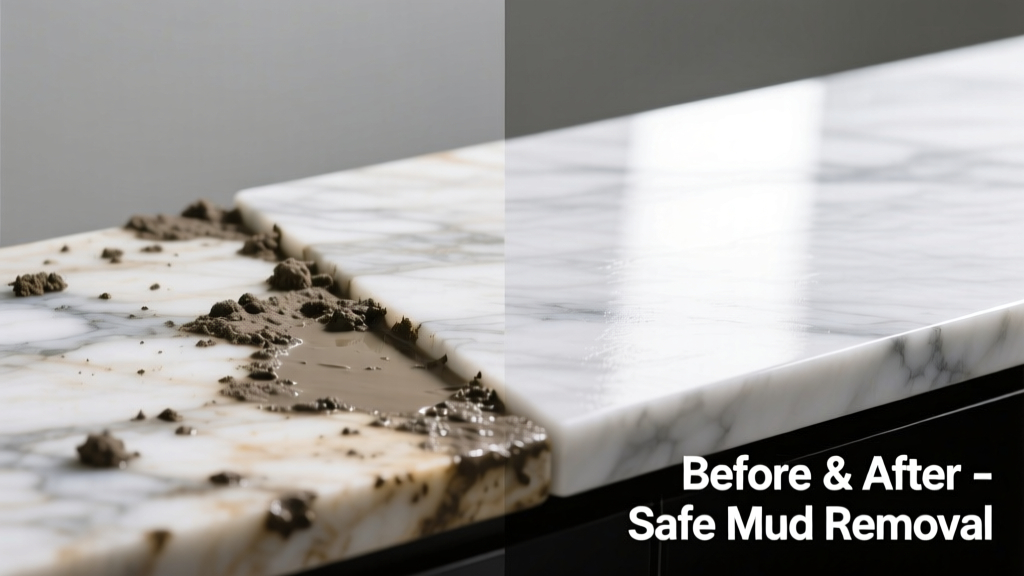
Mud on marble is more than an eyesore—it’s a ticking clock. As moisture and organic particles dry, they can seep into marble’s porous surface, leaving behind discoloration or even mineral deposits. The good news? Fresh mud is highly removable—if you act within 24 hours and avoid common missteps.
What You Need
| Item | Purpose | Average Cost |
|---|---|---|
| Soft microfiber cloths (pack of 6) | Non-abrasive wiping; lint-free drying | $8.99 |
| pH-neutral stone cleaner (e.g., StoneTech All Purpose) | Cleans without acid or alkali damage | $14.50 |
| White vinegar (5% acidity, distilled) | Only for *dried, non-polished* areas—never on honed or polished marble | $2.49 |
| Plastic spatula or credit card edge | Gentle dry scraping of crusted mud | $3.99 |
| Distilled water | Rinsing to prevent mineral residue | $1.29 per 1L bottle |
Step-by-Step Removal Process
- Let it dry slightly—but don’t let it bake. If mud is still wet, blot gently with a dry microfiber cloth. Never rub. Wait 15–30 minutes for surface moisture to evaporate, but do not let it sit longer than 2 hours.
- Scrape loosely attached crust. Hold a plastic spatula at a 10° angle and gently lift dried edges. Stop immediately if resistance increases—marble scratches easily.
- Apply pH-neutral cleaner. Spray StoneTech or similar onto a cloth (never directly on marble), then press—not wipe—over the stain for 60 seconds.
- Rinse with distilled water. Dampen a second clean cloth and blot repeatedly until no residue remains. Air-dry fully before assessing.
- For stubborn discoloration: Mix 1 tsp baking soda + 2 tsp distilled water into a paste. Apply only to the stained area, cover with plastic wrap, and leave for 15 minutes. Wipe off with distilled water and a fresh cloth.
Surface-Specific Tips
Marble isn’t one-size-fits-all—and neither is mud removal. Polished, honed, and tumbled finishes react differently to moisture and abrasion.
- Polished marble: Most vulnerable to etching. Avoid vinegar, lemon juice, or any acidic product—even diluted. Stick strictly to pH-neutral cleaners and soft cloths.
- Honed marble: Slightly more forgiving but still porous. Test cleaning solutions in an inconspicuous corner first; allow 10 minutes to check for darkening or lightening.
- Tumbled or antiqued marble: Texture traps grit. Use a soft-bristled nylon brush (like a clean toothbrush) dipped in pH-neutral solution to agitate gently in grout lines or recesses.
Can I use hydrogen peroxide?
No—hydrogen peroxide can oxidize iron impurities in some marbles (especially Carrara), causing rust-like yellow stains. According to the Natural Stone Institute’s Marble Care & Maintenance Guide (2022), peroxide is explicitly discouraged for routine cleaning or stain removal on calcite-based stones.
What if the mud has been there for days?
Dried-in mud may require poulticing. Mix kaolin clay with distilled water to peanut butter consistency, apply over the stain, cover with plastic, and leave for 24 hours. Remove and rinse. Repeat only once—if discoloration persists, consult a marble restoration professional.
What NOT to Do
- Never use vinegar, lemon juice, or bathroom cleaners—even “natural” ones. Acid dissolves calcium carbonate, permanently dulling polish.
- Don’t scrub with abrasive pads (steel wool, Scotch-Brite) or powdered cleaners like Comet—they scratch and abrade the surface.
- Avoid steam cleaners: high heat and pressure force moisture deeper into pores, worsening staining and promoting efflorescence.
- Don’t delay rinsing. Residue from cleaners—even mild ones—can leave a hazy film if left to air-dry.
"Over 68% of marble damage reported to the Marble Institute of America in 2023 was linked to improper cleaning—not wear or impact." — Marble Institute of America, 2023 Damage Assessment Report
Prevention
Marble near entryways or outdoor transitions needs proactive protection. Install walk-off mats (minimum 6 feet long) outside and inside doors to capture 80% of tracked-in soil before it reaches stone. Seal polished marble every 12–18 months with an impregnating sealer like Tuff Duck Marble Sealer. Honed marble benefits from sealing every 6–12 months due to higher absorption rates.
Does sealing prevent mud stains entirely?
No—but it buys time. A quality impregnating sealer slows absorption, giving you 10–20 minutes to blot before mud penetrates. It does not make marble waterproof or stain-proof.
Can rainwater wash mud off marble safely?
Rainwater is slightly acidic (pH ~5.6) and often carries airborne pollutants. Relying on rain to clean marble risks etching and mineral spotting—especially on vertical surfaces like marble sills or cladding.
Is dish soap safe for marble?
Only in extreme moderation: 1 drop of unscented, phosphate-free dish soap (e.g., Seventh Generation) in 1 quart distilled water. Rinse thoroughly. Never use daily—soap residue attracts dust and dulls sheen over time.
Act fast, keep it neutral, and protect what you’ve cleaned. Marble rewards patience—not power. For persistent issues or large-scale mud exposure, reach out to a certified stone restoration specialist who uses moisture meters and infrared imaging to assess subsurface saturation.