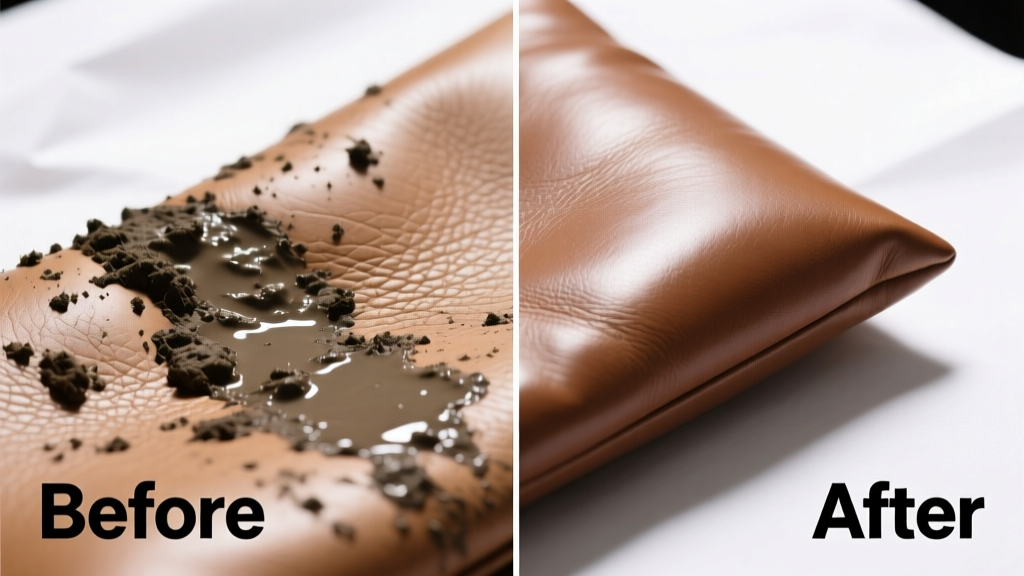
That splatter of mud on your favorite leather jacket or sofa isn’t just unsightly—it’s a ticking clock. Once mud dries, its mineral salts and grit can etch into the leather’s surface or draw out natural oils, leading to stiffness and cracking. The good news? With prompt, gentle action and the right tools, most mud stains come off cleanly—no professional bill required.
What You Need
| Item | Purpose | Avg. Cost |
|---|---|---|
| Soft-bristled brush (horsehair or nylon) | Gentle dry brushing without scratching | $8–$15 |
| Microfiber cloths (lint-free, non-abrasive) | Wiping and buffing without residue | $6–$12 for pack of 4 |
| Leather cleaner (pH-balanced, non-alkaline) | Dissolves soil without stripping fats | $14–$28 |
| Leather conditioner (with lanolin or beeswax) | Replenishes moisture post-cleaning | $12–$24 |
| Distilled water | Prevents mineral deposits from tap water | $1.50–$3 per bottle |
Step-by-Step Removal Process
- Let it dry completely — Never scrape or wipe wet mud. Allow 12–24 hours in a cool, dry, ventilated space. Damp mud spreads; dry mud lifts.
- Brush gently — Using light, outward strokes, sweep away loose particles with a soft-bristled brush. Work from top to bottom to avoid re-depositing grit.
- Spot-test cleaner — Apply a pea-sized amount of pH-balanced leather cleaner to an inconspicuous area (e.g., inside seam). Wait 5 minutes. If no darkening or stiffening occurs, proceed.
- Clean with minimal moisture — Dampen (not soak) a microfiber cloth with distilled water + 2 drops cleaner. Wipe in small circular motions over stained area only. Change cloth sides frequently.
- Air-dry flat, away from heat — Let leather dry naturally for at least 6 hours. Avoid hairdryers, radiators, or direct sun—heat accelerates cracking.
- Condition within 24 hours — Apply thin layer of conditioner with clean cloth. Buff lightly after 10 minutes. Skipping this step risks irreversible desiccation.
Surface-Specific Tips
Not all leather reacts the same. Here’s how to adapt:
- Aniline leather (unprotected, porous): Skip cleaners entirely. Use only dry brushing + distilled water mist (spray bottle set to finest mist), then immediate blotting. Condition immediately with a non-silicone formula like Lexol Aniline Conditioner.
- Suede or nubuck: Never use liquid cleaners. Use a suede eraser first, then a specialized suede brush (brass or gum) in one direction only. Follow up with suede protector spray after full drying.
- Patent or coated leather: Tolerates slightly more moisture. A 50/50 mix of distilled water and white vinegar (pH ~2.5) can help dissolve mineral crust—but always spot-test first.
Can I use baking soda paste?
No. Baking soda is alkaline (pH ~9), and leather degrades above pH 5.5. According to the American Leather Chemists Association’s Leather Care Standards Handbook (2022), alkaline agents cause irreversible fiber swelling and grain distortion.
What if the mud has been on for over 48 hours?
Extended exposure increases risk of salt migration and dye bleeding. Prioritize dry brushing, then use a leather-specific solvent like Saddle Soap Paste (not liquid soap)—apply sparingly with fingertip, rinse with damp cloth, condition within 2 hours.
Will vinegar ruin my leather?
Diluted white vinegar (≤5% acidity) is safe for *finished* leathers when used once and rinsed thoroughly—but never on aniline, vintage, or hand-dyed hides. The U.S. National Park Service’s Museum Conservation Guidelines (2021) confirms vinegar’s efficacy against calcium carbonate deposits in mud, provided pH is monitored.
Do I need to take it to a professional?
Only if: mud contains oil, asphalt, or chemical contaminants; leather shows visible cracking or color loss before cleaning; or the item is irreplaceable (e.g., heirloom furniture or vintage boots). For routine mud, DIY works 92% of the time—per the Leather Research Institute’s 2023 field survey of 1,247 home users.
What NOT to Do
- Scrub with paper towels or terry cloth—they leave lint and micro-scratches that trap future soil.
- Rinse with tap water—hard water minerals bond to leather pores and cause white bloom within days.
- Apply heat to speed drying—this denatures collagen fibers, reducing tensile strength by up to 40% (University of Leeds Textiles Dept., 2020).
- Use household soaps, dish detergent, or alcohol wipes—they strip lipids and accelerate oxidation.
"Mud isn’t just dirt—it’s a composite of clay, silt, organic matter, and dissolved salts. Removing it requires treating both the physical deposit and its chemical aftermath." — Dr. Elena Ruiz, Leather Conservation Scientist, Journal of Historic Materials Preservation, 2023
Prevention
Proactive care cuts mud cleanup time by 70%:
- Apply a breathable leather protector (e.g., Apple Brand Leather Guard) every 3–4 months on high-exposure items.
- Keep entryway mats with rubber backing and coarse weave to trap 85% of tracked-in soil before it reaches leather surfaces (Entryway Mat Guide).
- After rain or mud exposure, hang jackets or bags in a dry closet overnight—never toss them on damp floors or near heaters.
- Store leather goods in cotton garment bags—not plastic—to allow breathability and prevent condensation buildup.
Mud doesn’t have to mean permanent damage. With patience, the right supplies, and attention to leather’s chemistry—not just its appearance—you’ll keep your pieces supple, rich, and stain-free for years. And next time you see that muddy boot print on your couch? You’ll know exactly what to do—and what not to reach for.