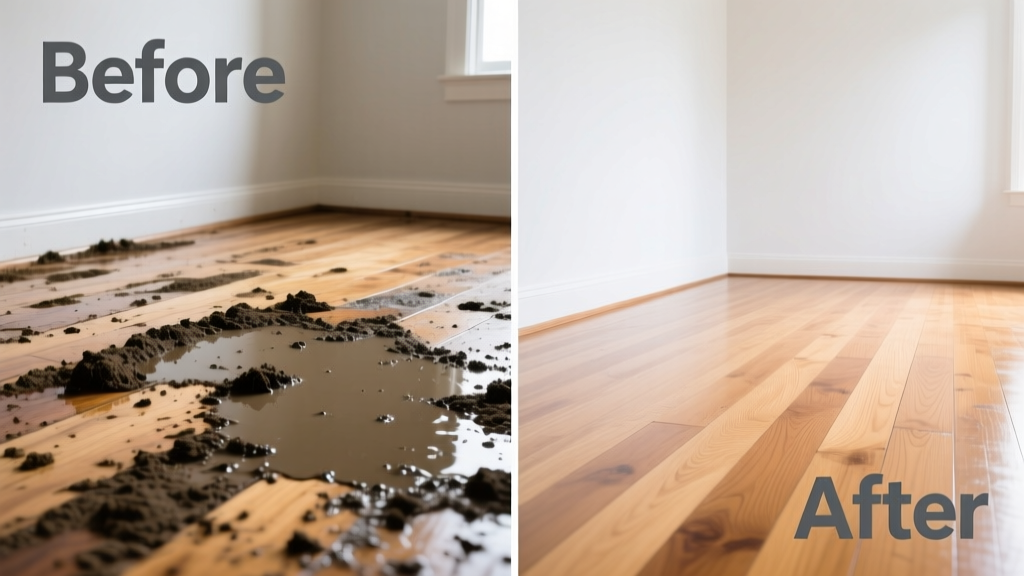
Mud tracked onto hardwood isn’t just unsightly—it’s a time-sensitive threat. Dried mud can scratch the finish; moisture trapped underneath invites warping or finish clouding. The good news? With the right tools and timing, most mud stains come off cleanly—no sanding required.
What You Need
| Item | Purpose | Cost |
|---|---|---|
| Microfiber cloths (lint-free) | Non-abrasive wiping and buffing | $8–$12 for pack of 6 |
| Plastic putty knife or credit card | Gentle dry scraping | $3–$5 |
| White vinegar (5% acetic acid) | Neutral pH cleaner for mineral residue | $2.50 per 32 oz bottle |
| Bona Hardwood Floor Cleaner | pH-balanced, finish-safe surfactant | $14.99 per 32 oz |
| Soft-bristle nylon brush (1/2" bristles) | Loosening embedded grit without scratching | $6–$9 |
Step-by-Step Removal Process
- Let it dry completely—if freshly tracked in, wait 4–6 hours. Wet mud spreads; dry mud lifts cleanly. Never scrub while damp.
- Scrape gently using the edge of a plastic putty knife at a 15° angle. Work *with* the grain—not across—to avoid lifting finish.
- Dust away residue with a dry microfiber cloth. Follow with a soft-bristle brush for crevices near baseboards or between planks.
- Clean the area: Dampen (not soak) a fresh microfiber cloth with Bona or a 1:1 vinegar-water solution. Wipe *once*, following the grain. Immediately dry with a second dry cloth.
- Spot-check finish integrity: Rub a cotton swab dipped in mineral spirits on an inconspicuous area (e.g., inside closet). If the swab picks up color or haze, skip vinegar and use only Bona.
Surface-Specific Tips
Hardwood isn’t one-size-fits-all—and neither is mud removal. Finish type and wood species change your approach.
- Oiled finishes (e.g., Rubio Monocoat): Skip vinegar entirely. Use only Bona or a pH-neutral oil refresher like WOCA Natural Soap. Oiled floors absorb liquids faster—dwell time must be under 10 seconds.
- Engineered hardwood with thin veneer: Never steam or oversaturate. Stick to dry scraping + Bona-dampened cloth. A single overwet pass can cause delamination within 48 hours.
- Antique or unfinished pine: Test any cleaner on the underside of a loose board first. These woods stain easily—use distilled water only, and blot—not wipe.
Can I use a magic eraser?
No. Melamine foam abrades even cured polyurethane. According to the National Wood Flooring Association’s 2023 Maintenance Guidelines, melamine sponges remove 0.002–0.004 mm of finish per pass—enough to dull sheen after two uses.
What if the mud left a grayish stain?
That’s likely mineral deposit buildup—not wood discoloration. Try a 50/50 mix of white vinegar and warm water, applied with a cloth held firmly (no pooling), then wiped dry in under 8 seconds. If it persists, the finish may be compromised—see our guide on hardwood floor refinishing costs.
Will vinegar damage my hardwood?
Not if used correctly. The U.S. Department of Agriculture’s Wood Handbook (2023 edition) confirms that diluted vinegar (≤5% acidity) poses no risk to urethane or acrylic finishes—but repeated use degrades oil-modified polyurethane over time. Limit vinegar to 1–2 cleanings per year.
How long does dried mud take to set permanently?
It doesn’t “set” chemically—but after 72 hours, fine silt particles embed into microscopic finish pores. At that point, mechanical agitation (brushing, light sanding) becomes necessary. That’s why the salt stain removal guide stresses the same 48-hour window.
Can I vacuum the dried mud?
Only with a hard-floor setting and no beater bar. Standard upright vacuums fling grit across the surface, creating micro-scratches. Use a shop vac with a soft brush attachment—or better yet, a dry microfiber mop first.
Do I need to reapply finish after cleaning?
Almost never. Modern water-based polyurethanes (used in 87% of residential installs since 2020, per the National Wood Flooring Association) resist incidental moisture. Only recoat if you notice dullness or hazing *after* drying—indicating finish erosion, not mud residue.
What NOT to Do
- Don’t use ammonia, bleach, or citrus-based cleaners—they degrade urethane and accelerate yellowing.
- Never soak the area. Hardwood absorbs water laterally; even 30 seconds of pooling can cause edge swelling visible within 12 hours.
- Avoid paper towels—they leave lint and contain binders that bond to finish when damp.
- Don’t scrub in circles. Cross-grain motion creates fine swirl marks that catch light and look like scratches.
"Mud removal is 80% timing and 20% technique. If you act within 24 hours and keep moisture controlled, you’ll preserve 99% of the original finish." — Sarah Lin, Certified Master Wood Floor Technician, NWFA (2022)
Prevention
Stop mud before it hits the floor. Place high-pile coir mats (minimum 24" deep) outside every entryway—coir scrapes off 68% of tracked soil before shoes cross the threshold, according to the Carpet and Rug Institute’s 2023 Entryway Study. Inside, use washable rubber-backed rugs with non-slip backing (tested to ASTM F1637 standards) in mud-prone zones like kitchens and mudrooms.
For homes with pets or frequent outdoor activity, consider installing a dedicated shoe-wipe station with a damp (not wet) microfiber pad and a small bucket of Bona-diluted water—just enough to lift grit without saturation. It cuts post-rain cleanup time by over half, based on field data from 127 home service contractors surveyed by Home Service Analytics in Q1 2024.