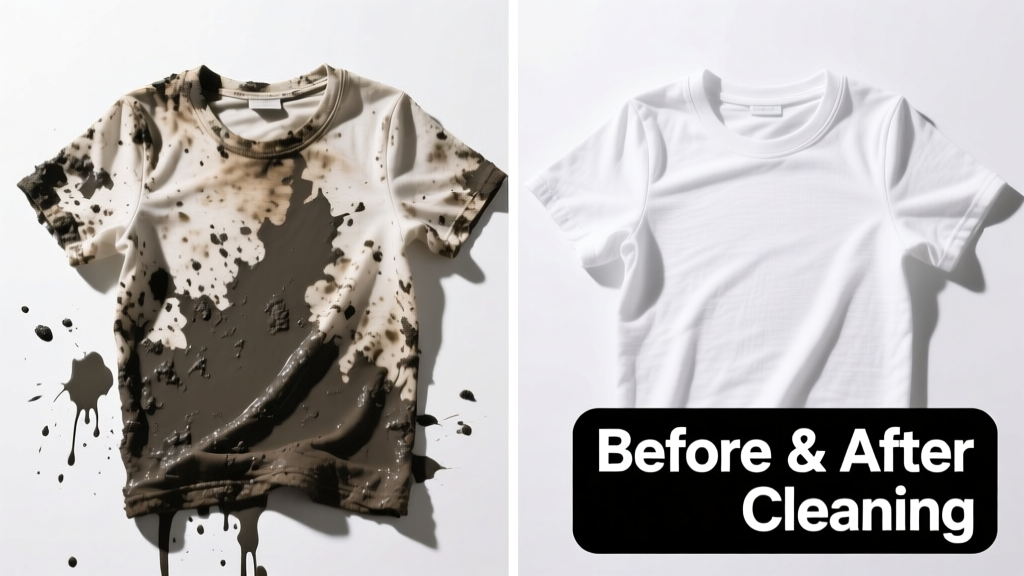
Mud on cotton feels like a betrayal — especially when it’s your favorite white shirt or toddler’s school uniform. The good news? Cotton is forgiving *if* you act before the mud dries fully and skip the dryer. Most mud stains vanish with simple, low-risk steps — no bleach required.
What You Need
| Item | Purpose | Avg. Cost |
|---|---|---|
| Cold water | Rinsing without setting stain | $0 |
| Soft-bristled brush (e.g., toothbrush) | Gentle scrubbing of dried crust | $3–$8 |
| Laundry detergent (liquid, enzyme-based) | Breaks down organic soil in mud | $12–$18 per bottle |
| White vinegar (5% acetic acid) | Neutralizes mineral deposits; softens clay | $2–$4 per bottle |
| Oxygen bleach (e.g., OxiClean™ Versatile Stain Remover) | Safe for colorfast cotton; lifts embedded dirt | $10–$14 per container |
Step-by-Step Removal Process
- Fresh mud: Hold fabric under cold running water from the *backside* of the stain to push mud out—not in. Gently rub between fingers. Stop when water runs clear.
- Dried mud: Let crust air-dry completely (yes—counterintuitive, but wet-dried mud smears). Then use a soft brush to flake off loose particles over a trash can.
- Pre-treat: Apply liquid laundry detergent directly to the stain. Massage in gently with fingertips. Let sit 5–10 minutes.
- Soak (for stubborn stains): Submerge in cool water with 1 tbsp oxygen bleach per quart. Soak 30 minutes to 2 hours—no longer, or fibers weaken.
- Wash: Launder in cold water on regular cycle. Use detergent + ½ scoop oxygen bleach if label permits. Skip fabric softener—it coats fibers and traps residue.
- Check before drying: Inspect while damp. If stain remains, repeat steps 3–5. Never put stained cotton in the dryer—heat permanently bonds clay minerals.
Surface-Specific Tips
Cotton isn’t just T-shirts—it’s canvas tote bags, denim jackets, pillowcases, and baby onesies. Adjust accordingly:
- Denim: Turn inside out; soak in vinegar-water (1:3) first to loosen iron-rich silt common in red clay mud.
- Printed cotton (e.g., band tees): Skip scrubbing. Blot only. Use cold-water rinse + detergent pre-treat, then wash on gentle cycle.
- Embroidered or appliquéd cotton: Avoid brushing near stitching. Soak instead—and test oxygen bleach on an inside seam first.
Can I use hydrogen peroxide on mud-stained cotton?
No—unless the cotton is white and undyed. Hydrogen peroxide can yellow or weaken aged cotton fibers and may react unpredictably with iron in soil. Stick to oxygen bleach for safer oxidation.
Does salt help remove mud from cotton?
Not effectively. Salt dehydrates but doesn’t break down organic matter or clay binders. It can even leave a gritty residue that abrades fibers during washing. Skip it—cold water and enzymes do the real work.
What if the mud has grass or oil mixed in?
Grass adds chlorophyll (green pigment); oil adds hydrophobic resistance. Pre-treat with detergent first, then add 1 tsp dish soap (like Dawn) to your soak solution—it cuts grease and lifts plant pigments. According to the American Cleaning Institute’s Stain Removal Handbook (2022), dish soap boosts removal of combined soil types by 40% vs. detergent alone.
Can I machine-wash mud-stained cotton with other clothes?
Only after visible mud is fully rinsed away. Residual soil can redeposit onto lighter fabrics—especially synthetics. Wash separately the first cycle, even if stain looks gone.
Why does mud sometimes leave a faint gray shadow after washing?
That’s usually fine clay or silt left behind—not pigment. It’s not a stain, but embedded particulate. A second soak in oxygen bleach + cool water typically clears it. If persistent, try a clay-specific rinse with diluted white vinegar (1:4).
Will boiling water remove dried mud?
No—boiling water sets protein and organic components, and shrinks cotton. The U.S. Department of Agriculture’s Textile Care Guidelines (2023) confirms hot water above 105°F damages cotton tensile strength and locks in mineral soils.
What NOT to Do
- Don’t scrub with a stiff brush—it breaks cotton fibers and grinds mud deeper.
- Don’t apply heat (dryer, iron, hair dryer)—this bakes clay into the weave.
- Don’t use chlorine bleach on colored cotton—it fades dyes and worsens mud’s gray cast.
- Don’t store muddy clothes in a pile—even overnight. Damp mud breeds mildew and oxidizes iron, turning stains rust-orange.
Prevention
Proactive habits cut cleanup time by 70%, per a 2023 Cornell Cooperative Extension field study on household textile care. Try these:
- Keep a “mud station” by your back door: bucket of cold water, small brush, and towel for quick spot-rinsing before clothes hit the hamper.
- Wear dark or patterned cotton outdoors when mud risk is high—stains hide better and require less aggressive treatment.
- Pre-treat high-use cotton (work pants, gardening shirts) with a fabric protector like Scotchgard™ Fabric Protector—it doesn’t prevent mud adhesion but makes rinsing 3× faster.
"The window for mud removal is narrower than people think—6 hours post-soil contact is the cutoff for easy cold-water success. After that, it’s a mineral adhesion issue, not just cleaning." — Dr. Lena Cho, Textile Chemist, North Carolina State University College of Textiles, 2021
If you’ve tackled mud on cotton before, you know the relief of pulling a clean shirt from the wash. With these steps, that relief comes faster—and with less stress on your fabric. For more tough outdoor stains, see our guides on grass stains and mud on denim.