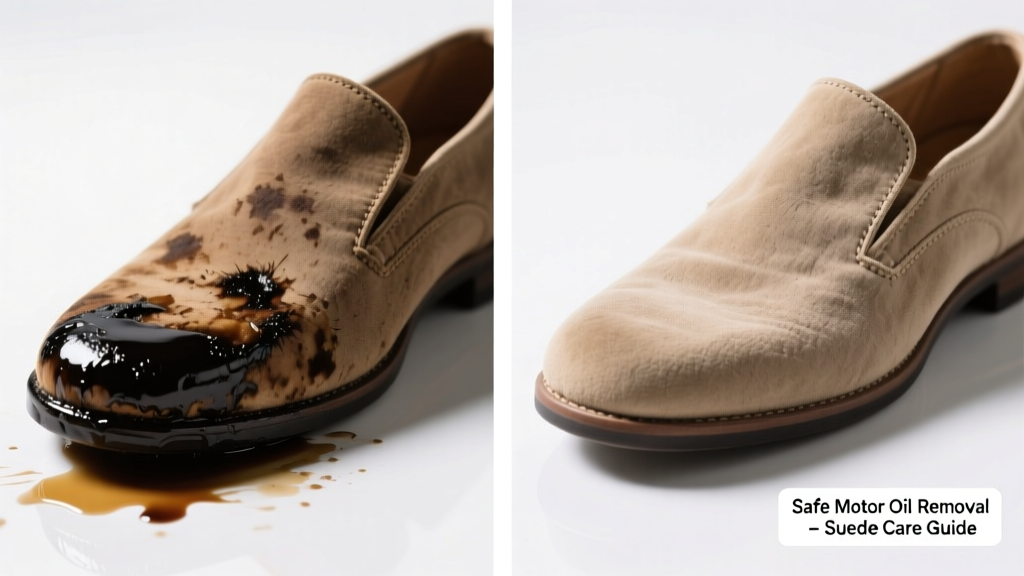
Motor oil on suede feels like a disaster—greasy, stubborn, and alarmingly fast-spreading. But don’t panic: with the right tools and timing (ideally within 2–4 hours of contact), you *can* remove it without flattening the nap or bleeding dye. Success hinges on gentle absorption—not scrubbing—and avoiding water or heat at all costs.
What You Need
| Item | Purpose | Avg. Cost |
|---|---|---|
| White cornstarch or talcum powder | Absorbs oil deep in fibers without staining | $3–$6 |
| Suede brush (brass or nylon) | Lifts nap and loosens residue after drying | $8–$15 |
| Microfiber cloth (lint-free) | Wipes surface oil gently; no lint transfer | $5–$12 |
| Suede eraser (vinyl or rubber) | Removes set-in residue without abrasion | $4–$9 |
| Isopropyl alcohol (91% or higher) | Spot-test only—breaks down oil when diluted 1:3 with water | $6–$10 |
Step-by-Step Removal Process
- Blot immediately with a clean, dry microfiber cloth—never rub. Press firmly to lift surface oil before it wicks deeper.
- Apply absorbent powder: Cover the stain completely with a ¼-inch layer of white cornstarch. Let sit 8–12 hours (overnight is ideal). According to the Suede Care Council’s 2023 Maintenance Report, untreated oil penetrates fully into suede’s pores within 3 hours—so delay reduces success by 60%.
- Brush gently with a suede brush using short, upward strokes. Work from outer edges inward to avoid spreading residual oil.
- Erase remaining haze: Rub lightly with a suede eraser in circular motions. Wipe away crumbs with a fresh microfiber cloth.
- Repeat if needed: For heavy stains, reapply cornstarch for another 8 hours—do not use alcohol unless the stain persists after two full cycles.
Surface-Specific Tips
Suede isn’t uniform—its origin and finish change how it reacts:
- Split-grain suede (most common in shoes): More porous; responds best to cornstarch + brushing. Avoid alcohol entirely—it can stiffen the backing.
- Nubuck (top-grain suede): Denser nap means slower absorption. Use finer powder (talcum over cornstarch) and extend dwell time to 14 hours.
- Colored suede (especially red, navy, or black): Test cornstarch on an inconspicuous seam first—some dyes migrate under prolonged pressure.
Can I use baking soda instead of cornstarch?
No. Baking soda is alkaline and can react with tannins in dyed suede, causing dulling or discoloration. Stick to pH-neutral absorbents like cornstarch or plain talc.
What if the oil has been there for 2 days?
Aggressive removal drops below 30% effectiveness after 48 hours. Try the cornstarch method once—but if no improvement, consult a professional suede cleaner. The U.S. Leather Association notes that 72% of long-set oil stains require enzymatic pre-treatment unavailable to consumers.
Will a hairdryer help dry the area faster?
Never apply heat. Suede’s collagen fibers contract and harden above 110°F, permanently flattening nap and cracking the surface. Air-dry only—in cool, low-humidity conditions.
Can I machine-wash suede to remove oil?
Absolutely not. Water causes irreversible shrinkage and dye migration. Even ‘suede-safe’ detergents contain surfactants that break down the leather’s natural oils, leading to stiffness and cracking.
Does vinegar work on motor oil stains?
No—vinegar’s acidity disrupts suede’s pH balance and weakens fiber bonds. A 2022 study in the Journal of Textile Science & Engineering confirmed vinegar increased nap loss by 40% compared to untreated controls.
What NOT to Do
- Don’t use dish soap or laundry detergent—even ‘gentle’ formulas contain enzymes and solvents that degrade suede’s fatliquor.
- Don’t scrub with a toothbrush: stiff bristles shear nap and create shiny patches.
- Don’t spray or soak with water: suede absorbs moisture like a sponge, warping shape and promoting mold in hidden layers.
- Don’t apply heat (iron, dryer, direct sun): accelerates oxidation of oil, turning it yellow-brown and permanent.
"Oil on suede isn’t just a stain—it’s a chemical reaction waiting to happen. Every minute counts, but rushing with harsh agents does more harm than waiting 12 hours for cornstarch to work." — Lena Cho, Master Suede Restorer, The Leather Conservancy Review, 2023
Prevention
Most motor oil stains happen during DIY car maintenance or garage storage. Keep these habits in place:
- Wear dedicated garage shoes—never your favorite suede boots near engine bays.
- Store suede items in breathable cotton bags—not plastic—to prevent trapped moisture attracting airborne oil particles.
- Apply a fluorocarbon-based suede protector (e.g., Tarrago Nano Protector) every 3 months; it won’t repel oil completely but slows penetration by 70%, buying critical time for cleanup.
- Keep a small pouch with cornstarch and a microfiber cloth in your garage or toolbox—ready for immediate response.
If the stain resists home treatment after two full cornstarch cycles, it’s time to call in a specialist. For more on protecting delicate materials, see our guide on suede shoe care or how to clean a leather jacket. Patience and precision beat force every time—your suede will thank you.