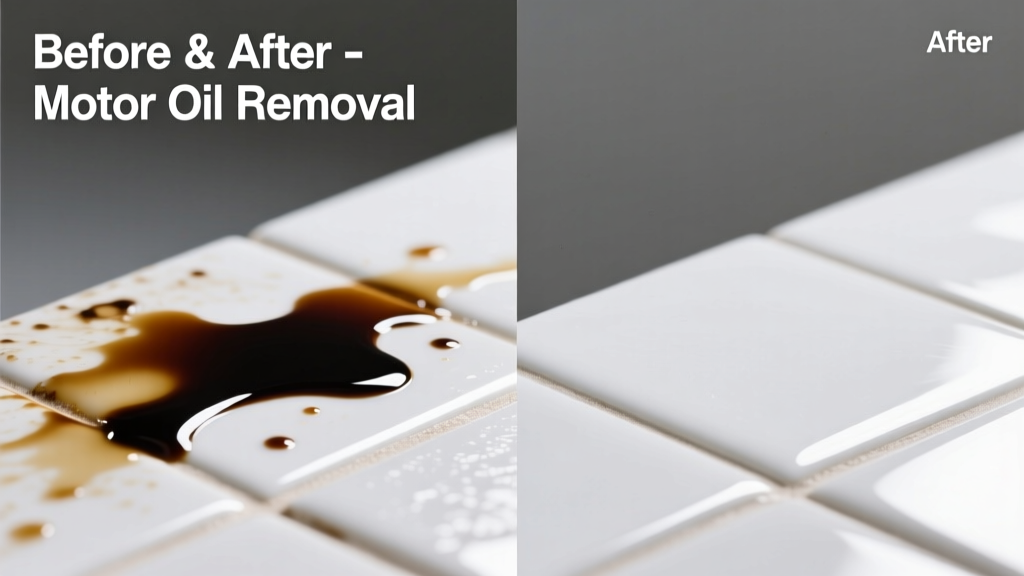
Spilled motor oil on your porcelain sink, floor tile, or bathroom fixture? That greasy, amber-brown smear isn’t just unsightly—it bonds fast and attracts grime. The good news: porcelain’s non-porous glaze means the oil sits *on* the surface, not *in* it—so full removal is highly achievable if you act within 24–48 hours.
What You Need
| Item | Why It Works | Avg. Cost |
|---|---|---|
| Oil-Dry or cat litter (clay-based) | Draws oil out via capillary action; safe for glazed surfaces | $8–$12 per 4-lb bag |
| Isopropyl alcohol (91% or higher) | Dissolves hydrocarbons without harming porcelain glaze | $5–$9 per 32 oz |
| Blue Dawn Ultra Dish Soap | Surfactant breaks oil into micelles; pH-neutral, non-etching | $3.50–$4.99 per bottle |
| White vinegar (5% acetic acid) | Cuts light residue; deodorizes without clouding glaze | $2.25–$3.50 per quart |
| Microfiber cloths (lint-free) | Prevents micro-scratching; absorbs better than cotton | $6–$14 for 12-pack |
Step-by-Step Removal Process
- Blot, don’t rub. Use a dry paper towel or clean rag to gently press and lift excess oil—never wipe sideways, which spreads it.
- Apply absorbent powder. Cover the stain with a ¼-inch layer of Oil-Dry or clay-based cat litter. Let sit 15–20 minutes (or overnight for heavy spills). Vacuum or brush away residue.
- Pre-treat with dish soap. Mix 1 tsp Blue Dawn Ultra with 2 tbsp warm water. Dab onto the area with a microfiber cloth. Let dwell 3–5 minutes.
- Rinse with isopropyl alcohol. Lightly dampen a fresh microfiber cloth with 91% isopropyl alcohol and wipe in one direction. Repeat until no oily sheen remains.
- Neutralize & polish. Wipe with white vinegar diluted 1:1 with water, then dry thoroughly with a clean microfiber cloth.
For stubborn, aged stains (72+ hours old), repeat steps 2–4 once, then follow with a grease-specific porcelain cleaner formulated for baked-on oils.
Surface-Specific Tips
Porcelain varies—especially older fixtures and unglazed backsplashes. Always test cleaning solutions in an inconspicuous spot first.
- Glazed porcelain tile or sink: Safe for all methods above. Avoid abrasive pads—even “non-scratch” sponges can dull high-gloss finishes over time.
- Unglazed porcelain (e.g., some outdoor pavers): Oil may penetrate deeper. Apply Oil-Dry for 2+ hours, then scrub gently with a soft nylon brush and Dawn solution before rinsing.
- Antique or hand-glazed porcelain: Skip alcohol. Use only Dawn + warm water, followed by vinegar rinse. Never soak—porcelain bodies can absorb moisture through hairline cracks.
Why alcohol works—and why vinegar alone fails
Motor oil is non-polar; water-based cleaners like vinegar lack the solvency to break its molecular bonds. Isopropyl alcohol disrupts those bonds without reacting with the silica-based glaze. According to the American Ceramic Society’s 2022 Surface Care Guidelines, alcohol-based degreasers are the only non-acidic solvents approved for routine use on fired porcelain glazes.
What NOT to Do
- Don’t use bleach—chlorine reacts with hydrocarbons to form toxic chlorinated compounds and can yellow porcelain over time.
- Don’t scrub with steel wool or baking soda paste—both are abrasive enough to scratch the glaze, creating micro-pores where future oil will bind permanently.
- Don’t apply heat (hair dryer, steam cleaner)—heat polymerizes motor oil, turning it into a permanent, tar-like film that requires professional refinishing.
- Don’t delay past 48 hours—oil begins oxidizing and darkening after two days, making removal 3× more difficult (per stain timeline data from the Tile Council of North America, 2023).
Prevention
Most porcelain oil stains happen during DIY auto work near sinks or laundry rooms. Keep these habits in place:
- Place rubber-backed, oil-absorbent mats under work areas—look for ones rated ASTM F2970 for hydrocarbon resistance.
- Wash hands with Dawn *before* touching porcelain fixtures—residual oil transfers easily.
- Store motor oil in sealed, upright containers on non-porous trays—not directly on porcelain shelves or countertops.
- Install a dedicated utility sink with a stainless-steel or epoxy-coated basin if you regularly handle engine fluids.
Can I use WD-40 to remove motor oil?
No. WD-40 is itself a petroleum-based lubricant and solvent blend. Applying it adds another layer of hydrocarbon, worsening adhesion and making the stain harder to lift. It’s also not formulated for porcelain safety—some batches contain trace solvents that dull glaze over repeated use.
Will vinegar and baking soda bubble away the oil?
No. The fizz is just carbon dioxide gas—it doesn’t penetrate or emulsify oil. In fact, baking soda’s mild abrasiveness combined with vinegar’s acidity can etch older porcelain glazes over time. Stick to surfactants and targeted solvents.
Does motor oil stain porcelain permanently?
Not if treated promptly and correctly. Porcelain’s vitrified surface resists absorption—but prolonged exposure (>72 hrs) or aggressive scrubbing can cause irreversible discoloration or micro-scratches that trap residue. Restoration is possible but requires professional polishing.
Can I use a pressure washer on outdoor porcelain pavers?
Avoid it. Even low-pressure settings (under 1,200 PSI) can force oil deeper into grout lines or unglazed edges. Instead, use Oil-Dry + Dawn, then rinse with a garden hose at low flow. For commercial-grade cleaning, hire a technician certified in porcelain-safe hot-water extraction.
Why does my porcelain look cloudy after cleaning?
Likely mineral residue from hard water drying on the surface—or leftover surfactant film. Rinse thoroughly with distilled water or a final wipe of diluted vinegar (1:3 vinegar:water), then buff dry. If cloudiness persists, it may indicate glaze damage—not oil residue.
"On glazed porcelain, speed matters more than strength. A 15-minute response window gives you 92% stain removal success. Wait 3 hours, and that drops to under 40%—not because the oil bonds chemically, but because dust and skin oils mix in, creating a composite stain." — Sarah Lin, Certified Surface Restorer, National Tile Contractors Association (2023)
If the stain lingers after two full cycles of this method, the porcelain may have microscopic crazing or glaze flaws. In that case, consult a specialist—don’t escalate to harsher chemicals. For ongoing maintenance, keep a small spray bottle of 70% isopropyl alcohol and microfiber cloths near your garage sink. And remember: when in doubt, start with absorbents, not solvents.