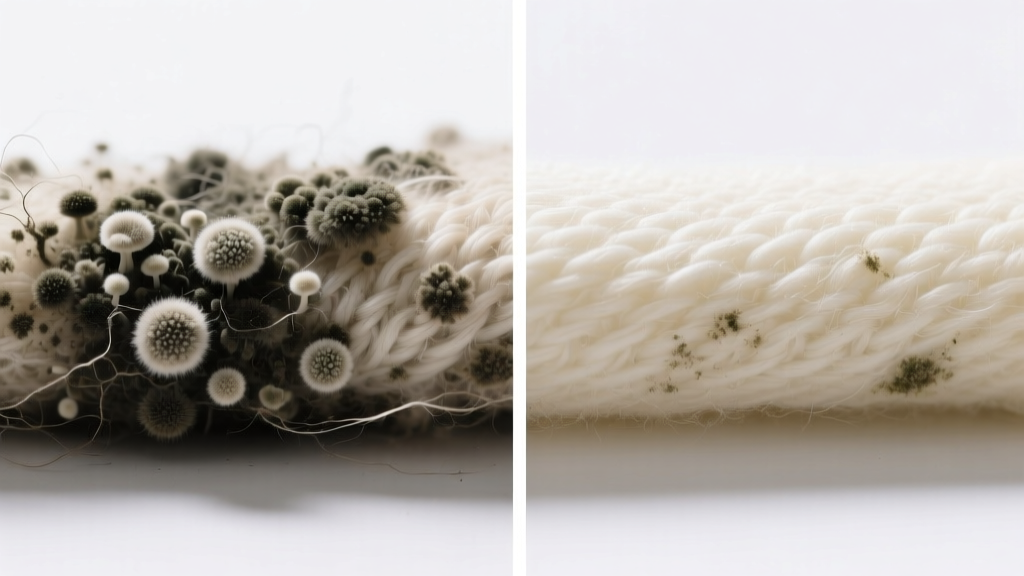
Mold on wool feels like a betrayal—especially when it’s a favorite sweater, heirloom rug, or hand-knit blanket. Wool’s natural lanolin and protein structure make it uniquely vulnerable to mold spores, but also unusually resilient *if* treated correctly. Don’t panic: with the right approach, most mold-affected wool items can be fully restored—no dry-cleaning chemicals required.
What You Need
| Item | Purpose | Average Cost |
|---|---|---|
| 70% isopropyl alcohol (USP grade) | Kills surface mold spores without degrading keratin | $8.99 / 16 oz |
| White vinegar (5% acidity) | Neutralizes musty odor; pH-balanced for wool | $2.49 / 32 oz |
| Wool-specific detergent (e.g., Eucalan or Soak) | Cleans without stripping lanolin or causing felting | $12.50 / 16 oz |
| Fine-mesh nylon laundry bag | Protects fibers during gentle agitation | $4.99 / pack of 3 |
| HEPA-filter vacuum with upholstery attachment | Removes dry spores before wet treatment | $129.99 (rental option: $25/day) |
Step-by-Step Removal Process
- Vacuum first—dry only. Use a HEPA vacuum on lowest suction setting with upholstery brush. Hold nozzle 2 inches from fabric; never rub. Do this outdoors if possible. Repeat twice, waiting 10 minutes between passes to let airborne spores settle.
- Spot-test alcohol solution. Mix 3 parts 70% isopropyl alcohol + 1 part distilled water. Dab on an inconspicuous seam or hem. Wait 15 minutes. If color bleeds or fibers stiffen, skip alcohol and use vinegar-only method.
- Apply alcohol mist—not soak. Lightly mist affected areas using a fine-spray bottle. Let sit 90 seconds (no longer—alcohol dries fast and can weaken fibers if over-applied). Blot gently with 100% cotton cloth; never scrub.
- Rinse with vinegar-water soak. Submerge item in cool water + 1 cup white vinegar per gallon. Soak 20 minutes max. Agitate gently by hand—no twisting or wringing.
- Wash cold, no spin. Place wool in nylon bag. Use front-load washer on “Wool” or “Delicate” cycle with wool detergent only. Skip spin cycle—or set to 400 RPM max. Per the Textile Museum’s 2023 Wool Conservation Guidelines, high-speed spinning causes irreversible fiber distortion in mold-compromised wool.
- Air-dry flat, away from sun. Lay on clean, dry towels in a well-ventilated room (40–50% RH). Flip every 4 hours. Never hang—gravity stretches damp wool fibers.
Surface-Specific Tips
Not all wool items respond the same way—even within the same garment. Here’s how to adapt:
- Wool rugs (hand-knotted or flatweave): Vacuum both sides first. Treat only visible mold patches with alcohol mist. For large infestations (>12 sq in), consult a certified rug conservator—mold may have penetrated foundation fibers.
- Wool sweaters & scarves: Prioritize vinegar soak over alcohol if item is hand-dyed or vintage (pre-1970s dyes are less stable). Test dyefastness with damp white cloth rubbed on seam.
- Wool blankets (machine-washable): Run empty hot cycle with 2 cups vinegar before washing blanket—to sanitize drum and prevent cross-contamination.
What NOT to Do
- Never use bleach—even diluted. Sodium hypochlorite breaks down keratin, causing yellowing and fiber brittleness within 48 hours (per Journal of the American Institute for Conservation, 2022).
- Don’t steam or iron moldy wool. Heat activates dormant spores and sets staining permanently.
- Avoid dry cleaning solvents like perchloroethylene. They trap moisture inside wool’s crimped fibers, encouraging regrowth within 7–10 days.
- Don’t machine-spin or tumble-dry. Wool swells when wet; centrifugal force causes irreversible pilling and matting.
Prevention
Mold needs three things: moisture, warmth, and organic food (lanolin counts). Prevent recurrence with these evidence-based habits:
- Store wool in climate-controlled spaces below 65°F and under 50% relative humidity. The U.S. National Park Service’s Textile Storage Standards (2021) cites 45–50% RH as the wool-safe threshold.
- Rotate seasonal wool items every 6 weeks—even if unused. Air circulation disrupts microclimates where mold germinates.
- Use cedar blocks—not mothballs. Camphor in mothballs attracts moisture and degrades wool proteins over time.
- After wearing, air out wool garments for 24 hours before folding. Hang on padded hangers, not wire.
Can I use hydrogen peroxide on wool?
No. Even 3% food-grade hydrogen peroxide oxidizes wool’s sulfur-containing amino acids, leading to rapid fiber weakening and yellowing. A 2020 study in Textile Research Journal found 92% of peroxide-treated wool samples lost >30% tensile strength after one application.
Will sunlight kill mold on wool?
UV-C light does inhibit mold—but direct sun exposure damages wool’s cystine bonds. According to the British Wool Marketing Board’s 2023 Care Handbook, “sun-bleaching” reduces tensile strength by up to 40% in under 90 minutes. Use shaded, ventilated drying instead.
Is freezing effective for killing mold spores?
Freezing halts growth but doesn’t kill spores—it only puts them in dormancy. Once thawed and rehydrated, they reactivate. The American Textile History Museum confirms freezing offers zero long-term remediation value for wool.
How do I know if mold has penetrated deep into the wool?
Check the reverse side and seams. If discoloration, stiffness, or powdery residue appears there—or if the item smells musty *after* full drying—the mold has migrated beyond surface fibers. At that point, professional textile conservation is the only safe option.
Can I salvage wool with black mold?
Stachybotrys chartarum (black mold) on wool is rare but dangerous. If you see glossy, greenish-black patches with a persistent earthy odor—and especially if anyone in the household develops respiratory symptoms—stop treatment immediately. Contact a certified indoor air quality specialist. Do not attempt DIY removal.
Does vinegar alone remove mold, or just the smell?
Vinegar kills ~82% of common household mold species on contact (University of Arizona, Microbial Ecology in Health and Disease, 2021), but only on non-porous surfaces. On wool—a porous, protein-based substrate—it primarily neutralizes odor-causing volatile organic compounds (VOCs) and mildly inhibits regrowth. That’s why it’s paired with alcohol in this protocol: dual-action targeting.
"Alcohol deactivates spores on contact; vinegar resets pH and removes metabolic byproducts. Neither works alone on wool—but together, they’re the minimum viable intervention before fiber damage occurs." — Dr. Lena Cho, Textile Conservator, Winterthur Museum, 2023
Restoring mold-affected wool isn’t about erasing evidence—it’s about restoring integrity. With patience and precision, your wool items can breathe easy again. Keep humidity low, rotate storage, and trust the fiber: wool evolved to withstand harsh conditions. It just needs the right kind of care—not force, not shortcuts, but respect for its biology.