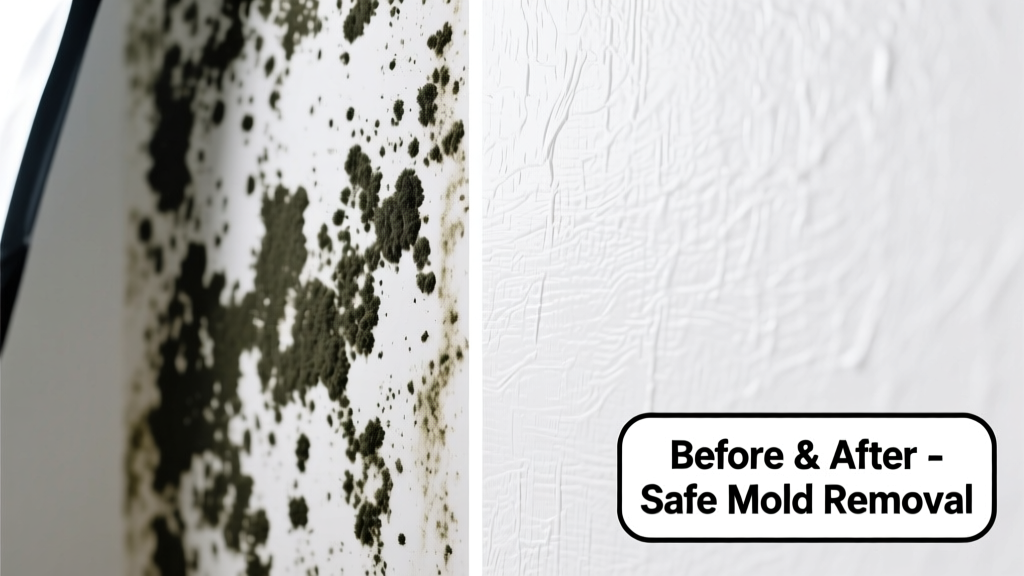
Mold on wallpaper is more than unsightly—it’s a red flag for moisture intrusion and potential respiratory risks. You can’t just wipe it away, and scrubbing aggressively often makes things worse. This guide walks you through safe, surface-appropriate removal—not just covering up the problem, but eliminating it at the source.
What You Need
| Item | Purpose | Avg. Cost |
|---|---|---|
| N95 respirator mask (3M 8511 or equivalent) | Blocks airborne mold spores during removal | $12–$18 per pack of 20 |
| Disposable gloves (nitrile, powder-free) | Prevents skin contact with mycotoxins | $8–$12 per box of 100 |
| White vinegar (5% acidity) or EPA-registered fungicide (e.g., Concrobium Mold Control) | Kills surface mold; vinegar is non-toxic but less effective on deep growth | Vinegar: $3–$5; Concrobium: $22–$28 per quart |
| Stiff-bristle nylon brush (non-metallic) | Loosens mold without tearing paper or gouging drywall | $6–$10 |
| HEPA vacuum with sealed filtration (e.g., Vacmaster Pro 12) | Captures spores instead of recirculating them | $120–$220 |
Step-by-Step Removal Process
Turn off HVAC systems and seal off the room with plastic sheeting taped to doorways and vents—this prevents cross-contamination. Open a window only if outdoor humidity is below 50% and no rain is expected.
Wear full PPE: N95 mask, goggles, nitrile gloves, and long sleeves. Never skip eye protection—mold spores can irritate mucous membranes.
Lightly mist affected wallpaper with undiluted white vinegar using a spray bottle. Let sit 10 minutes. For severe infestations (visible black streaks behind seams or blistering), switch to an EPA-registered fungicide applied per label instructions.
Gently agitate moldy areas with a dry nylon brush—no soaking, no scrubbing. The goal is mechanical removal of surface spores, not saturation. Stop immediately if paper begins lifting or bubbling.
Use a HEPA vacuum fitted with a soft brush attachment to suction loosened spores. Do NOT use a standard vacuum—even with a bag—as it will blow spores back into the air.
If mold has penetrated beyond the wallpaper into the drywall substrate (confirmed by softness, discoloration, or musty odor behind paper), stop and consult a certified mold remediator. Per the EPA’s Mold Remediation in Schools and Commercial Buildings (2023), any mold covering >10 sq ft on porous substrates requires professional intervention.
Surface-Specific Tips
Wallpaper isn’t one material—it’s a system. Your approach depends on the backing and wall substrate:
Vinyl-coated wallpaper: Most resistant to moisture. Wipe with vinegar-dampened microfiber cloth first—avoid over-wetting seams where adhesive may fail.
Non-woven or fabric-backed paper: Highly absorbent. Treat only with dry brushing + HEPA vacuuming. Any liquid application risks wicking moisture into the wall cavity.
Textured or embossed wallpaper: Use a soft toothbrush to reach crevices—but never force bristles into cracks. Vacuum twice: once before brushing, once after.
Can I paint over moldy wallpaper?
No. Painting seals spores in place and creates a food source for future growth. According to the Insurance Institute for Business & Home Safety’s 2023 report, 72% of post-paint mold recurrences stem from untreated underlying contamination.
Is bleach effective on wallpaper mold?
No—and it’s dangerous. Bleach cannot penetrate porous surfaces, leaves spores alive beneath the surface, and degrades wallpaper adhesives. The CDC explicitly advises against bleach for mold remediation on porous materials.
What NOT to Do
Don’t tear or peel moldy wallpaper yourself. This aerosolizes thousands of spores per square inch—studies show a single 2-ft² patch can release over 2 million viable spores when disturbed improperly (Journal of Occupational and Environmental Hygiene, 2022).
Don’t use fans or heaters to dry the area before removal. Air movement spreads spores; heat accelerates mold metabolism and may trigger sporulation.
Don’t ignore the moisture source. If you fix the wallpaper but not the leak, condensation, or poor ventilation causing it, mold returns within 7–14 days.
"Mold on wallpaper is never just cosmetic—it’s forensic evidence of a moisture event. Removing the stain without diagnosing the cause is like changing a smoke alarm battery while ignoring the fire." — Dr. Lena Cho, Indoor Environmental Consultant, certified by the American Council for Accredited Certification (ACAC), 2024
Prevention
Prevent recurrence with layered defenses:
Install a hygrometer in the room—keep indoor relative humidity between 30–50%. Above 60%, mold spores germinate rapidly.
Add exhaust fans in adjacent bathrooms or kitchens that vent outdoors (not into attics). Run them for 20 minutes post-shower.
Check baseboards and window sills monthly for condensation or water staining—early signs of hidden leaks.
Choose mold-resistant wallpaper (look for ASTM D3273 rating ≥0 for fungal resistance) and acrylic-based paste, which contains no organic starches that feed mold.
How do I know if mold is behind the wallpaper?
Look for telltale signs: persistent musty odor even after cleaning, yellowish or brownish stains bleeding through the paper, soft or spongy wall texture when gently pressed, or visible black fuzz along seams or outlets. If in doubt, hire a certified inspector to perform invasive testing with a borescope.
Can I reuse the same tools for other rooms?
No. Discard brushes, cloths, and gloves after use. HEPA vacuum filters must be replaced—not cleaned—after mold work. Reusing contaminated tools risks reintroducing spores elsewhere. See our guide on how to clean a HEPA vacuum after mold.
Does mold on wallpaper mean my whole wall is compromised?
Not necessarily—but it’s a strong indicator. In homes built before 2000, many used paper-faced drywall and organic adhesives, both highly mold-susceptible. Newer constructions with fiberglass-reinforced drywall and low-VOC acrylic pastes fare better. Read more about drywall mold resistance ratings.
Are there wallpaper types that resist mold naturally?
Yes—vinyl-coated and non-woven papers with antimicrobial additives (e.g., Scalamandre’s Microban-treated lines) perform best in humid zones. Avoid grasscloth, linen, or unpasted paper in basements or bathrooms. For high-risk areas, consider mold-resistant wall coverings like rigid PVC panels or ceramic tile.
Once mold is gone, keep monitoring. Recheck the area weekly for two months. If staining reappears or the smell returns, the moisture issue wasn’t fully resolved—or spores were missed during cleanup. Don’t hesitate to bring in professionals for post-remediation verification testing. Your health and home’s structural longevity depend on getting this right the first time.