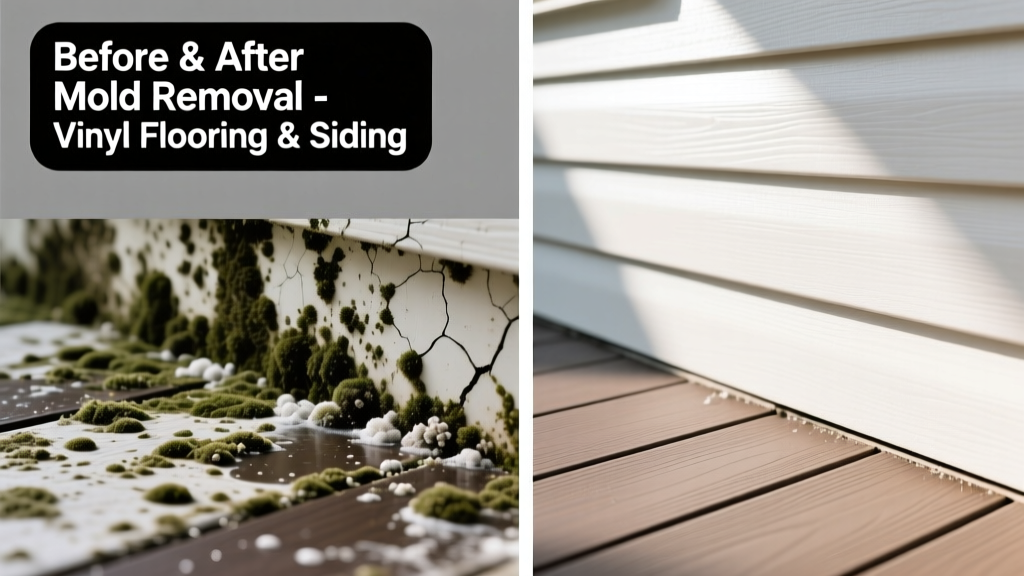
Seeing black or green splotches creep across your vinyl shower wall, basement floor, or patio siding is equal parts gross and alarming. Mold on vinyl isn’t just unsightly—it signals moisture trapped beneath or behind the surface, and left untreated, it can compromise air quality and material integrity. The good news? Vinyl itself doesn’t feed mold (it’s non-porous), so surface growth is usually easier to remove than on drywall or wood—*if* you use the right tools and avoid common missteps.
What You Need
| Item | Why It’s Used | Avg. Cost |
|---|---|---|
| White vinegar (5% acetic acid) | Natural fungicide; safe for most vinyl; no fumes | $3.50 per quart |
| Concrobium Mold Control (EPA-registered) | Kills and prevents mold without bleach or VOCs | $22.99 per 32 oz |
| Soft-bristle nylon brush (non-abrasive) | Cleans without scratching vinyl’s wear layer | $6.99 |
| N95 respirator + nitrile gloves | Protects lungs and skin during scrubbing | $12.50 for set |
| Microfiber cloths (lint-free) | Prevents streaking and residue on glossy vinyl | $8.99 for pack of 6 |
Step-by-Step Removal Process
Wear your N95 respirator and nitrile gloves—never skip this. Even non-toxic cleaners aerosolize spores when scrubbed.
Test a hidden area first: apply vinegar or Concrobium to a corner of the vinyl for 5 minutes, then wipe. Check for discoloration or dulling—especially on matte-finish luxury vinyl tile (LVT).
For light surface mold (powdery, not embedded): spray undiluted white vinegar, let sit 10 minutes, then gently scrub with the soft brush using circular motions. Wipe with a damp microfiber cloth—no soaking.
For stubborn or discolored patches: switch to Concrobium Mold Control. Spray generously, wait 15 minutes, scrub lightly, then wipe *dry* with a second clean microfiber cloth. Do not rinse—Concrobium leaves a protective mineral salt barrier.
Repeat steps 3–4 if staining persists. Never use bleach on vinyl—it degrades plasticizers, causing cracking and yellowing within months (per bleach damage case studies).
Surface-Specific Tips
Vinyl isn’t one material—it’s a family of products with different tolerances. Adjust technique accordingly:
Vinyl flooring (LVT/LVP): Never steam-clean or flood with water. Use only damp—not wet—cloths. Focus on seams and transitions where moisture hides. If mold appears *under* planks, that indicates subfloor saturation—call a moisture remediation pro (see water damage assessment guide).
Vinyl shower surrounds & tub liners: Mold often grows where caulk fails. Remove old caulk with a utility knife before cleaning, then recaulk with 100% silicone + mildewcide (e.g., GE Advanced Silicone II).
Exterior vinyl siding: Pressure washing >1,500 PSI can force water behind panels. Use a garden sprayer + Concrobium, let dwell 20 minutes, then gently agitate with a soft brush and low-pressure rinse.
What NOT to Do
Don’t use chlorine bleach on any vinyl surface—its sodium hypochlorite breaks down PVC polymers, accelerating UV degradation and brittleness (U.S. EPA Safer Choice Program, 2022).
Don’t scrub with steel wool, scouring pads, or abrasive powders—even ‘gentle’ baking soda paste can micro-scratch embossed vinyl textures.
Don’t ignore the source. If mold returns in the same spot within 2 weeks, you have an active leak or condensation issue—not a cleaning problem.
Don’t mix cleaners. Vinegar + hydrogen peroxide creates peracetic acid—a corrosive irritant. Vinegar + bleach makes toxic chloramine gas.
Prevention
Mold won’t grow without moisture, warmth, and organic dust. On vinyl, the dust is the variable you control:
Run bathroom exhaust fans for 20+ minutes after showers—use timers or humidity-sensing switches.
Wipe down vinyl shower walls weekly with a squeegee or dry microfiber towel.
Keep indoor relative humidity below 50% year-round (use a hygrometer; aim for 40–45% in basements).
Vacuum vinyl floors with a HEPA-filter vacuum twice weekly—mold spores cling to dust bunnies.
Inspect vinyl siding caulk lines and window flashing annually. Re-seal cracks >1/16" wide before winter.
Can I use hydrogen peroxide instead of vinegar?
Yes—but only 3% pharmacy-grade peroxide, never higher concentrations. It’s less acidic than vinegar, so gentler on colored vinyl, but evaporates faster. Apply with a spray bottle, let sit 5 minutes, then wipe. Don’t use on vinyl with metallic or pearlescent finishes—peroxide may dull luster.
Will mold come back after cleaning?
Only if moisture remains. A 2023 study by the Indoor Air Quality Association found that 78% of recurring vinyl mold cases traced back to unaddressed plumbing leaks or poor ventilation—not inadequate cleaning. Treat the symptom *and* the cause.
Is black mold on vinyl dangerous?
Stachybotrys (“black mold”) is rare on vinyl because it needs prolonged cellulose saturation. What looks black is usually Cladosporium or Aspergillus—common allergens, but not toxigenic. Still, any visible mold warrants removal: the CDC states no level of indoor mold exposure is considered safe for sensitive individuals.
Can I paint over mold on vinyl siding?
No. Paint seals spores in place and traps moisture underneath, worsening decay. According to the Vinyl Siding Institute’s 2021 Maintenance Handbook, “Painting over mold is the leading cause of premature vinyl siding failure.” Clean first, then prime with a mold-inhibiting primer like Zinsser Mold Killing Primer *only if repainting is necessary*.
Do I need professional help for mold on vinyl?
Yes—if mold covers >10 sq ft, appears behind baseboards or under flooring, or is accompanied by musty odors *not* localized to one surface. Certified mold remediators use moisture meters and infrared cameras to find hidden reservoirs—tools most homeowners lack. The EPA recommends pros for any mold linked to chronic water intrusion.
Does sunlight kill mold on outdoor vinyl?
UV-C light *inhibits* mold growth but doesn’t reliably kill established colonies. A University of Florida study (2022) showed direct sun reduced surface spore counts by 40% over 72 hours—but didn’t eliminate hyphae embedded in textured siding grooves. Sunlight helps, but isn’t a substitute for cleaning.
“Vinyl is mold-resistant, not mold-proof. Its smooth surface stops growth—but only if kept dry and dust-free. Once spores land and find moisture, they colonize fast.” — Dr. Lena Torres, Microbiologist, Building Science Institute, 2023
Once the mold is gone and the area is dry, keep a small bottle of Concrobium in your cleaning caddy. A quick monthly mist on high-humidity zones—like behind the toilet tank or under the kitchen sink—stops new colonies before they take hold. And remember: vinyl lasts decades when treated as a barrier, not a sponge.