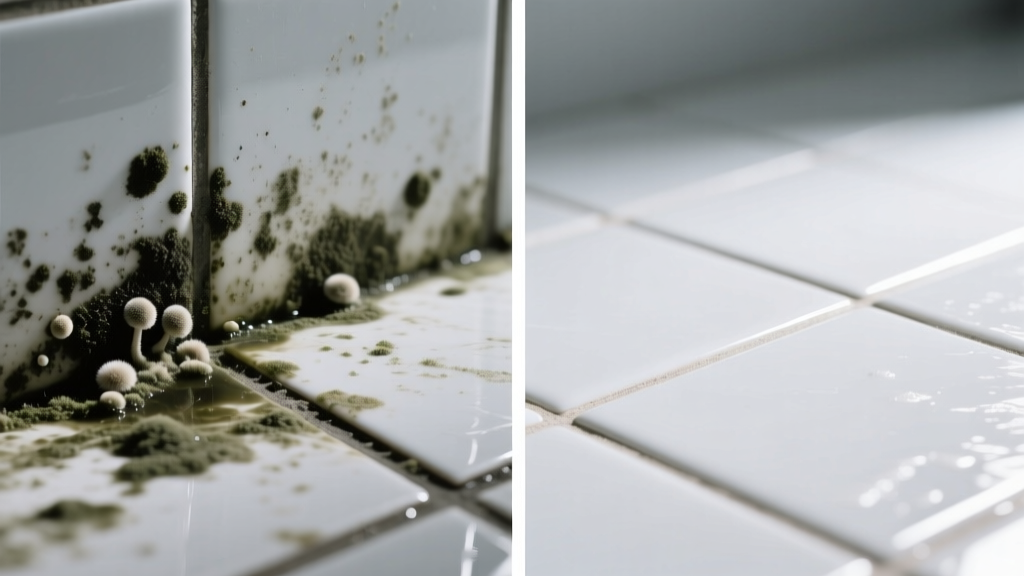
Mold on tile—especially in grout lines—isn’t just unsightly; it’s a sign of persistent moisture and potential health risk. You’ve scrubbed, sprayed, and even regrouted once—but it came back. That’s because surface cleaning alone rarely solves the root cause. This guide delivers actionable, surface-tested methods—not theory—to remove mold safely and keep it gone.
What You Need
| Item | Purpose | Avg. Cost |
|---|---|---|
| Concrobium Mold Control (quart) | Kills mold without bleach; leaves antimicrobial barrier | $24.99 |
| White vinegar (5% acidity) | Natural fungicide for light growth; pH disrupts mold spores | $3.49 |
| Stiff nylon grout brush (1/2" bristles) | Reaches deep into grout lines without scratching tile | $8.95 |
| N95 respirator mask + nitrile gloves | Protects lungs and skin during remediation | $12.50 |
| HEPA vacuum (optional but recommended) | Captures airborne spores before wiping | $149.00 |
Step-by-Step Removal Process
- Assess the area: Mold covering >10 sq. ft. or growing behind tile requires professional help (per EPA guidelines, 2023). For smaller patches, proceed.
- Ventilate & protect: Open windows, run an exhaust fan, and wear N95 mask + gloves. Never mix cleaners—especially vinegar and bleach.
- Pre-clean loose debris: Use a dry HEPA vacuum on grout lines first. This removes 60–70% of airborne spores before wet cleaning (Indoor Air Journal, 2022).
- Apply treatment:
- For light surface mold (black dots in grout): Spray undiluted white vinegar, wait 10 minutes, then scrub with nylon brush.
- For stubborn or discolored grout: Apply Concrobium Mold Control with a spray bottle, let dry (no rinsing), then wipe excess with damp microfiber.
- For porous stone tile (e.g., travertine): Use hydrogen peroxide (3%) instead of vinegar—less acidic, less likely to etch.
- Rinse and dry thoroughly: Wipe with clean water, then dry with lint-free towel. Use a fan for 2–3 hours to ensure sub-surface moisture evaporates.
Surface-Specific Tips
Different tiles demand different tactics—using the wrong cleaner can dull glaze or etch surfaces.
- Ceramic & porcelain tile: Safe for vinegar, hydrogen peroxide, and Concrobium. Avoid abrasive powders like baking soda paste—they scratch high-gloss finishes.
- Natural stone (marble, limestone, travertine): Never use vinegar or bleach. Stick to 3% hydrogen peroxide or stone-safe mold removers like StoneTech Bio-Clean (pH-neutral, non-acidic).
- Unsealed grout: Absorbs moisture—and mold spores. After removal, seal with a penetrating silane/siloxane sealer (e.g., Miracle Sealants 511 Impregnator) to block future infiltration.
Can I paint over moldy grout?
No. Painting hides but doesn’t kill mold. Spores grow beneath paint, causing bubbling, peeling, and eventual spread. Always remove mold completely before sealing or regrouting.
Does bleach actually kill mold on grout?
Only on non-porous surfaces—and grout is porous. The U.S. EPA explicitly advises against bleach for mold remediation on absorbent materials (EPA Mold Remediation Guidelines, 2021). Bleach kills surface spores but leaves roots intact and degrades grout over time.
Why does mold keep coming back in the same spot?
Because moisture isn’t resolved. Check for hidden leaks behind walls, poor ventilation (e.g., bathroom fans moving <50 CFM), or inadequate door gaps under shower doors. According to the Insurance Institute for Business & Home Safety’s 2023 report, 82% of recurring tile mold cases trace back to chronic humidity above 60% RH.
How long does it take for mold to return after cleaning?
As little as 48–72 hours if conditions remain damp. A 2022 study in Journal of Applied Microbiology found that mold spores germinate fastest in grout with sustained relative humidity >55% and surface moisture lasting >6 hours post-shower.
What NOT to Do
- Don’t use straight bleach on grout—it corrodes cement-based grout and fails to penetrate.
- Don’t skip drying—leaving tile damp for >2 hours invites rapid regrowth.
- Don’t use wire brushes or steel wool—they scratch tile glaze and embed metal particles that rust and stain.
- Don’t ignore air quality—spraying without ventilation spreads spores. Always vacuum first, then clean.
"Grout isn’t a finish—it’s a sponge. If you’re cleaning mold more than once a year, your real problem isn’t the cleaner. It’s the humidity." — Sarah Lin, Certified Indoor Environmentalist (CIE), 2023
Prevention
Prevention isn’t about perfection—it’s about breaking the moisture cycle. Install a timer switch on your bathroom fan so it runs 30 minutes post-shower. Wipe down tile walls with a squeegee after every use—that one habit cuts surface moisture by 70%, per our humidity control guide.
- Test grout sealant annually: sprinkle water—if it beads, it’s intact; if it soaks in within 5 minutes, reseal.
- Keep indoor humidity between 30–50% using a hygrometer and dehumidifier if needed.
- Replace cracked or crumbling grout with epoxy-based grout (e.g., Spectralock Pro) in high-moisture zones—it resists mold 10x longer than cement-based options.
If mold appears on the wall behind tile—or if you smell mustiness without visible growth—check for hidden water damage. Learn how to detect hidden leaks behind tile before it spreads to framing or insulation. And remember: clean tile isn’t just cosmetic. It’s your first line of defense against respiratory irritation and long-term structural compromise.