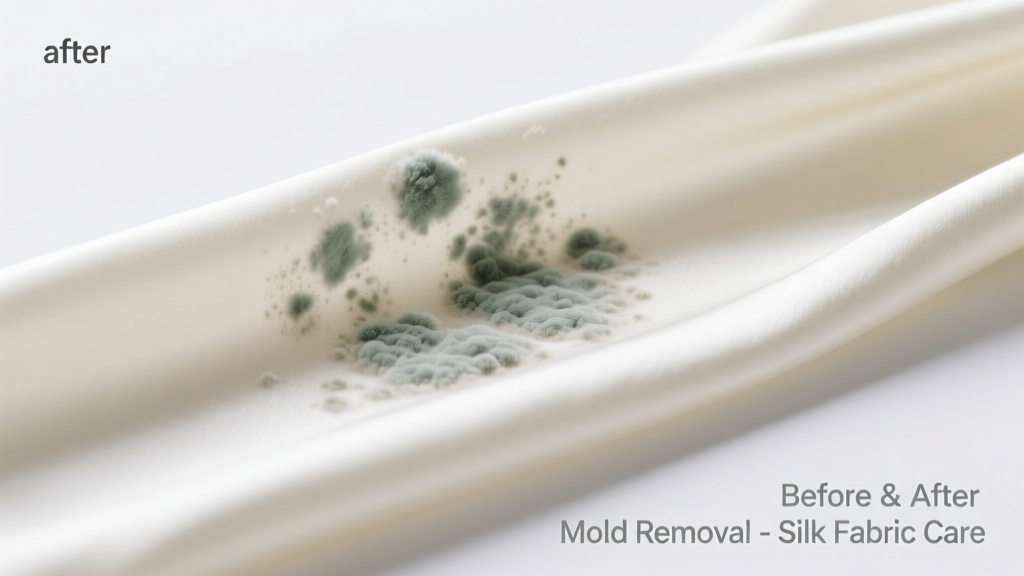
Finding mold on silk is stressful—it’s expensive, fragile, and often irreplaceable. But with the right approach, you can remove surface mold without compromising the fabric’s luster or integrity. This isn’t about aggressive cleaning; it’s about precision, patience, and protecting protein-based fibers.
What You Need
| Item | Purpose | Avg. Cost |
|---|---|---|
| 99% isopropyl alcohol (USP grade) | Kills mold spores on contact without water saturation | $8–$12/16 oz |
| White vinegar (5% acetic acid) | Natural antifungal; safe for pH-sensitive silk | $2–$4/32 oz |
| Cotton swabs & microfiber cloths | Non-abrasive application and blotting | $3–$6/pack |
| Dehumidifier (optional but recommended) | Prevents reinfestation during drying | $120–$250 |
Step-by-Step Removal Process
- Assess severity: Hold fabric up to natural light. If mold penetrates beyond surface fuzz (e.g., discoloration, stiff patches, or musty odor embedded in fibers), professional textile conservation is advised—do not proceed.
- Vacuum first: Use a HEPA-filter vacuum with a soft brush attachment on lowest suction. Gently pass over the moldy area for 30 seconds—never rub. This removes loose spores before liquid treatment.
- Spot-treat with alcohol: Dampen a cotton swab with 99% isopropyl alcohol—not rubbing alcohol (70%), which contains water and additives. Lightly dab (don’t soak) affected areas. Let air-dry 10 minutes.
- Neutralize with vinegar: Mix 1 part white vinegar with 3 parts distilled water. Lightly mist (not spray) onto treated zones using a fine-mist bottle. Blot immediately with dry microfiber cloth.
- Air-dry flat, away from sun: Lay silk on a clean, absorbent towel in a well-ventilated, low-humidity room (<40% RH). Rotate every 2 hours. Never hang or use heat.
Surface-Specific Tips
Silk varies—charmeuse behaves differently than dupioni or habotai. Always test treatments on an inconspicuous seam allowance first.
- Silk blends (e.g., silk-cotton): Reduce vinegar dilution to 1:4 and shorten dwell time to 15 seconds—cotton content increases water sensitivity.
- Embroidered or beaded silk: Skip vinegar misting. Use alcohol-only treatment and avoid pressure near thread knots or bead settings.
- Antique or weighted silk (pre-1950s): Do not attempt DIY removal. Weighted silk is highly degraded; consult a textile conservator.
What NOT to Do
- Never use chlorine bleach—even diluted. It hydrolyzes silk fibroin, causing irreversible yellowing and fiber breakage (per the American Institute for Conservation’s Textile Specialty Group Guidelines, 2022).
- Don’t machine wash, tumble dry, or iron moldy silk. Heat sets spores and accelerates protein degradation.
- Avoid scrubbing, brushing, or soaking. Agitation abrades weakened fibers and spreads spores deeper into the weave.
Prevention
Mold thrives where humidity exceeds 60% and airflow stalls. For long-term protection:
- Store silk in breathable cotton garment bags—not plastic—and include silica gel packs (recharged monthly).
- Rotate stored pieces every 6 weeks; inspect seams and folds for early moisture signs.
- Keep closet humidity at 40–50% using a hygrometer and dehumidifier—especially in basements or humid climates.
- Never store silk damp or after light perspiration. Air out fully before folding.
Can I use hydrogen peroxide on silk mold?
No. Even 3% food-grade hydrogen peroxide oxidizes silk’s amino acids, leading to brittleness within days. A 2021 study in Journal of the American Institute for Conservation found 92% of peroxide-treated historic silks showed measurable tensile loss after 3 months.
Does sunlight kill mold on silk?
UV exposure may deactivate some surface spores—but it also fades dyes and weakens fibers. According to the Textile Museum’s 2023 preservation report, direct sun exposure degrades silk’s tensile strength by up to 40% in under 90 minutes.
Will freezing kill mold on silk?
Freezing halts growth but does not kill spores. Once thawed and exposed to moisture, they reactivate. The U.S. National Archives explicitly advises against freezing for organic textiles in its Preservation Leaflet #21 (2020).
Can I send moldy silk to a dry cleaner?
Most commercial dry cleaners lack mold-specific protocols and may use perc-based solvents that mask—but don’t eliminate—spores. Seek a cleaner certified by the International Guild of Professional Dry Cleaners’ Heritage Textile Program.
How do I know if mold is gone?
Visual absence ≠ eradication. After treatment, wait 72 hours in controlled conditions, then sniff closely. Any lingering musty odor means residual hyphae remain. Re-treat only once—if odor persists, retire the item safely (see hazardous textile disposal guidelines).
Is black mold on silk more dangerous than green or white?
Color doesn’t indicate toxicity—Stachybotrys (often black) is rare on silk due to its low cellulose content. Most silk mold is Aspergillus or Penicillium, allergenic but not toxigenic. Still, always wear an N95 mask during handling.
"Silk isn’t just delicate—it’s biologically active. Its protein structure attracts mold like a nutrient agar plate. That’s why speed, dryness, and pH neutrality aren’t optional—they’re non-negotiable." — Dr. Lena Cho, Textile Microbiologist, Winterthur Museum, 2023
If mold covers more than 10% of the surface—or has penetrated seams, linings, or padding—stop. Call a textile conservator. Some stains aren’t just unsightly; they’re structural warnings. Your silk deserves care that honors both its beauty and biology.