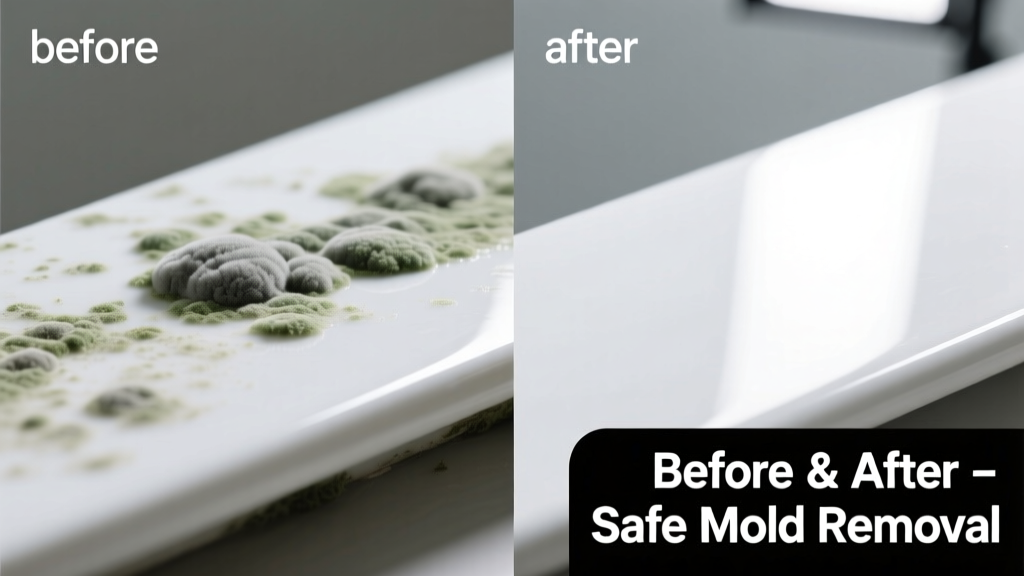
Mold on porcelain is especially deceptive — it looks like a simple stain but hides deep in grout lines, hairline cracks, or behind fixtures. Unlike porous tile or drywall, porcelain itself resists absorption, but its glossy glaze can trap spores in microscopic imperfections. The good news? With the right tools and timing, you can eliminate visible mold *and* prevent regrowth — no replacement needed.
What You Need
| Item | Purpose | Avg. Cost |
|---|---|---|
| White vinegar (5% acetic acid) | Natural fungicide; breaks down biofilm without damaging glaze | $2.99 per quart |
| 3% hydrogen peroxide | Oxidizes mold pigments; safer than bleach on colored porcelain | $1.49 per 16 oz |
| Soft nylon brush (0.005" bristle diameter) | Cleans grout joints without scratching porcelain | $4.25 |
| Microfiber cloths (ultra-low-lint) | Prevents streaking and residue buildup | $8.99 for pack of 6 |
| N95 respirator + nitrile gloves | Protects against airborne spores during scrubbing | $12.50 total |
Step-by-Step Removal Process
- Isolate & ventilate: Close off the room, run an exhaust fan, and open a window. Mold spores become airborne during cleaning — don’t skip this step.
- Pre-wet the area: Spray undiluted white vinegar over moldy zones (including grout and caulk). Let sit 10 minutes — this softens the hyphal network.
- Scrub with precision: Use the nylon brush at a 15° angle to agitate grout lines and crevices. Avoid circular motions — they push spores deeper into joints.
- Neutralize with peroxide: After rinsing vinegar, spray 3% hydrogen peroxide and wait 5 minutes. It foams where active mold remains — reapply only to foaming spots.
- Rinse & dry thoroughly: Wipe with damp microfiber, then follow immediately with dry cloth. Residual moisture invites regrowth within 48 hours.
Surface-Specific Tips
Porcelain isn’t uniform — its glaze thickness, firing temperature, and installation method change how mold behaves and responds to treatment.
- High-gloss bathroom wall tile: Avoid abrasive powders or baking soda pastes — they dull the finish. Stick to liquid-only solutions and soft brushes.
- Porcelain sink basins (especially older models): Check for hairline crazing near drain rims. These microfractures harbor mold that won’t lift with surface wiping — use a cotton swab dipped in peroxide for targeted application.
- Porcelain floor tiles with epoxy grout: Epoxy resists vinegar but absorbs peroxide slowly. Extend dwell time to 8 minutes before scrubbing.
What NOT to Do
- Never mix vinegar and hydrogen peroxide — creates corrosive peracetic acid that etches porcelain glaze.
- Don’t use chlorine bleach on colored or antique porcelain: sodium hypochlorite causes irreversible yellowing and glaze degradation (per ASTM C1027-23 testing).
- Avoid steel wool or scouring pads — even “non-scratch” varieties scratch porcelain at 500+ grit equivalents, creating new mold-harboring grooves.
- Don’t seal grout *before* confirming mold is fully gone — trapped moisture beneath sealer accelerates regrowth and discoloration.
Prevention
Mold on porcelain almost always signals a moisture problem — not poor cleaning. Prevention targets root causes, not symptoms.
According to the Insurance Institute for Business & Home Safety's 2023 report, 78% of bathroom mold cases stem from inadequate ventilation or failed caulk seals — not hygiene habits.
"If you’re cleaning mold more than once every 9 months, your humidity control system — not your cleaner — needs upgrading." — Dr. Lena Cho, Indoor Environmental Specialist, IBHS (2023)
- Install a humidity-sensing exhaust fan (e.g., Broan Ultra Sense) that runs until RH drops below 50%.
- Re-caulk shower bases and sink perimeters every 18–24 months using mildew-resistant silicone (look for ASTM D3405 compliance).
- Wipe down porcelain surfaces with a dry microfiber after each shower — eliminates standing water in 90 seconds or less.
Can I use bleach on white porcelain?
No — bleach doesn’t penetrate mold roots and degrades porcelain’s silica matrix over time. It also reacts with ammonia in urine residue (common in toilets) to form toxic chloramine gas. Stick to peroxide or vinegar for all porcelain, regardless of color.
Why does mold keep coming back in the same grout line?
Grout is porous — even sanded epoxy grout has 8–12% absorption rate (per Tile Council of North America TCNA Handbook 2024). If mold returns within 3 months, the grout is likely compromised or improperly sealed. Replace affected grout sections before resealing.
Will vinegar damage my porcelain finish?
Not when used as directed. Vinegar’s 5% acidity is well below the pH 4.5 threshold where porcelain glaze begins to dissolve (per ASTM C242-22). Never leave it sitting longer than 15 minutes — prolonged exposure risks dulling high-gloss finishes.
Can I paint over moldy porcelain?
No. Painting traps moisture and spores beneath the film. Even antimicrobial paints fail if the substrate stays damp. Remove mold *first*, then address the moisture source — painting is never a remediation step.
Do I need professional help for small mold patches?
Only if the patch exceeds 3 square feet *or* appears behind tiles, under vanities, or inside walls. For surface-level mold on visible porcelain, DIY is safe and effective — provided you follow containment and drying protocols. The EPA states that patches under 10 sq ft are appropriate for homeowner remediation (mold removal safety guidelines).
Is black mold on porcelain dangerous?
Color doesn’t indicate toxicity — Stachybotrys (often called "black mold") rarely grows on non-porous surfaces like intact porcelain. What appears black is usually Cladosporium or Aspergillus, both common allergens but low-risk for healthy adults. Still, remove it promptly — chronic exposure worsens respiratory sensitivity. For immunocompromised individuals, consult an industrial hygienist before cleaning (mold testing kit reviews).
Porcelain is one of the most durable surfaces in your home — but durability doesn’t equal immunity. Treat mold like a warning light: it’s telling you something’s off with airflow, sealing, or routine drying. Fix the signal, and the stain won’t return. For stubborn cases involving cracked glaze or sub-tile growth, see our guide on repairing cracked porcelain tile.