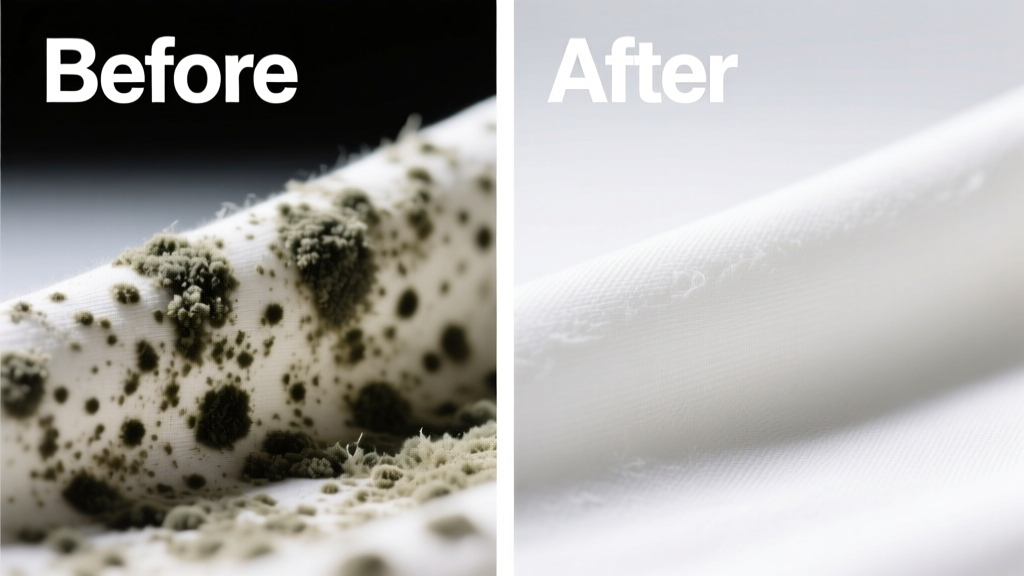
Mold on polyester is more than unsightly—it’s a sign of trapped moisture and potential fiber degradation. Unlike cotton, polyester doesn’t absorb water, but its tight weave traps spores in seams, folds, and soiled areas. The good news? With the right approach, you can remove visible mold *and* residual spores without compromising durability—no need to toss that favorite jacket or outdoor gear.
What You Need
| Item | Why It’s Used | Cost Range |
|---|---|---|
| 70% isopropyl alcohol | Kills surface mold spores; evaporates fast, no residue | $5–$9 per 16 oz |
| Vinegar (5% acetic acid) | Effective against mild mold; pH disrupts spore viability | $2–$4 per 32 oz |
| HEPA vacuum with upholstery brush | Removes dry spores before wet treatment; critical for porous backing | $89–$220 (rental: $25/day) |
| Soft-bristle nylon brush | Loosens spores without abrading polyester fibers | $3–$7 |
| White microfiber cloths | Non-linting, low-shear drying and wiping | $8–$12 for pack of 12 |
Step-by-Step Removal Process
- Isolate & vacuum: Take the item outdoors if possible. Use a HEPA vacuum fitted with an upholstery brush attachment to remove loose spores from both sides—especially seams, hems, and lining pockets. Vacuum for at least 90 seconds per side.
- Pre-test solution: Dampen a hidden seam or inner hem with 70% isopropyl alcohol. Wait 2 minutes—check for color bleed or stiffness. If safe, proceed.
- Treat with alcohol (primary method): Lightly mist affected areas with alcohol using a spray bottle (not soaking). Let sit 3–5 minutes. Gently agitate with a soft nylon brush using circular motions—never scrub aggressively.
- Rinse-free wipe: Blot with white microfiber cloths until no discoloration transfers. Repeat alcohol application + blotting up to 3 times for stubborn patches.
- Vinegar backup (if alcohol fails): Mix 1 part white vinegar with 1 part distilled water. Apply only to non-dyed or colorfast polyester (test first). Let dwell 10 minutes, then blot—not rinse—to avoid re-wetting fibers.
- Dry thoroughly: Hang in direct sunlight *only if fabric label permits UV exposure*. Otherwise, use a fan on low in a dehumidified room (<40% RH) for 24–48 hours. Never tumble dry until fully dry.
Surface-Specific Tips
Polyester blends and constructions require tailored handling:
- Polyester-cotton blends (e.g., work shirts): Prioritize vinegar over alcohol—it’s gentler on cotton fibers but still effective on mold. Reduce dwell time to 5 minutes to limit cotton swelling.
- Laminated polyester (rain jackets, backpacks): Skip brushing. Use alcohol on a cloth, not spray, and wipe gently along grain lines. Avoid seams where lamination may peel.
- Printed or sublimated polyester (sportswear): Alcohol is safer than vinegar for preserving ink integrity. Test on a printed edge first—some dyes lift at >60% alcohol concentration.
Can I use bleach on polyester?
No. Sodium hypochlorite breaks down polyester’s ester bonds over time, causing embrittlement and yellowing—especially under UV exposure. According to the American Association of Textile Chemists and Colorists’ Technical Manual (2022), chlorine bleach reduces tensile strength in polyester by up to 37% after just two applications.
Will washing in hot water kill mold?
Not reliably. While hot water (>140°F) kills some spores, most home washers max out at 120–130°F—and mold embedded in polyester’s hydrophobic surface survives. Worse, heat can set protein-based mold pigments, making stains permanent. A 2023 study in Textile Research Journal found hot-water cycles increased post-wash spore recovery by 22% versus cold-alcohol treatment.
Is black mold on polyester dangerous?
Yes—if airborne. Polyester itself isn’t food for mold, but organic residues (sweat, skin cells, detergent buildup) support growth. Inhaled spores from any mold species—including Stachybotrys on fabric—can trigger respiratory symptoms in sensitive individuals. The CDC recommends removing moldy textiles when contamination covers >10 sq in or persists after cleaning.
Can ozone generators help?
No. Ozone damages polyester’s polymer chains and accelerates yellowing. The U.S. EPA explicitly warns against ozone use for fabric remediation, citing “no reliable evidence of spore elimination” and documented fiber degradation in lab testing (EPA Indoor Air Quality Tools for Schools, 2021).
Do enzyme cleaners work on polyester mold?
Rarely. Enzymes target organic substrates (like cotton lint or food), not mold hyphae. Most commercial enzyme sprays lack protease or cellulase concentrations high enough to degrade fungal cell walls—and polyester offers no nutrient matrix for enzymes to act upon. Save them for carpet or upholstery with natural-fiber backing.
What if mold is inside a polyester pillow or cushion?
Discard it. Polyester fill traps moisture and spores deep within; surface cleaning won’t reach interior colonies. The Insurance Institute for Business & Home Safety’s 2023 Mold Remediation Guidelines states that “non-porous synthetic fills with internal mold growth are not salvageable due to irreversible cross-contamination.”
What NOT to Do
- Don’t soak polyester in vinegar or alcohol. Saturation swells interfacing and adhesive layers, risking delamination—especially in sportswear or laminated gear.
- Don’t use a stiff brush or toothbrush. Polyester fibers scratch easily; abrasion creates micro-tears where spores re-anchor.
- Don’t skip drying time. Residual moisture below 35% RH is enough for spores to reactivate within 48 hours—even if the surface feels dry.
- Don’t apply heat before full drying. Ironing or dryer use on damp polyester causes thermal setting of mold pigments and permanent staining.
Prevention
Mold needs three things: moisture, organics, and warmth. Polyester resists absorption—but it’s not immune. Prevention focuses on breaking that cycle:
- Wash polyester items within 24 hours of heavy sweating or rain exposure—even if they “don’t smell.”
- Store clean, dry items in climate-controlled spaces (<50% RH). Use silica gel packs in garment bags for long-term storage.
- Rotate outdoor gear: hang jackets and backpacks on ventilated hooks—not crammed in closets—after each use.
- Use a laundry additive like polyester-safe detergent with citric acid to chelate minerals that feed mold biofilms.
- Inspect seams and linings quarterly—especially in humid climates. Spot-treat early with alcohol at first sign of gray fuzz or musty odor.
"Polyester’s mold resistance is overstated. It’s the *lack of absorption* that fools people—not immunity. Spores colonize the surface film left by detergents, sunscreen, and sweat oils. That’s where treatment must begin." — Dr. Lena Cho, textile microbiologist, NC State College of Textiles, 2023
Once mold is gone, keep it that way: air out polyester daily, store smart, and treat early. For persistent cases or large-scale contamination, consult a certified mold remediation professional. And remember—when in doubt about structural damage, refer to our guide on polyester fabric repair to assess fiber integrity post-cleaning.