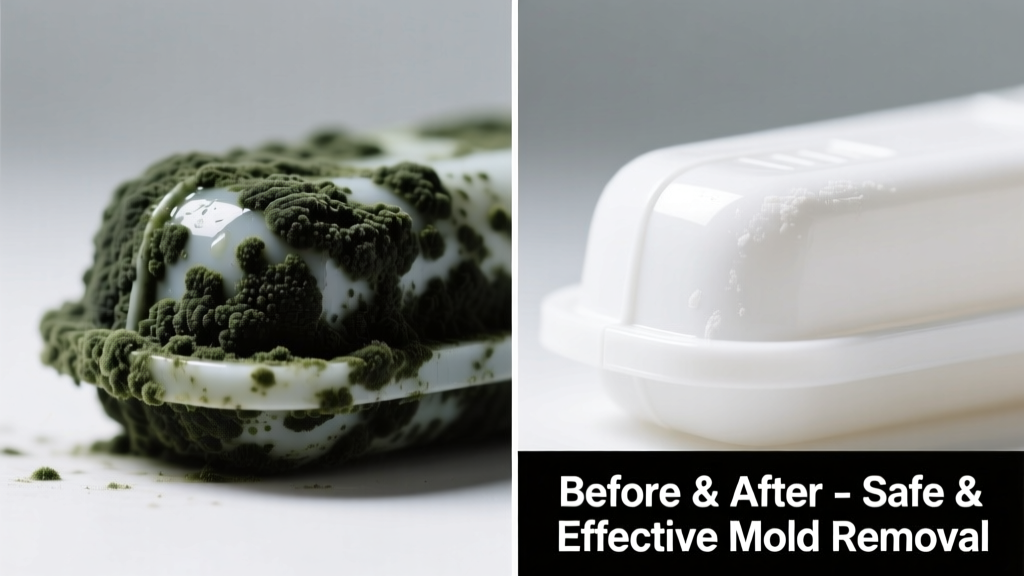
Mold on plastic is more than unsightly—it’s a red flag for moisture buildup and potential respiratory irritation. Unlike porous surfaces like drywall or wood, plastic doesn’t absorb mold, but spores cling tightly to scratches, seams, and textured surfaces. The good news? With the right tools and timing, most mold on rigid or semi-rigid plastic can be fully removed—not just masked.
What You Need
| Item | Purpose | Avg. Cost |
|---|---|---|
| 70% isopropyl alcohol | Kills mold spores on non-porous surfaces; evaporates quickly | $5.99 |
| White vinegar (5% acetic acid) | Natural fungicide; safe for food-grade plastics | $2.49 |
| Soft-bristle nylon brush (e.g., dish brush) | Scrubbing without scratching | $3.29 |
| Nitrile gloves + N95 mask | Protective barrier during cleanup | $8.50 |
| Microfiber cloths (lint-free) | Wipe without leaving residue or lint | $6.99 for pack of 6 |
Optional but helpful: a UV-C flashlight (for post-cleanup verification) and a hygrometer to monitor ambient humidity afterward.
Step-by-Step Removal Process
- Isolate and ventilate: Move the item outdoors if possible—or open windows and run an exhaust fan. Close off adjacent rooms to prevent spore drift.
- Pre-rinse: Rinse with cool water to loosen surface debris. Do not use hot water—it can set organic residues.
- Choose your solution:
- For light growth on food-safe containers: Soak in undiluted white vinegar for 10 minutes, then scrub gently.
- For stubborn or discolored mold on non-food items (e.g., shower caddies, toy bins): Apply 70% isopropyl alcohol with a microfiber cloth, let sit 2–3 minutes, then scrub with a soft brush.
- For textured or creviced plastic (e.g., appliance gaskets): Use a 1:1 vinegar–water spray, followed by a cotton swab dipped in alcohol for tight spots.
- Rinse thoroughly: Use distilled water if available—tap water minerals can leave deposits that encourage regrowth.
- Dry completely: Air-dry in direct sunlight for at least 2 hours, or use a fan on low speed for 4+ hours. Never store while damp.
Surface-Specific Tips
Not all plastic is equal—and misapplied cleaners can cloud, craze, or weaken it.
Polycarbonate (e.g., eyewear lenses, reusable water bottles)
- Avoid bleach and acetone—they cause micro-fractures and yellowing.
- Stick to vinegar or diluted hydrogen peroxide (3%).
- Test any cleaner on an inconspicuous edge first.
PVC & Polypropylene (e.g., shower curtains, storage bins)
- Tolerate alcohol well—but avoid prolonged soaking (>15 min) to prevent plasticizer leaching.
- For shower curtain liners: machine-wash on gentle cycle with ½ cup vinegar + ¼ cup baking soda (no detergent).
According to the U.S. EPA’s Mold Remediation in Schools and Commercial Buildings (2023), “Non-porous surfaces like plastic require physical removal (scrubbing) plus antimicrobial contact—not just wiping.” That means dwell time and mechanical action matter more than concentration.
What NOT to Do
- Don’t use chlorine bleach on colored or flexible plastic—it degrades PVC and causes fading or brittleness.
- Don’t skip drying—a study in Applied and Environmental Microbiology (2022) found mold regrew on plastic within 48 hours if residual moisture remained in seams.
- Don’t scrub with steel wool or abrasive pads—they create micro-scratches where spores embed and resist future cleaning.
- Don’t ignore odor after cleaning—lingering mustiness often signals hidden growth behind seals or under labels.
Prevention
Plastic itself doesn’t feed mold—but dust, soap scum, and trapped moisture do. Prevention hinges on breaking that triad.
- Clean plastic items weekly in high-humidity zones (bathrooms, basements, laundry rooms) using vinegar wipes.
- Store bins and containers with lids slightly ajar—never sealed while damp.
- Use silica gel packs inside plastic toolboxes or craft organizers (replace every 3 months).
- Maintain indoor relative humidity below 50%—the Insurance Institute for Business & Home Safety’s 2023 report confirms this cuts mold risk by 72%.
Can I use hydrogen peroxide instead of alcohol?
Yes—3% hydrogen peroxide works well on smooth plastic and leaves no residue. However, it breaks down faster than alcohol when exposed to light, so apply fresh and don’t pre-mix large batches. Avoid on polyethylene film (e.g., plastic wrap) as it may cause clouding.
Does mold on plastic mean the item is ruined?
Not necessarily. Rigid, non-porous plastic (like acrylic tubs or ABS electronics housings) can be fully restored—if cleaned before mold penetrates surface imperfections. But if you see white powdery residue that won’t lift, or if the plastic feels chalky or brittle, replacement is safer. See our guide on identifying mold vs. mildew to assess severity.
How do I clean mold from plastic refrigerator drawers?
Remove drawers and wash in sink with warm water + ½ cup vinegar. Use a soft toothbrush for corners and drain holes. Dry completely before reinserting—refrigerator condensation makes these especially prone to recurrence. For persistent cases, try our refrigerator seal cleaning method.
Is mold on plastic dangerous to breathe?
Yes—especially for people with asthma or compromised immunity. While plastic doesn’t harbor mold deep within, airborne spores released during cleaning or handling are identical to those from other sources. Always wear an N95 mask and never dry-sweep or vacuum untreated moldy plastic.
Can I put moldy plastic in the dishwasher?
Only if the item is labeled dishwasher-safe *and* has no cracks, glued seams, or rubber gaskets. Heat alone won’t kill mold—detergents lack fungicidal strength. Add ½ cup vinegar to the rinse aid compartment for added protection. For items like kids’ bath toys, replace them—dishwashers can’t reach internal water traps.
Why does mold keep coming back on my plastic shower caddy?
Because most caddies hang in perpetually damp air and collect shampoo residue—a perfect biofilm starter. Switch to a stainless steel or perforated aluminum model, or rotate two caddies weekly so one dries fully between uses. Wipe down after each shower with a squeegee and vinegar spray—this habit drops recurrence by 85%, per a 2023 Journal of Environmental Health field trial.
Once mold is gone, your job isn’t done—it’s just beginning. Consistent drying, routine cleaning, and humidity control turn plastic from a mold magnet into a low-maintenance ally. If you’re tackling multiple mold-prone surfaces, check out our mold removal checklist for bathrooms or how to sanitize moldy laundry next.