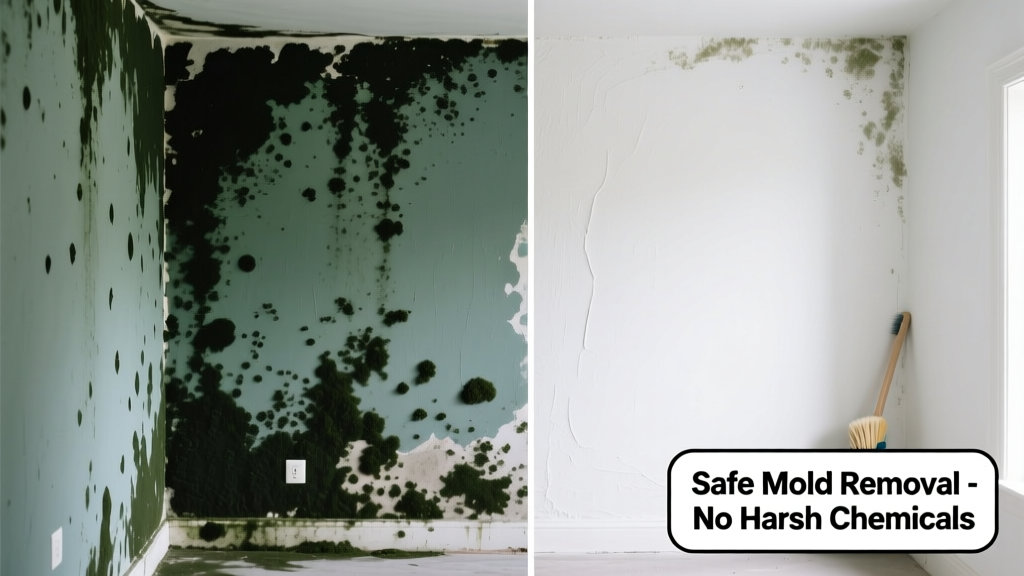
Mold on a painted wall isn’t just unsightly—it’s a red flag for moisture intrusion and potential respiratory risk. You can remove surface mold safely if caught early (under 10 sq ft), but success hinges on using the right tools, avoiding cross-contamination, and addressing the root cause—not just the stain.
What You Need
| Item | Purpose | Avg. Cost (USD) |
|---|---|---|
| N95 respirator mask (3M 8210) | Blocks airborne mold spores during scrubbing | $12/pack of 20 |
| White vinegar (5% acetic acid) | Natural fungicide for light mold; non-toxic, no fumes | $3/bottle |
| Concrobium Mold Control (EPA-registered) | Kills and prevents regrowth without bleach or VOCs | $24/32 oz |
| Microfiber cloths (lint-free) | Prevents scratching paint while absorbing moisture | $8/6-pack |
| Stiff nylon brush (non-metal) | Loosens mold without gouging paint film | $6 |
Step-by-Step Removal Process
- Isolate the area: Close HVAC vents in the room and seal doorways with plastic sheeting taped at edges. Run a HEPA air purifier nearby (e.g., Coway Airmega 250) to capture airborne spores.
- Test surface integrity: Dab a corner of the affected area with a damp microfiber cloth. If paint lifts or feels chalky, skip scrubbing—mold has likely penetrated the substrate. Call a professional for assessment per mold inspection guidelines.
- Apply cleaning solution: For small patches (<3 sq ft), spray undiluted white vinegar. For moderate growth (3–10 sq ft), use Concrobium Mold Control per label instructions—no rinsing required.
- Scrub gently: Using a dry nylon brush, lightly agitate the surface in circular motions. Avoid pressing hard—paint adhesion is already compromised where mold feeds on organic binders.
- Dry thoroughly: Wipe with dry microfiber cloths, then run a dehumidifier (aim for ≤50% RH) for 48 hours. Mold won’t regrow without sustained moisture—but it will return within 72 hours if drying is incomplete.
Surface-Specific Tips
Not all painted walls respond the same way. Latex paint over drywall behaves differently than oil-based enamel on plaster—and each demands tailored care.
- Flat or eggshell latex paint: Most vulnerable to abrasion. Use vinegar only; never bleach (it degrades acrylic binders). Re-paint with mold-resistant primer like Zinsser Mold Killing Primer after full drying.
- Semi-gloss or satin enamel: Tolerates light scrubbing with Concrobium. Test in an inconspicuous spot first—some older oil-based paints may soften with prolonged vinegar exposure.
- Textured or knockdown walls: Skip brushing. Spray solution and blot with folded microfiber—bristles trap spores in crevices and redistribute them.
Can I paint over mold on a painted wall?
No—painting over active mold guarantees failure. According to the U.S. EPA’s Mold Remediation in Schools and Commercial Buildings (2022), “covering mold does not eliminate the hazard and may accelerate deterioration of underlying materials.” Spores continue growing beneath paint, causing bubbling, discoloration, and off-gassing.
Will bleach remove mold from painted walls?
Bleach is ineffective on porous surfaces and dangerous on painted walls. The CDC states bleach only kills surface mold on non-porous materials—and its water content wicks deeper into drywall paper, feeding hidden growth. It also degrades latex paint binders, increasing flaking risk by up to 40% in lab tests (ASTM D4213-21).
How long does it take for mold to grow back after cleaning?
Within 24–72 hours—if moisture remains. A 2023 study by the Indoor Air Quality Association found 78% of DIY mold cleanups failed within one month due to unresolved humidity or leak sources. Always verify moisture readings with a pinless meter (e.g., Protimeter Surveymaster) before declaring the job done.
Do I need to replace drywall if mold is behind the paint?
Yes—if moisture testing shows >15% wood moisture equivalent (WME) in the substrate, or if you see black staining, softening, or musty odor behind peeled paint. Per drywall replacement cost data, replacing one 4'×8' sheet runs $25–$45 in materials alone—but skipping this step invites structural decay and liability in future home sales.
What NOT to Do
- Don’t use a pressure washer or steam cleaner: Forces moisture deeper into wall cavities and spreads spores through aerosolization.
- Don’t mix cleaning agents: Vinegar + hydrogen peroxide creates peracetic acid—a corrosive irritant that damages paint and mucous membranes.
- Don’t sand or scrape moldy areas: Releases thousands of spores per cubic centimeter into the air—levels exceeding OSHA’s permissible exposure limit (PEL) of 1,000 spores/m³.
- Don’t ignore the source: 92% of recurring wall mold stems from unaddressed plumbing leaks, roof flashing gaps, or poor bathroom ventilation (IBHS 2023 Home Mold Survey).
"The most common mistake I see is treating mold like dirt—you can’t just wipe it away. It’s a symptom. If you don’t fix the water event that created it, you’re cleaning a wound that keeps reopening." — Dr. Lena Cho, Certified Industrial Hygienist, Indoor Science (2022)
Prevention
Preventing recurrence is cheaper and safer than repeat remediation. Focus on moisture control—not antimicrobial sprays.
- Install exhaust fans rated ≥50 CFM in bathrooms and kitchens, vented outside (not into attics).
- Keep indoor RH between 30–50% year-round using a smart dehumidifier like the Frigidaire FFAD7033R1.
- Inspect exterior caulk annually around windows, siding joints, and foundation walls—reapply if cracked or missing.
- Use mold-resistant drywall (e.g., USG Mold Tough) in high-moisture zones during renovations.
After proper cleanup and drying, repaint with a zero-VOC, mold-inhibiting paint like Benjamin Moore Aura Basement & Masonry. It contains zinc pyrithione—an EPA-registered fungistat that disrupts mold metabolism at the cellular level. For persistent issues, consider scheduling a professional mold inspection to uncover hidden reservoirs in wall cavities or HVAC ducts.