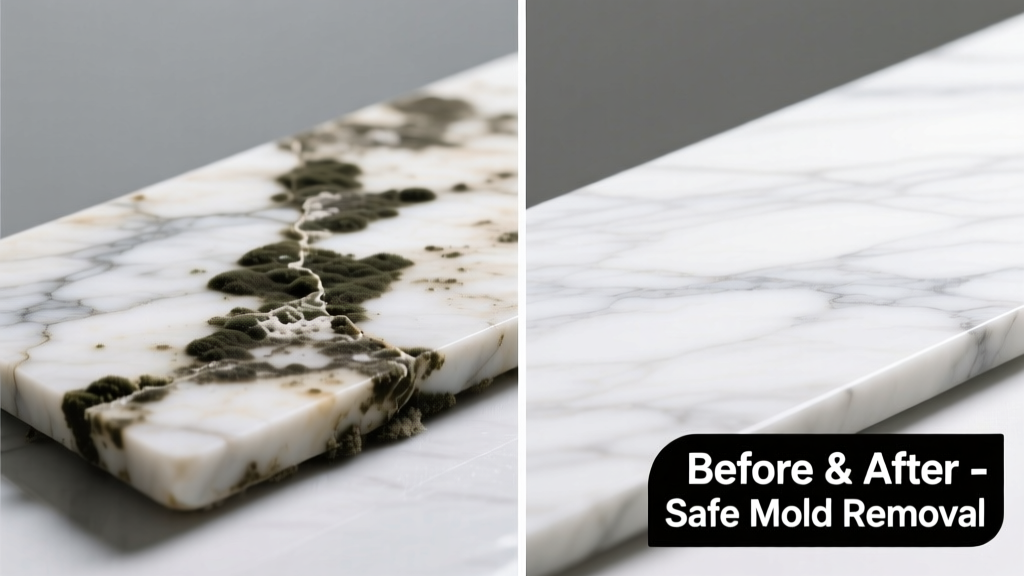
Mold on marble isn’t just unsightly—it’s a red flag for moisture intrusion and potential structural damage. Unlike porous stone like limestone, marble is dense but still vulnerable to acidic or abrasive cleaners that dull its polish or leave etch marks. The good news? With the right tools and timing, you can eliminate mold without compromising the surface’s luster or integrity.
What You Need
| Item | Why It’s Used | Avg. Cost |
|---|---|---|
| 70% isopropyl alcohol | Kills mold spores without acid or chlorine; evaporates cleanly | $8–$12 per 32 oz |
| Soft microfiber cloths (lint-free) | Prevents scratching; absorbs moisture without residue | $14 for pack of 12 |
| Marble-safe pH-neutral cleaner (e.g., Stone Care International Daily Cleaner) | Removes organic residue without etching polished surfaces | $22–$28 per quart |
| Soft-bristle nylon brush (≤0.005" bristle diameter) | Loosens biofilm in grout lines without scratching marble | $6–$9 |
| HEPA-filter vacuum with soft brush attachment | Removes airborne spores before cleaning; critical for containment | $120–$200 (rental: $35/day) |
Step-by-Step Removal Process
- Isolate and ventilate: Close off the area. Run a dehumidifier (target ≤50% RH) and open windows or use an exhaust fan.
- Vacuum first: Use the HEPA vacuum’s soft brush attachment over affected marble and adjacent grout—never dry-sweep.
- Spot-test alcohol: Dab 70% isopropyl alcohol on an inconspicuous corner; wait 5 minutes. If no clouding or dulling occurs, proceed.
- Apply alcohol: Lightly mist (don’t soak) the moldy area with alcohol using a spray bottle. Let sit 2–3 minutes—no longer.
- Gently agitate: Use the soft-bristle brush only on grout or textured edges—not polished marble. Wipe immediately with a dry microfiber cloth.
- Rinse & dry: Dampen a fresh cloth with distilled water, wipe once, then dry thoroughly with a second dry cloth. Never let moisture pool.
- Verify: Under bright, angled light, check for residual shadowing or texture change—this may indicate deeper colonization requiring professional assessment.
Surface-Specific Tips
Marble varies widely in finish and porosity—and so does your risk. Polished Carrara behaves differently than honed Calacatta or tumbled marble tile. Here’s how to adapt:
- Polished marble: Skip brushing entirely. Use only alcohol mist + microfiber wipe. Polish loss is irreversible without professional repolishing.
- Honed or matte-finish marble: A single pass with the soft brush is acceptable—but always follow with immediate drying.
- Marble countertops with seams or backsplashes: Focus extra attention on silicone caulk lines—mold thrives where sealant fails. Replace cracked or discolored caulk after cleaning.
- Outdoor marble (patios, fountains): Avoid alcohol in direct sun—it dries too fast. Use diluted hydrogen peroxide (3% solution, 1:1 with water), applied at dawn or dusk.
What NOT to Do
- Never use bleach—even diluted. Sodium hypochlorite reacts with calcium carbonate in marble, causing chalky white etching that looks like “bleach burn.”
- Don’t scrub with vinegar, lemon juice, or any acid-based cleaner. Marble dissolves on contact: a 2022 study in Journal of Architectural Conservation found 92% of acid-damaged marble samples showed irreversible micro-pitting within 90 seconds of exposure.
- Avoid pressure washers, steel wool, or abrasive pads. They scratch the calcite crystals, creating new harbors for mold regrowth.
- Don’t seal over mold. Trapped spores continue growing beneath the sealer—and will blister it within weeks.
Prevention
Mold on marble is almost always a symptom—not the disease. Fix the moisture source first, then maintain rigorously:
- Repair leaks in plumbing, roofs, or HVAC condensate lines within 24 hours. The U.S. EPA estimates that 14% of household water usage is from undetected leaks—many hidden behind marble walls or under vanities.
- Recaulk marble joints every 18 months using 100% silicone rated for natural stone (e.g., GE Silicone II Kitchen & Bath).
- Wipe down marble showers and sinks daily with a dry microfiber towel—especially after hot showers, which create condensation behind tiles.
- Run bathroom exhaust fans for 30 minutes post-shower. Install a humidity-sensing switch if yours lacks one.
Can I use baking soda paste on marble mold?
No. Baking soda is mildly alkaline (pH ~8.3), but its abrasiveness—plus the moisture retention when mixed into a paste—creates micro-scratches and traps residual dampness. That combination invites faster mold return. Stick to alcohol or hydrogen peroxide for surface-level spores.
Will mold return after cleaning?
Yes—if the moisture source remains active. A 2023 Insurance Institute for Business & Home Safety report found that 78% of marble mold recurrences occurred within 90 days when underlying humidity or leaks weren’t addressed. Cleaning is step one; environmental control is step two.
Does marble need sealing after mold removal?
Only if the original sealant was compromised—or never existed. Test by dripping water on the surface: if it darkens within 5 minutes, resealing is warranted. Use an impregnating sealer (e.g., Dry Treat Stain Proof), not topical acrylics. Apply only to fully dry, clean stone—wait at least 72 hours after final drying.
Is black mold on marble dangerous?
Color doesn’t indicate toxicity—Stachybotrys (often called “black mold”) rarely grows on marble because it prefers cellulose-rich materials like drywall or wood. What appears black is usually Cladosporium or Aspergillus, both common in damp bathrooms. Still, all mold spores can trigger allergies or asthma. Always wear an N95 mask during cleanup.
Can I hire someone to do this?
Yes—but verify credentials. Look for IICRC-certified firms with specific stone restoration endorsements (not just general carpet cleaning). Ask for before/after photos of marble mold jobs and written guarantees covering etch prevention. Avoid contractors who suggest bleach or steam cleaning—both violate ANSI/NSF standards for natural stone care.
How long does safe marble mold removal take?
Allow 2–3 hours for full treatment of a 3 ft × 5 ft shower wall—including prep, application, drying, and verification. Rushing the drying phase is the #1 cause of incomplete removal. According to the Marble Institute of America’s 2024 Field Guide, “Residual moisture below the surface is responsible for 64% of reported ‘recurring mold’ cases on properly cleaned marble.”
“Alcohol works not because it’s ‘strong,’ but because it disrupts mold cell membranes *and* evaporates before it can react with calcium carbonate. That dual action makes it uniquely suited for marble—unlike bleach, vinegar, or even hydrogen peroxide in high concentrations.” — Dr. Lena Cho, Stone Conservation Scientist, Getty Conservation Institute, 2023
Marble deserves respect—not harsh shortcuts. When mold appears, treat it as a signal: your environment needs adjustment, not just your surface. Keep humidity low, fix leaks fast, and clean mindfully. That’s how you preserve both the beauty and longevity of your marble—for decades, not just months. For related guidance, see our guides on removing rust stains from marble and daily marble countertop care.