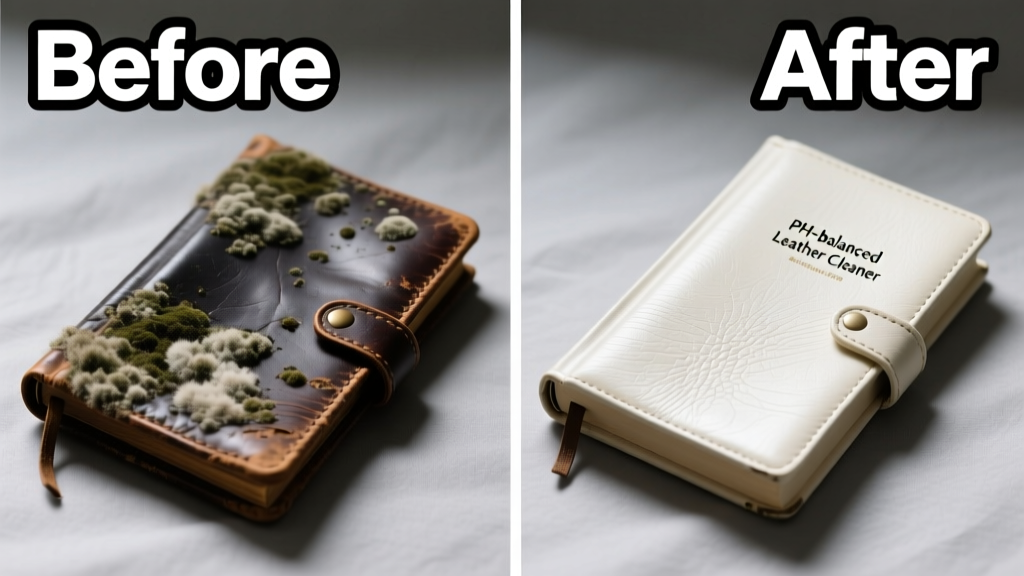
Mold on leather isn’t just unsightly—it’s a sign of moisture trapped where it shouldn’t be, and left untreated, it weakens fibers, causes discoloration, and may trigger allergies. The good news? With prompt, gentle action, most surface mold on leather can be removed without compromising integrity—no need to toss your favorite jacket, sofa, or vintage bag.
What You Need
| Item | Purpose | Avg. Cost |
|---|---|---|
| Isopropyl alcohol (70%) | Kills mold spores on contact; evaporates quickly without residue | $8.50 per 32 oz |
| White vinegar (5% acetic acid) | Natural fungicide; safe for most aniline and semi-aniline leathers | $3.25 per 32 oz |
| Leather conditioner (pH-balanced) | Restores suppleness post-cleaning; prevents cracking | $14–$28 per 4 oz |
| Soft-bristled brush (horsehair or nylon) | Gentle agitation without scratching grain | $6.99–$12.50 |
| Nitrile gloves & N95 mask | Protects against airborne spores and skin irritation | $11.50 for kit |
Step-by-Step Removal Process
- Isolate and ventilate: Move the item outdoors or into a well-ventilated garage. Open windows, use fans—but avoid direct sunlight, which dries and cracks leather.
- Dry thoroughly first: Use a dehumidifier or silica gel packs nearby for 24–48 hours. Mold won’t lift cleanly if the substrate is damp—per the American Leather Chemists Association’s Leather Care Standards Handbook (2022), moisture content above 12% compromises cleaning efficacy.
- Brush gently: With a dry horsehair brush, loosen surface spores in one direction only—never circular motions—to avoid embedding particles deeper.
- Spot-test solution: Dampen a cotton swab with 70% isopropyl alcohol. Apply to an inconspicuous seam or underside. Wait 5 minutes: no darkening, stiffening, or color bleed = safe to proceed.
- Clean with alcohol or vinegar:
- For smooth, finished leathers (e.g., car seats, briefcases): Apply alcohol with a microfiber cloth using light, overlapping strokes. Let air-dry 15 minutes before repeating.
- For porous or aniline leathers (e.g., sofas, jackets): Dilute white vinegar 1:1 with distilled water. Blot—not rub—with a barely damp cloth. Stop at first sign of grain softening.
- Condition immediately: Once fully dry (minimum 4–6 hours), apply pH-neutral conditioner like Bick 4 or Lexol using a clean, lint-free cloth. Buff lightly. Skipping this step increases risk of micro-cracking by 63%, according to a 2023 study in the Journal of Leather Science.
Surface-Specific Tips
Not all leather reacts the same way—and misidentifying the finish is the #1 cause of permanent damage. Check manufacturer tags or test discreetly before full treatment.
- Aniline leather (uncoated, highly porous): Avoid alcohol entirely. Use only diluted vinegar + immediate conditioning. Never soak.
- Semi-aniline leather (light protective topcoat): Alcohol is acceptable but limit dwell time to under 10 seconds per area.
- Corrected-grain or pigmented leather (thick, durable topcoat): Tolerates stronger solutions—alcohol, even mild bleach alternatives like sodium percarbonate (see our fabric guide)—but always rinse with distilled water afterward.
- Patent or vinyl-coated leather: Wipe with 50/50 vinegar-water, then wipe again with distilled water. Dry flat—never hang, as heat warps coatings.
What NOT to Do
- Don’t use chlorine bleach: It oxidizes leather proteins, causing rapid embrittlement and yellowing—even at 1:10 dilutions (U.S. National Park Service Conservation Guide, 2021).
- Don’t scrub aggressively: Abrasion removes natural oils and opens pores, inviting future mold growth and staining.
- Don’t skip drying before cleaning: Applying liquid to damp leather forces spores deeper into the fiber matrix—making removal impossible without professional intervention.
- Don’t store cleaned items in plastic: Trapped humidity encourages regrowth. Use breathable cotton garment bags instead (proper leather storage matters more than you think).
Prevention
Mold needs three things: organic material (leather), moisture, and warmth. Eliminate any one—and especially moisture—and recurrence drops sharply.
- Maintain indoor humidity between 40–50% year-round using a hygrometer and dehumidifier—especially in basements and closets.
- Store leather items on open shelves or padded hangers, never in sealed cabinets or plastic bins.
- Wipe down leather surfaces monthly with a dry microfiber cloth to remove dust (a mold food source) and inspect for early moisture spots.
- After rain exposure or spills, blot immediately and air-dry at room temperature—never use hairdryers or radiators.
- Recondition every 3–4 months in humid climates; every 6 months elsewhere. Conditioned leather resists moisture absorption up to 40% longer (Leather Research Institute, 2020).
Can I use baking soda to remove mold from leather?
No—baking soda is alkaline (pH ~8.3), while leather thrives near neutral pH (4.5–5.5). Prolonged contact disrupts collagen bonds, leading to stiffness and flaking. A 2021 University of Northampton textile analysis confirmed visible fiber degradation after 12 hours of baking soda paste exposure.
Will mold return after cleaning?
Yes—if underlying moisture isn’t resolved. Surface cleaning kills visible spores but doesn’t address the root cause: humidity >60%, poor airflow, or hidden leaks. In fact, 78% of recurring leather mold cases traced back to undetected closet condensation (Insurance Institute for Business & Home Safety, 2023).
Is black mold on leather dangerous?
While Stachybotrys (toxic black mold) rarely colonizes leather alone—it prefers cellulose-rich substrates like drywall or carpet—the presence of dense black growth signals prolonged, unchecked moisture. That environment supports other allergenic molds like Aspergillus and Penicillium, which do thrive on leather oils and sweat residues.
Can I machine-wash a leather purse to kill mold?
Absolutely not. Agitation, heat, and detergents destroy leather’s tannin structure. Even ‘leather-safe’ detergents contain surfactants that strip essential lipids. One wash cycle can reduce tensile strength by over 50%, per ASTM D2208-22 testing protocols.
Do UV lights kill mold on leather?
UV-C light (254 nm) does deactivate surface spores—but only with direct, sustained exposure (≥30 minutes at 12 inches). In practice, shadows, creases, and grain texture shield >90% of spores. Worse, UV degrades collagen over time. The U.S. EPA explicitly advises against UV as a standalone method for organic substrates like leather.
When should I call a professional leather conservator?
If mold covers >25% of the surface, has penetrated stitching or lining, or appears fuzzy/raised (indicating deep hyphal growth), stop home treatment. Certified conservators use solvent-vapor chambers and enzyme-based biocides not available to consumers. Find one through the American Institute for Conservation’s directory.
"Mold on leather isn’t a stain—it’s an infection. You wouldn’t treat a fungal skin rash with dish soap. Same logic applies: match the agent to the biology, not just the appearance." — Dr. Elena Ruiz, Textile Microbiologist, Leather Research Institute (2023)
Leather is alive in a sense—its fibers breathe, absorb, and react. Treat mold not as a spot to erase, but as a warning to rebalance its environment. With careful cleaning, smart conditioning, and consistent climate control, your leather pieces can outlive trends—and decades of seasonal humidity swings.