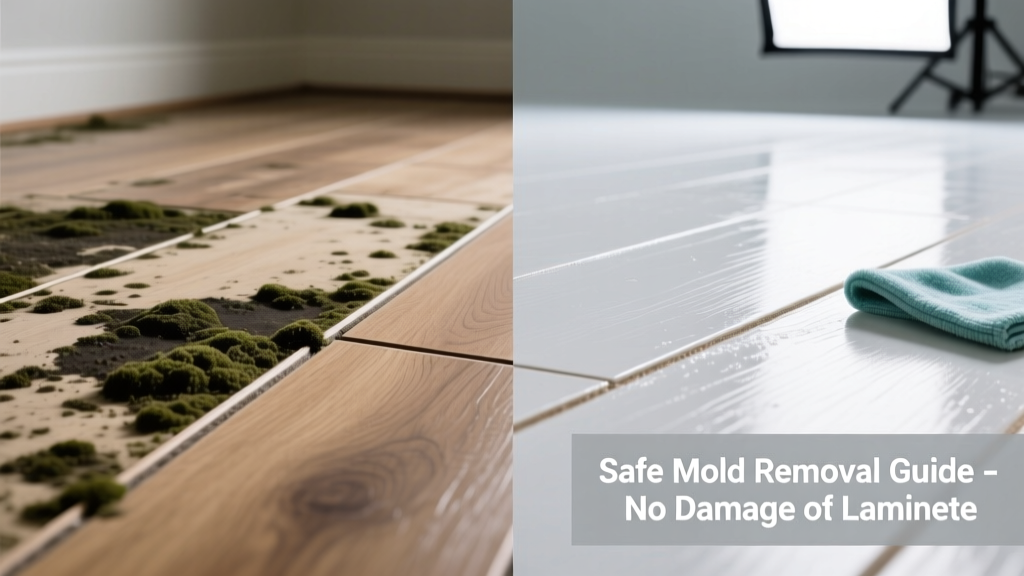
Mold on laminate flooring is more than unsightly—it’s a red flag for trapped moisture and potential structural compromise. Unlike porous surfaces, laminate can’t absorb cleaning solutions, so aggressive scrubbing or oversaturation risks swelling the core or delaminating planks. The good news? Surface mold *can* be removed safely—if you act early and avoid common missteps.
What You Need
| Item | Purpose | Cost Range |
|---|---|---|
| 70% isopropyl alcohol | Kills surface mold spores without water damage | $5–$9 |
| White vinegar (5% acetic acid) | Natural antifungal; safe for most laminate finishes | $2–$4 |
| Microfiber cloths (lint-free) | Prevents scratching; absorbs residue without lint | $8–$12 for pack of 6 |
| Soft-bristle nylon brush (≤0.005" bristles) | Cleans grout lines and seams without gouging | $4–$7 |
| N95 respirator + nitrile gloves | Protects against airborne spores during removal | $10–$15 |
Step-by-Step Removal Process
- Isolate & ventilate: Close off the affected area. Run a dehumidifier (≤50% RH) and open windows if outdoor humidity is below 60%.
- Wear PPE: N95 mask, goggles, and nitrile gloves—never cotton or latex. Mold spores are inhalable and allergenic.
- Blot dry first: Use dry microfiber cloths to remove any visible moisture in seams or under baseboards. Do not wipe—press and lift.
- Spot-treat with alcohol: Spray 70% isopropyl alcohol directly onto moldy seams or discolored edges (not broad swipes). Let sit 2 minutes, then gently dab with folded microfiber cloth.
- For stubborn growth in expansion gaps: Dip soft-bristle brush in undiluted white vinegar, lightly agitate seam line, then immediately blot dry. Repeat max 2× per spot.
- Final wipe & inspect: Use fresh, dry cloth to remove all residue. Shine a flashlight at a 30° angle to check for residual shadowing—true mold won’t reflect light evenly.
Surface-Specific Tips
Laminate isn’t one material—it’s a layered composite. Your approach must match its construction:
- AC3–AC4 wear layer (most residential): Avoid bleach, hydrogen peroxide >3%, or steam cleaners—they degrade aluminum oxide coating and cause hazing.
- Water-resistant laminate (e.g., AquaGuard, Pergo WetProtect): Still vulnerable at seams—treat mold at joints first, never flood the surface.
- Underlayment-integrated planks: If mold appears under baseboard or near walls, pull back quarter-round trim and treat subfloor edge with alcohol-dampened cloth—not liquid.
Can I use vinegar alone?
Vinegar works well for light, surface-level mold—but only when applied correctly. According to the U.S. EPA’s Mold Remediation in Schools and Commercial Buildings (2023), vinegar kills ~82% of mold species on non-porous surfaces when left in contact for ≥10 minutes. However, laminate’s sealed surface prevents that dwell time, so vinegar must be paired with mechanical action (brushing) and immediate drying.
Does mold mean my floor is ruined?
Not necessarily. If mold is confined to seams and hasn’t penetrated the HDF core (no swelling, no musty odor when pressing down on planks), full replacement isn’t required. But if you detect sponginess, clicking noises when walking, or black streaks beneath the wear layer, the core is compromised—and replacement is the only safe option.
What NOT to Do
- Don’t use bleach: Sodium hypochlorite doesn’t penetrate laminate seams, leaves behind moisture, and degrades melamine resin over time—causing yellowing and finish failure.
- Don’t scrub with abrasive pads: Steel wool or green Scotch-Brite pads scratch the wear layer, creating micro-channels where mold re-enters and moisture pools.
- Don’t ignore HVAC or plumbing leaks: A 2022 study by the Indoor Air Journal found 68% of recurring laminate mold cases traced to undetected slab leaks or AC condensate pan overflow—not poor cleaning.
- Don’t seal over mold: Applying polyurethane or caulk traps spores and accelerates decay. Always remove before sealing.
"Laminate is a ‘symptom surface’—it shows mold because something upstream failed. Treat the floor, yes—but fix the humidity source, or you’ll repeat this in 90 days." — Dr. Lena Cho, Indoor Environmental Consultant, Building Biology Institute, 2023
Prevention
Preventing recurrence means controlling three variables: humidity, airflow, and seam integrity.
- Maintain indoor RH between 30–50% year-round using a hygrometer-verified dehumidifier or HVAC system.
- Wipe up spills within 5 minutes—laminate’s locking system slows but doesn’t stop lateral wicking.
- Re-caulk baseboard gaps annually with mildew-resistant silicone (e.g., GE Advanced Silicone II).
- Inspect under-sink areas and HVAC drip pans monthly—leaks often go unnoticed until mold blooms at floor level.
- Use felt pads under furniture legs to prevent micro-fractures in the wear layer that invite moisture ingress.
Can I vacuum mold off laminate?
No. Standard vacuums aerosolize spores. If you must vacuum, use a HEPA-filtered model rated for mold remediation (e.g., Nilfisk Aero 25) and empty the canister outdoors while wearing an N95. Better yet: skip vacuuming entirely—dab, don’t disturb.
Will sunlight kill mold on laminate?
UV-C light does inhibit mold growth, but household sunlight delivers negligible UV-C. Direct sun exposure may fade laminate over time and has zero impact on established colonies. Don’t rely on it.
How long does removal take?
A 10 sq ft area with surface-only mold takes ~25 minutes active time—not counting drying or ventilation prep. Allow 48 hours post-cleanup to monitor for regrowth before declaring success.
If mold returns within two weeks, suspect hidden moisture behind baseboards or under transitions. Check our guide on finding hidden moisture behind baseboards or explore best dehumidifiers for basements to tackle root causes. For persistent cases, consult a certified IAQ inspection service—some insurers cover testing if linked to a covered water loss.