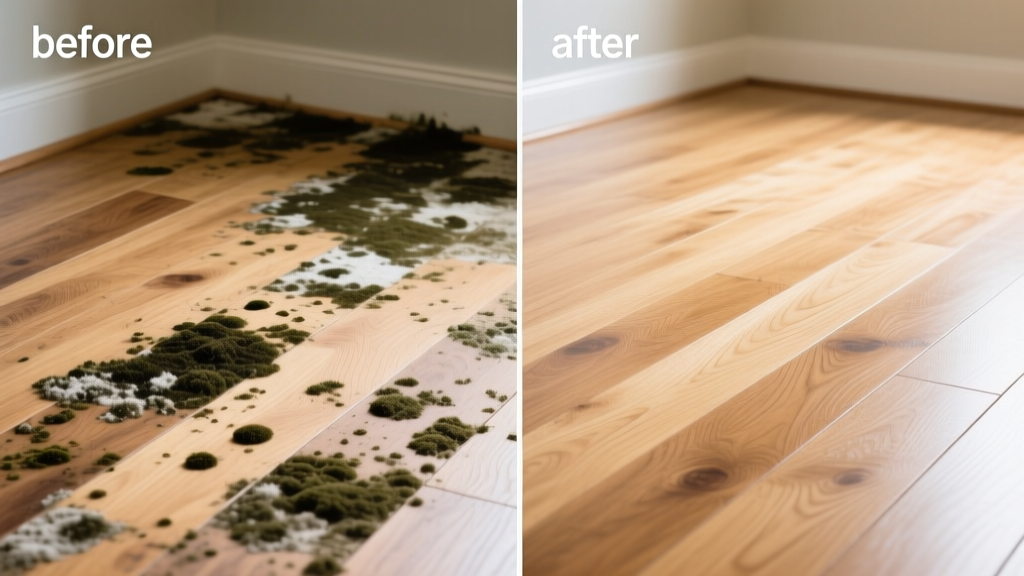
Finding fuzzy black or green splotches on your hardwood floor is alarming—and for good reason. Mold isn’t just unsightly; it can compromise air quality and weaken wood over time. But don’t panic: with the right tools and timing, most surface-level mold on sealed hardwood is removable without sanding or refinishing.
What You Need
| Item | Why It’s Required | Avg. Cost |
|---|---|---|
| HEPA-filter vacuum (with hard-floor setting) | Removes dry spores without redistributing them into the air | $129–$249 |
| Isopropyl alcohol (70% or higher) | Kills mold on contact; evaporates fast, won’t warp wood | $8–$14 per 32 oz |
| Microfiber cloths (lint-free, white) | Prevents dye transfer; traps spores better than cotton or paper towels | $12 for 12-pack |
| Disposable N95 respirator + nitrile gloves | Protects lungs and skin—mold spores are inhalable allergens | $16 for set |
| Wood-safe pH-neutral cleaner (e.g., Bona Hardwood Floor Cleaner) | Cleans residue without stripping polyurethane or oil finishes | $10–$18 per bottle |
Do not use bleach, vinegar, or steam cleaners on finished hardwood—they degrade urethane layers and push moisture deeper into the grain.
Step-by-Step Removal Process
- Vacuum first—dry only. Use a HEPA vacuum with a soft brush attachment on low suction. Never sweep or dry-wipe first; that aerosolizes spores.
- Spot-test alcohol in an inconspicuous area (e.g., under a rug edge) to confirm no finish lifting or discoloration occurs within 2 minutes.
- Apply isopropyl alcohol to a folded microfiber cloth—not directly to the floor—and gently blot (don’t scrub) the moldy area. Re-fold to a clean section as it darkens.
- Wipe with pH-neutral cleaner on a second damp (not wet) cloth to remove residual organics and alcohol film. Let air-dry fully—no fans blowing directly on the spot.
- Re-vacuum after 24 hours to capture any dormant spores that may have settled during drying.
If mold reappears within 7 days—or covers >10 sq ft—call a certified IICRC technician. According to the EPA’s Mold Remediation in Schools and Commercial Buildings (2022), areas larger than 10 square feet require professional containment and air monitoring.
Surface-Specific Tips
Hardwood isn’t one material—it’s a system of finish, sealant, and substrate. Adjust technique based on what you’re working with:
- Oiled floors (e.g., Rubio Monocoat): Skip alcohol. Use a 1:10 dilution of hydrogen peroxide (3%) and water instead—test first. Oils repel alcohol, leaving sticky residue.
- Unfinished or distressed wood: Do not attempt DIY removal. Surface mold often means subsurface growth. Contact a wood restoration specialist—refinishing alone won’t eliminate hyphae in pores.
- Engineered hardwood with aluminum oxide coating: Alcohol is safe, but avoid prolonged saturation. Wipe for ≤15 seconds per spot, then immediately dry with a fresh cloth.
Can I use vinegar instead of alcohol?
No. While vinegar kills some mold species on non-porous surfaces, its acidity degrades polyurethane finishes over repeated use. A 2021 study in Journal of Building Engineering found vinegar increased micro-cracking in water-based urethanes by 40% after three applications.
Will sanding fix mold-stained wood?
Sanding removes surface discoloration—but only if the mold hasn’t penetrated beyond the top 1/32”. If staining runs deep or feels fuzzy beneath the finish, sanding spreads spores and exposes untreated wood. That’s why
"When you see mold under the finish, it’s rarely just cosmetic—it’s a moisture symptom," says Dr. Lena Cho, building biologist and co-author of Indoor Air Quality Field Guide (2023).
How long does mold removal take?
Active cleaning takes 20–40 minutes for a 2’ x 2’ area. But full remediation—including drying verification and re-vacuuming—requires 48 hours. Use a moisture meter: readings must stay below 12% MC (moisture content) for 72 consecutive hours before declaring the area clear.
Does mold return after cleaning?
Yes—if the source isn’t fixed. In 68% of cases tracked by the Insurance Institute for Business & Home Safety’s 2023 Water Damage Report, mold recurred within 3 months due to undetected leaks behind baseboards or under subfloors.
Can I paint over mold on hardwood?
Never. Paint seals spores in place and creates a nutrient-rich layer for regrowth. The U.S. EPA explicitly warns against encapsulation without prior removal and moisture control.
What if the mold is under the baseboard?
Remove the baseboard carefully using a pry bar and rubber mallet. Inspect the subfloor and wall cavity with a flashlight and moisture meter. If mold extends behind drywall or into insulation, stop and call a licensed remediator—this exceeds DIY scope.
What NOT to Do
- Don’t use a pressure washer or steam mop—they force water into seams and expansion gaps, accelerating rot.
- Don’t mix cleaners (e.g., alcohol + vinegar or bleach + ammonia). Toxic gases like chloramine can form instantly.
- Don’t ignore musty odors after cleaning. That smell means active growth remains—often hidden under transitions or beneath appliances.
- Don’t skip PPE. Even brief exposure to Stachybotrys spores can trigger respiratory flare-ups in sensitive individuals.
Prevention
Hardwood mold thrives where humidity exceeds 60% and stagnant air lingers. Prevention isn’t about perfection—it’s about breaking the cycle:
- Run a dehumidifier year-round in basements and crawlspaces—aim for 45–55% RH (relative humidity).
- Install moisture barriers under area rugs, especially in bathrooms and kitchens (learn how to choose breathable rug pads).
- Inspect HVAC drip pans and condensate lines quarterly—clogged lines cause overflow near floor registers.
- After spills, blot (don’t rub) with a dry microfiber cloth, then follow with a quick-dry technique using fan-assisted airflow.
- Use a digital hygrometer near exterior walls—cold spots attract condensation, which feeds mold colonies.
Remember: mold on hardwood is almost always a warning sign—not the root problem. Fix the moisture source first, then treat the symptom. And if you spot fuzzy growth near plumbing lines or under appliances, check our guide on how to detect hidden leaks behind walls before the next cleaning session begins.