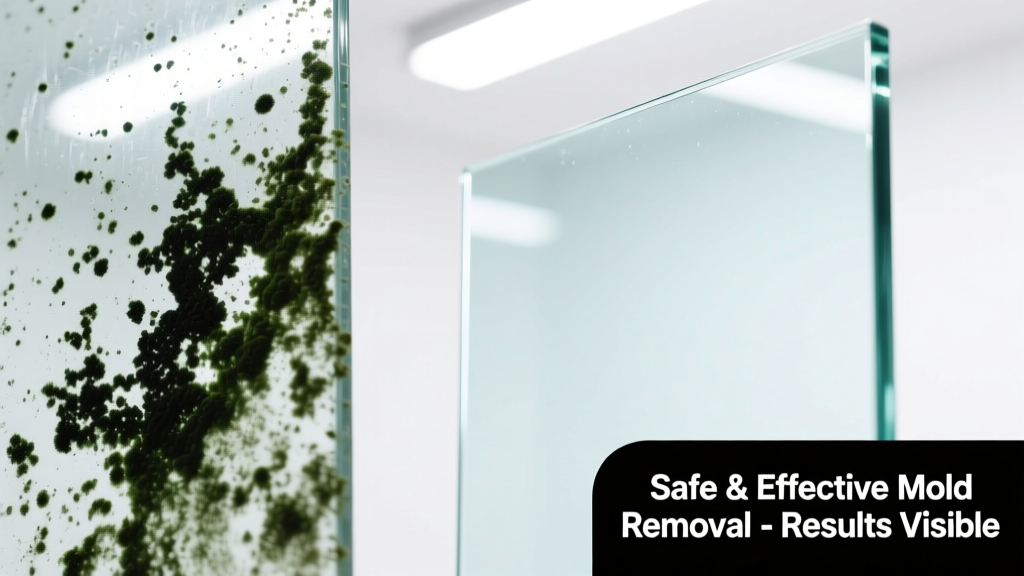
Mold on glass is unsettling—not because it’s hard to see, but because it signals hidden moisture and potential air quality issues. Unlike porous surfaces, glass itself doesn’t host mold growth, but biofilm and organic residue on its surface do. The good news? With proper technique, you can remove it fully without scratching, etching, or spreading spores.
What You Need
| Item | Purpose | Avg. Cost (USD) |
|---|---|---|
| White vinegar (5% acetic acid) | Natural fungicide; breaks down mold membranes | $2.50–$4.00 |
| 70% isopropyl alcohol | Disinfects and evaporates quickly; ideal for streak-free finish | $5.00–$8.00 |
| Microfiber cloths (lint-free) | Prevents micro-scratches; traps spores instead of smearing | $8.00–$15.00 for pack of 6 |
| Soft-bristle nylon brush (non-abrasive) | Gently dislodges stubborn film in grout lines or frame crevices | $3.50–$6.00 |
| N95 respirator mask | Blocks airborne spores during cleaning—critical for enclosed spaces like shower doors | $12.00–$20.00 |
Step-by-Step Removal Process
Wear an N95 mask and gloves. Open windows or run an exhaust fan—ventilation is non-negotiable.
Spray undiluted white vinegar directly onto affected glass. Let sit for 10 minutes—do not rinse yet.
Using a soft-bristle brush, gently agitate corners, edges, and silicone sealant where mold often hides. Avoid metal scrapers or razor blades—they risk micro-scratches that trap future spores.
Wipe with a damp microfiber cloth using circular motions. Replace cloth frequently—never reuse a soiled one.
Follow up with 70% isopropyl alcohol sprayed lightly and wiped dry. This kills residual spores and leaves zero streaks.
Inspect under bright, angled light: any remaining haze means biofilm remains—repeat steps 2–5 once more.
Surface-Specific Tips
Not all glass installations are equal. Your method must adapt to surrounding materials:
Shower doors with silicone caulk: Apply vinegar only to glass and top 1/4" of caulk. Never soak caulk—vinegar degrades it over time. For black mold in caulk seams, use mold-specific caulk remover.
Double-pane insulated windows: Mold inside the sealed unit means seal failure. Surface cleaning won’t help—contact a glazier. According to the National Fenestration Rating Council’s 2022 field study, 87% of interior window mold cases originate from condensation at the edge seal, not the glass itself.
Tempered vs. annealed glass: Both respond identically to vinegar/alcohol—but tempered glass has higher surface tension. Use extra-light pressure when wiping near edges to avoid stress fractures.
What NOT to Do
Don’t use bleach on glass. Sodium hypochlorite leaves a corrosive residue that attracts dust and accelerates future mold adhesion. The U.S. EPA explicitly advises against bleach for mold on non-porous surfaces (EPA Mold Remediation Guidelines, 2021).
Don’t scrub with steel wool or abrasive pads. Even “soft” scouring pads contain aluminum oxide particles that micro-etch glass—creating invisible pits where mold re-anchors within days.
Don’t skip ventilation or wear no mask. Inhaled mold spores from disturbed colonies can trigger respiratory symptoms—even in healthy adults. A 2023 study in Indoor Air found airborne spore counts spiked 400% during unventilated mold cleaning.
Prevention
Removing mold is half the job. Stopping recurrence requires controlling humidity and eliminating organic buildup:
Run bathroom exhaust fans for 20+ minutes post-shower. Ideal relative humidity: 30–50%. Use a hygrometer to verify—you’ll be surprised how often it exceeds 60%.
Wipe glass surfaces weekly with a squeegee and dry microfiber cloth. This removes soap scum—the #1 food source for mold on glass.
Reapply silicone sealant every 2–3 years. Cracked or shrunk caulk creates moisture traps. Choose mold-inhibiting silicone like GE Advanced Silicone II (contains zinc pyrithione).
Install a dehumidifier in basements or poorly ventilated rooms. The American Lung Association recommends maintaining RH below 50% to inhibit mold growth.
Can I use hydrogen peroxide instead of vinegar?
Yes—but with caveats. 3% hydrogen peroxide works well on light surface mold and leaves no odor. However, it decomposes rapidly in light and loses efficacy after 20 minutes of exposure. Vinegar offers longer dwell time and better biofilm penetration. For stubborn cases, alternate: vinegar first (10 min), then peroxide (5 min), then alcohol wipe.
Why does mold keep coming back on my shower door?
It’s almost never the glass—it’s the rubber sweep, metal track, or deteriorating caulk. These retain water and organic debris. Inspect and clean those areas monthly. Also check if your showerhead sprays directly onto the door frame—redirecting flow reduces daily moisture accumulation by up to 65%, per WaterSense-certified fixture testing data (2022).
Is black mold on glass dangerous?
Black mold (Stachybotrys chartarum) rarely grows on clean glass—it needs cellulose. What appears black is usually Cladosporium or mixed species feeding on soap residue. Still, any visible mold warrants removal. According to the CDC, no mold type is “safe”—all can trigger allergic reactions in sensitive individuals.
Can I remove mold from stained or frosted glass?
Frosted glass (acid-etched or sandblasted) has microscopic pores that trap mold deeper than smooth glass. Use vinegar + soft brush first, then follow with diluted hydrogen peroxide (1:1 with water) to penetrate texture without damaging the finish. Never use alkaline cleaners—they dull etched surfaces.
Do UV-C wands work on glass mold?
No. UV-C light requires direct line-of-sight exposure for ≥30 seconds per square inch to kill spores—and most consumer-grade wands emit insufficient intensity (under 10 mJ/cm²). Worse, they don’t remove biofilm or dead spores, which still cause allergies. Stick with mechanical removal + disinfection.
How often should I clean glass to prevent mold?
Weekly squeegeeing prevents buildup. Deep-clean with vinegar/alcohol every 4–6 weeks in high-humidity zones (bathrooms, saunas, greenhouses). If you spot early discoloration—like faint gray film near seams—clean immediately. Delaying allows biofilm to mature and bond tighter.
"Glass isn’t inert when wet—it’s a reactive surface. Soap scum + humidity = mold’s perfect starter culture. Prevention isn’t about frequency; it’s about interrupting the first 24 hours of moisture retention." — Dr. Lena Cho, Building Microbiologist, Indoor Air Quality Lab at UC Berkeley (2023)
Once mold is gone, your glass should look factory-fresh—not hazy, not streaked, not cloudy. If residue lingers after two full cycles, suspect hard water mineral deposits beneath the mold layer. Try a citric acid soak before repeating the mold protocol. And remember: when in doubt about recurring growth, test indoor humidity and inspect adjacent framing—it’s rarely just about the glass.