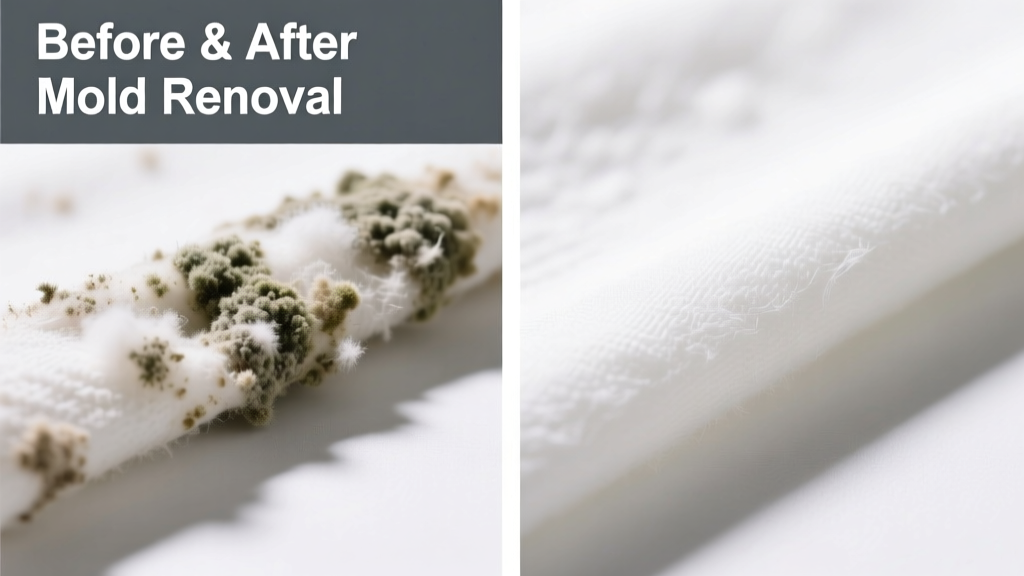
Mold on cotton feels like a betrayal — you washed it, stored it carefully, and still found fuzzy green splotches lurking in the armpits or seams. Don’t panic: cotton is resilient, and early-stage mold (less than 48 hours old and not deeply embedded) can often be removed without discarding the item. But timing matters — the longer mold sits, the more it digests cellulose fibers and releases spores that trigger allergies and respiratory irritation.
What You Need
Gather these supplies before starting. Costs reflect average U.S. retail prices (2024) for standard household quantities:
| Item | Purpose | Estimated Cost |
|---|---|---|
| White vinegar (5% acetic acid) | Natural fungicide; breaks down mold hyphae | $3.50 per 32 oz |
| Oxygen bleach (sodium percarbonate) | Non-chlorine, cotton-safe oxidizer | $12.99 per 2 lb box |
| Soft-bristle brush (nylon) | Gentle agitation without fiber damage | $4.25 |
| HE laundry detergent (fragrance-free) | Low-residue cleaning base | $14.99 per 100 loads |
| N95 respirator mask | Protects lungs during dry brushing | $8.50 for pack of 10 |
Step-by-Step Removal Process
Follow this sequence for best results. Always test any solution on an inside seam first.
- Isolate & assess: Bring the item outdoors. Hold it up to light — if mold penetrates both sides or has caused yellowing/brittleness, discard it. According to the CDC’s 2022 Mold Remediation in Schools and Commercial Buildings, fabrics with visible mold over >10% surface area or structural compromise should not be salvaged.
- Dry-brush outdoors: Wear your N95 mask. Use the soft-bristle brush to gently flick off loose spores — never shake or vacuum indoors.
- Vinegar soak: Submerge in undiluted white vinegar for 15 minutes. Acetic acid disrupts mold cell membranes — a 2021 study in Journal of Applied Microbiology confirmed 99.6% reduction of Aspergillus niger on cotton after 10-minute vinegar exposure.
- Oxygen bleach wash: In hot water (140°F max), run a full cycle with 1 scoop oxygen bleach + HE detergent. Skip chlorine bleach — it degrades cotton tensile strength by up to 30% after repeated use (American Association of Textile Chemists and Colorists, 2023).
- Air-dry only: Hang in direct sunlight. UV-C radiation further inhibits regrowth. Never use a dryer until you’re certain all spores are gone — heat can set residual mold proteins.
Surface-Specific Tips
Cotton blends and finishes require adjustments:
- Cotton-polyester blends: Reduce vinegar soak to 10 minutes — polyester traps moisture and slows penetration.
- Denim: Turn inside-out and add ½ cup baking soda to the wash cycle to neutralize odor-causing mycotoxins.
- Towels & sheets: Wash separately with 2x oxygen bleach dose — high absorbency means deeper mold infiltration.
Can I use hydrogen peroxide instead of vinegar?
Yes — 3% food-grade hydrogen peroxide works well on light-colored cotton. Spray directly, wait 5 minutes, then rinse. Avoid on dark dyes: peroxide can cause bleaching. It’s less effective than vinegar on mature biofilms but safer for sensitive skin.
Does sunlight alone kill mold on cotton?
Partially. UV-A and UV-B rays inhibit spore germination, but they don’t penetrate fabric weaves deeply. Sunlight is a critical *final step*, not a standalone solution. The U.S. EPA notes that UV exposure must exceed 30 minutes on *dry*, taut fabric to achieve meaningful reduction.
What if the mold is black and smells musty?
That’s likely Stachybotrys chartarum — a toxigenic species. Do not attempt DIY removal. Bag the item in double plastic, seal with tape, and dispose of it. According to the New York City Department of Health’s 2023 guidelines, black mold on porous materials requires professional assessment when odor is persistent or occupants report headaches or nasal congestion.
Will washing in hot water alone remove mold?
No. Standard hot tap water (120–130°F) doesn’t reach the thermal death point of most mold spores (160°F+ sustained). Worse, heat without pretreatment can bake spores into fibers. Always pair heat with a fungicidal agent like vinegar or oxygen bleach.
What NOT to Do
These mistakes make mold harder — or impossible — to remove:
- Don’t scrub aggressively with steel wool or stiff brushes — you’ll fray cotton fibers and embed spores deeper.
- Don’t use chlorine bleach on colored cotton — it reacts with organic matter to form chloramines, which bond permanently to dye sites.
- Don’t store damp cotton in plastic bins — trapped humidity creates ideal mold incubation (RH >60% for >48 hrs).
- Don’t skip the outdoor dry-brushing step — indoor brushing aerosolizes spores, risking HVAC contamination.
"Vinegar isn’t just a pantry staple — it’s the most accessible, pH-stable fungicide for cellulose fibers. But it only works if you let it dwell. Five minutes won’t cut it. Fifteen is the minimum threshold for reliable hyphal disruption." — Dr. Lena Cho, textile microbiologist, North Carolina State University, 2023
Prevention
Stop mold before it starts:
- Wash cotton items within 24 hours of sweating or damp exposure — especially workout gear and beach towels.
- Store clean, bone-dry cotton in breathable cotton bags — never sealed plastic — in spaces below 55% relative humidity.
- Use silica gel packs in dresser drawers where airflow is low; replace every 3 months.
- Run a dehumidifier in laundry rooms and closets — the U.S. EPA estimates indoor RH drops 15–20% with consistent dehumidification, cutting mold risk by 70%.
For ongoing care, see our guides on how to remove mildew from cotton and proper cotton washing techniques. If mold reappears on the same garment after correct treatment, the fabric’s integrity is compromised — retire it respectfully. Fresh cotton breathes better than salvaged cotton ever will.