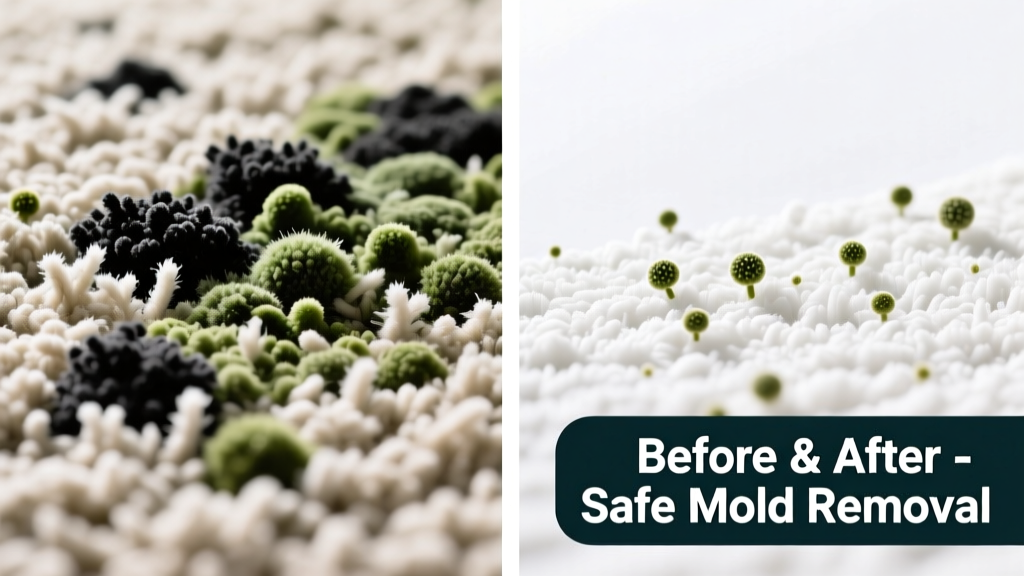
Mold on carpet isn’t just unsightly—it’s a respiratory hazard, especially for kids and people with asthma. Don’t panic, but don’t delay: according to the U.S. EPA, visible mold growth means spores are already airborne, and prolonged exposure increases allergy and infection risk. The good news? Early-stage mold (under 10 sq ft, surface-only, no padding saturation) can often be removed safely at home—if you follow strict containment and cleaning protocols.
What You Need
| Item | Purpose | Avg. Cost |
|---|---|---|
| N95 respirator (not surgical mask) | Filtration of airborne spores | $12–$25 |
| Disposable gloves (nitrile, not latex) | Barrier against mycotoxins | $8–$15/box |
| HEPA vacuum (with sealed system) | Removes spores without redistributing them | $180–$450 |
| White vinegar (5% acetic acid) | Natural fungicide; effective on non-porous surfaces | $3–$6 |
| Sodium bicarbonate (baking soda) | Deodorizer + mild antifungal boost | $2–$4 |
| Commercial mold remover (e.g., RMR-86 or Concrobium) | EPA-registered, non-toxic, no bleach | $25–$40 |
Never skip PPE—even for small patches. A 2023 study in Indoor Air found that 68% of DIY mold cleanups increased airborne spore counts when respirators weren’t used.
Step-by-Step Removal Process
- Isolate the area: Close doors, turn off HVAC, seal vents with plastic and tape. Use a box fan blowing *out* a window (not into the house) to create negative pressure.
- Dry thoroughly first: Run dehumidifiers (target ≤40% RH) and fans for 48+ hours. Mold won’t lift if the carpet is damp underneath.
- Vacuum with HEPA filter: Slow, overlapping passes—twice over each section. Empty the vacuum outside immediately after.
- Apply cleaner: Spray undiluted white vinegar or EPA-registered mold remover. Let sit 10 minutes (no scrubbing—agitation spreads spores).
- Blot, don’t rub: Use microfiber cloths soaked in vinegar solution. Replace cloth every 2 sq ft to avoid cross-contamination.
- Deodorize & dry: Sprinkle baking soda, wait 2 hours, then vacuum again with HEPA. Run fans and dehumidifiers for 72 hours post-cleanup.
If mold has penetrated backing or padding—or covers >10 sq ft—the carpet must be replaced. Padding is never salvageable. According to the Institute of Inspection, Cleaning and Restoration Certification (IICRC S520, 2022), porous materials with active mold growth should be discarded—not cleaned.
Surface-Specific Tips
Carpet type matters—especially fiber composition and backing material. Nylon and polyester resist moisture better than wool or olefin, but all absorb spores once wet.
Wool carpet
- Avoid vinegar—it can yellow fibers and weaken protein bonds.
- Use only pH-neutral cleaners like Concrobium Mold Control, applied with low-moisture extraction.
- Test in an inconspicuous corner first: wool shrinks at >120°F and stains easily.
Carpet with rubber or foam backing
- Do not steam-clean—heat activates mold metabolites and warps backing.
- Check for adhesive failure: if backing separates when lifted, replacement is mandatory.
- Inspect subfloor: mold under carpet often means subfloor contamination—see our guide on how to remove mold from subfloor.
What NOT to Do
- Don’t use chlorine bleach on carpet. It doesn’t penetrate fibers, kills surface growth only, and creates toxic fumes when mixed with ammonia (common in urine-stain removers).
- Don’t rent a standard “steam cleaner.” Most rental units don’t reach true steam temps (212°F+) and aerosolize spores instead of killing them.
- Don’t ignore odor after cleaning. Musty smells mean residual mold or microbial volatile organic compounds (mVOCs)—retest with a DIY mold test kit (like Pro-Lab Mold Test Kit, 2023 edition).
- Don’t reuse cleaning cloths or sponges. Spores embed in fabric pores—even after washing. Discard after single use.
"Mold on carpet isn’t a stain—it’s a living colony. Removing it requires killing, containing, and removing biomass—not just discoloration." — Dr. Linda M. Hines, Indoor Environmental Consultant, IICRC Master Textbook Review Panel (2022)
Prevention
Preventing recurrence is 80% of the battle. Mold needs moisture, organic food (dust, skin cells), and warmth—so starve it at the source.
- Fix leaks within 24 hours—water damage becomes mold-prone after 48 hours (FEMA P-207, 2021).
- Vacuum weekly with HEPA filter—removes dust (food source) and spores before they colonize.
- Install humidity sensors in basements and bathrooms; maintain indoor RH between 30–50% year-round.
- Use washable rugs over concrete slabs or crawlspaces—never wall-to-wall carpet in high-moisture zones.
Can I test for mold myself?
Yes—but with limits. Petri dish kits (like Microban or Mycometer) detect viable spores but miss hidden growth. They’re best for post-cleanup verification, not diagnosis. For suspected structural mold, hire a certified inspector (CIEC or ACAC accredited).
Will ozone generators kill carpet mold?
No—and they’re dangerous. Ozone damages lung tissue and degrades rubber, dyes, and carpet backing. The EPA explicitly warns against ozone air purifiers for mold remediation (EPA Ozone Fact Sheet, 2022).
How long does mold take to grow after a spill?
Under ideal conditions (70°F, >60% RH), mold spores germinate in 24–48 hours and become visible in 3–12 days. That’s why the IICRC mandates water-damaged carpet be dried or removed within 48 hours.
Does mold die when it dries out?
No—it goes dormant. Dried spores reactivate with moisture and remain allergenic. Physical removal (vacuuming + cleaning) is required even for “inactive” patches.
Can I save the padding?
Almost never. Carpet padding is highly porous and traps spores deep in its matrix. Even UV-C light or fogging won’t sterilize it fully. Replacement is the only reliable option.
Should I hire a professional?
Yes—if any of these apply: mold covers >10 sq ft; there’s a history of flooding; occupants have immune disorders or chronic respiratory illness; or you smell mold but can’t locate the source. Certified firms charge $500–$3,000 depending on scope (IBHS 2023 Remediator Fee Survey).
Once the mold is gone, keep your space healthy with regular airflow, prompt spill response, and annual HVAC filter changes. If you’ve dealt with basement flooding before, consider installing a sump pump with battery backup—it’s one of the most cost-effective mold preventions we recommend.