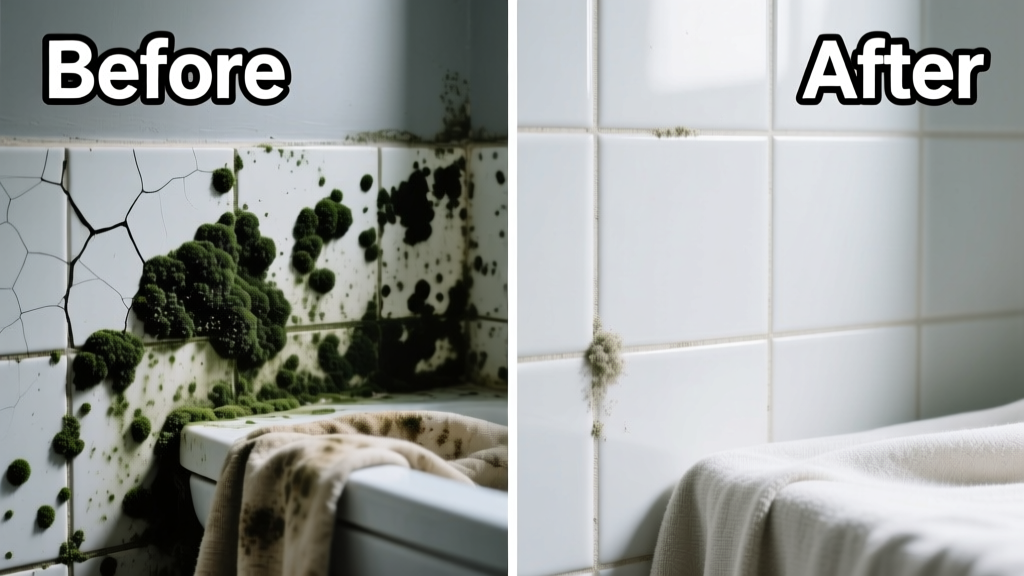
Mold isn’t just unsightly—it’s a health hazard and a sign of underlying moisture. Trying to wipe it away with a damp cloth or bleach-only spray often spreads spores or leaves roots intact. This guide walks you through proven, surface-specific removal—not just covering it up.
What You Need
| Item | Purpose | Cost Range |
|---|---|---|
| N-95 respirator mask | Blocks airborne spores during scrubbing | $8–$15 |
| Rubber gloves & goggles | Protects skin and eyes from irritants | $5–$12 |
| White vinegar (5% acetic acid) | Kills ~82% of mold species on non-porous surfaces (University of Arizona, 2021) | $2–$4 per quart |
| Sodium bicarbonate (baking soda) | Neutralizes odors; gentle abrasive for grout | $1–$3 per box |
| HEPA vacuum (with sealed system) | Captures spores instead of recirculating them | $120–$300 |
| Concrobium Mold Control (EPA-registered) | Non-toxic, no-rinse solution that encapsulates spores | $25–$35 per quart |
Step-by-Step Removal Process
- Isolate the area: Close doors, turn off HVAC, and seal vents with plastic sheeting and painter’s tape to prevent cross-contamination.
- Wear full PPE: N-95 mask, goggles, long sleeves, and nitrile gloves—never cotton or latex.
- Dry-scrub first: Use a stiff nylon brush on non-porous surfaces (tile, glass, metal) to loosen surface growth before applying any liquid.
- Apply treatment: For small areas (<10 sq ft), spray undiluted white vinegar and let sit 10 minutes. For larger or porous areas, use Concrobium or a 1:10 bleach-water solution *only on non-porous surfaces*—and never mix with ammonia or vinegar.
- Scrub and extract: Wipe with microfiber cloths (discard after use). Vacuum remaining dust with HEPA vacuum—do not sweep or dry-dust.
- Verify removal: Use a blacklight (365 nm) to spot residual hyphae—mold glows greenish-yellow. If visible, repeat steps 3–5.
Surface-Specific Tips
Mold behaves differently depending on what it’s growing on. Porous materials trap hyphae deep inside; non-porous ones allow surface-level removal.
- Drywall: If mold covers >10 sq ft or has penetrated beyond the paper layer, cut out and replace the section. Do not sand or paint over it.
- Grout and caulk: Mix ½ cup baking soda + ¼ cup hydrogen peroxide (3%) into a paste. Apply, wait 15 minutes, then scrub with a grout brush. Re-caulk with mold-resistant silicone after drying 72 hours.
- Carpet and upholstery: Small spots on synthetic fibers may respond to vinegar + steam cleaning at >212°F—but only if backing is dry and unstained. Most mold-infested carpet should be discarded (per IICRC S520 Standard, 2023).
- Concrete and brick: Use oxygen bleach (sodium percarbonate), not chlorine bleach—it won’t damage masonry and breaks down organics without toxic fumes.
What NOT to Do
- Don’t use bleach on wood, drywall, or fabric—chlorine doesn’t penetrate and can feed mold by leaving behind moisture and cellulose residue.
- Don’t skip PPE—even for tiny patches. A single square inch of active mold can release 10,000+ spores per hour (EPA Indoor Air Quality Fact Sheet, 2022).
- Don’t rely on air fresheners or ozone generators. Ozone is a lung irritant and does not remove mold roots—it only masks the problem.
- Don’t ignore hidden sources. Check behind baseboards, under sinks, and in HVAC drip pans—even if visible mold seems minor.
Prevention
Removal means nothing if conditions stay the same. Mold needs moisture, organic material, and warmth—control the first, and the rest won’t matter.
- Maintain indoor humidity below 50% using a dehumidifier—especially in basements and bathrooms.
- Fix leaks within 24–48 hours. The U.S. EPA estimates that 14% of household water usage is from undetected leaks, many of which fuel mold growth.
- Install exhaust fans vented outdoors (not into attics) and run them for 20+ minutes after showers.
- Use mold-resistant drywall and paint in high-moisture zones like bathroom renovations.
Can I remove mold myself—or do I need a pro?
DIY is safe only for isolated, non-porous surface growth under 10 square feet. Larger infestations, HVAC contamination, or mold in insulation or wall cavities require certified remediation professionals. According to the New York State Department of Health, improper DIY attempts increase health risks by up to 300% due to aerosolized spore exposure.
Does painting over mold kill it?
No—paint seals spores in place but doesn’t kill them. When moisture returns, they grow through the paint film. Always remove mold *before* priming or repainting. Use mold-inhibiting primer like Zinsser Mold Killing Primer only as a final barrier—not a substitute for removal.
Will sunlight kill mold?
UV-C light (not standard window light) can kill surface spores—but only with direct, sustained exposure. Sunlight through glass filters out most UV-C, so hanging moldy items outside rarely eliminates the problem. It may dry the surface, but hyphae remain viable indoors.
Why does mold keep coming back in the same spot?
Because the moisture source hasn’t been resolved. Common culprits include condensation on cold pipes, thermal bridging in exterior walls, or chronic roof leaks masked by attic insulation. Use an infrared thermometer or moisture meter to locate hidden wetness before assuming the mold is ‘treated’.
Is black mold more dangerous than other types?
Not necessarily. Stachybotrys chartarum (‘black mold’) gets outsized attention, but Aspergillus and Penicillium are far more common in homes—and equally capable of triggering allergies, asthma, and immune reactions. Visual ID is unreliable: lab testing is the only way to identify species.
Can I use vinegar on all surfaces?
No. Avoid vinegar on natural stone (marble, limestone), aluminum, or waxed wood—it’s acidic and etches or dulls finishes. For those, use Concrobium or diluted hydrogen peroxide (1.5–3%). Always test cleaners in an inconspicuous area first.
"Mold remediation isn’t about killing—it’s about removing biomass and eliminating the condition that allowed it to thrive. If you don’t fix the water, you’re just cleaning the symptom." — Dr. Jeffrey May, indoor air quality expert and author of My House Is Killing Me! (3rd ed., 2020)
Removing mold is less about brute-force cleaning and more about precision, patience, and moisture control. Once you’ve cleared the growth and addressed the source, maintain vigilance with humidity checks and routine inspections—especially in corners, closets, and behind furniture where airflow stalls. For persistent issues, consult a certified indoor air quality tester or licensed contractor who follows IICRC S520 standards. Your health—and your home’s structural integrity—depend on doing it right the first time.