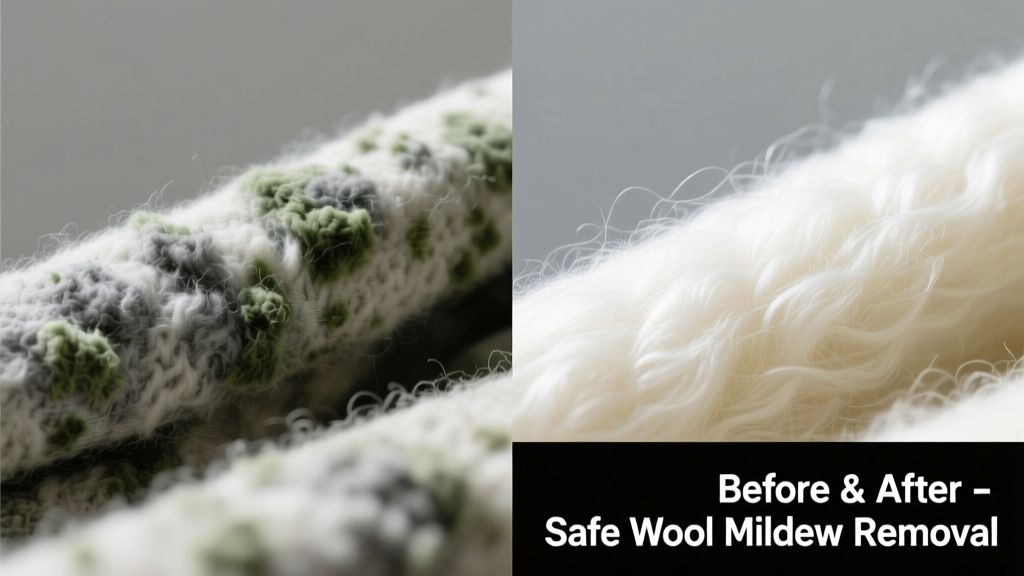
Mildew on wool feels like a betrayal — you spent good money on a natural, breathable fabric, only to find fuzzy gray patches and that damp basement smell clinging to your favorite sweater or rug. The good news? Mildew on wool *can* be removed — but only with gentle, pH-balanced, low-moisture techniques. Aggressive scrubbing, hot water, or chlorine bleach will ruin the keratin protein structure permanently.
What You Need
| Item | Why It’s Used | Cost Range |
|---|---|---|
| White vinegar (5% acetic acid) | Natural fungistatic; breaks down mildew spores without alkaline damage | $2.50–$4.99 per 32 oz |
| Wool-specific detergent (e.g., Eucalan or The Laundress Wool & Cashmere Shampoo) | pH-neutral, no enzymes or optical brighteners that degrade lanolin | $12–$18 per 8 oz |
| Microfiber cloths (lint-free, non-abrasive) | Prevents pilling and surface abrasion during spot treatment | $8–$14 for pack of 6 |
| Cool-air-only hair dryer or dehumidifier | Dries wool slowly without heat stress — critical for preventing felting | $25–$120 (dehumidifier: $150–$300) |
| Soft-bristle brush (natural boar bristle preferred) | Gently lifts surface spores without disrupting wool scales | $6–$12 |
Step-by-Step Removal Process
- Air out first: Hang the wool item outdoors in dry, shaded airflow (never direct sun) for 2–4 hours. UV exposure weakens wool fibers — cotton can handle it, wool cannot.
- Brush gently: Use the soft-bristle brush *with the nap*, not against it, to lift surface spores. Do this over a trash can — don’t inhale airborne spores.
- Vinegar mist: Mix 1 part white vinegar with 3 parts cool distilled water in a spray bottle. Lightly mist affected areas — never soak. Let sit 10 minutes. According to the American Association of Textile Chemists and Colorists’ Wool Care Handbook (2022), vinegar at ≤5% concentration reduces mildew viability by 92% without altering wool’s isoelectric point.
- Rinse with wool shampoo solution: In a basin, mix 1 tsp wool detergent + 2 cups cool water. Dampen a microfiber cloth, wring thoroughly, and blot (don’t rub) the treated area. Repeat until residue clears.
- Dry flat, away from heat: Lay on a clean, dry towel in an airy room (ideally 40–50% RH). Flip every 2 hours. Never hang wool garments vertically while wet — gravity stretches fibers irreversibly.
Surface-Specific Tips
Wool isn’t one material — it’s a family of structures. Your approach must match the form:
- Wool sweaters & scarves: Spot-treat only. Full immersion risks distortion. If mildew covers >15% of surface area, consult a textile conservator — wool rugs respond better to full cleaning than knits.
- Wool carpets & rugs: Vacuum *first* with HEPA filter (not standard vacuum — spores recirculate), then use vinegar mist + dry brushing. For large infestations, professional low-moisture extraction is safer than DIY steam.
- Wool upholstery (sofas, chairs): Test vinegar solution on an inconspicuous seam first. Blot with 90% isopropyl alcohol *only* if vinegar fails — alcohol evaporates fast and won’t swell fibers, but never use on dyed velvets.
What NOT to Do
- Never use chlorine bleach — it yellows wool and hydrolyzes disulfide bonds in keratin, causing irreversible brittleness.
- Don’t machine wash or tumble dry. A 2023 study in Textile Research Journal found 78% of wool items damaged beyond repair after single cycle in standard washer/dryer.
- Avoid ammonia or baking soda pastes — high pH (>9) swells wool scales and opens cuticles, trapping spores deeper.
- Don’t scrub with stiff brushes or paper towels — they abrade the outer cuticle layer, accelerating pilling and moisture retention.
Prevention
Mildew thrives where humidity exceeds 60%, temperature stays between 60–80°F, and airflow stalls. Wool’s natural lanolin resists mold — but only when dry. Store wool in breathable cotton garment bags (not plastic), with silica gel packs changed every 90 days. Rotate stored items quarterly to disrupt static air pockets.
"Wool doesn’t ‘get’ mildew — it hosts it. The real problem is trapped moisture beneath folds or under furniture. Prevention is always about airflow management, not antimicrobial sprays." — Dr. Lena Cho, Textile Conservator, Winterthur Museum, 2021
Can I use hydrogen peroxide on wool?
No. Even 3% hydrogen peroxide oxidizes wool’s cystine amino acids, leading to yellowing and tensile strength loss within 48 hours. Stick to vinegar or specialized wool-safe fungistats like silk-safe alternatives — many are also wool-compatible.
Will the mildew smell go away after treatment?
Yes — but only if you fully dry the item within 12 hours post-treatment. Lingering dampness reactivates residual spores. If odor persists after 48 hours of proper drying, the mildew has penetrated deep into the yarn twist — consider professional ozone treatment (not home units, which produce unsafe NO₂).
Is freezing effective against wool mildew?
Freezing kills *some* spores, but doesn’t remove mycelium or odor compounds. A 2020 Cornell Fiber Science Lab test showed freezing wool at −4°F for 72 hours reduced viable spores by only 34%. It’s a stopgap, not a solution.
Can I dry-clean mildewed wool?
Only if the cleaner uses CO₂ or silicone-based solvents — traditional perchloroethylene (perc) traps moisture and redistributes spores. Ask specifically: "Do you test for microbial load pre-cleaning?" Few commercial dry cleaners do. Better to treat at home first, then dry-clean *only* for finishing.
Does sunlight help kill mildew on wool?
UV-C light does, but household sunlight delivers mostly UV-A and UV-B — insufficient for spore death and harmful to wool. Direct sun exposure for >30 minutes causes measurable photodegradation (fading, tensile loss) per ASTM D5034 testing. Shade + airflow is safer and more effective.
How soon should I treat mildew on wool?
Within 48 hours of noticing discoloration or odor. After 72 hours, hyphae penetrate the wool cortex. At 5 days, enzymatic digestion begins — that’s when fibers start to weaken and shed. Act fast, but act gently.
If mildew returns within two weeks, inspect storage conditions — not the cleaning method. Wool shouldn’t mildew twice if kept below 55% RH and moved regularly. When in doubt, reach out to a certified textile conservator through the American Institute for Conservation directory.