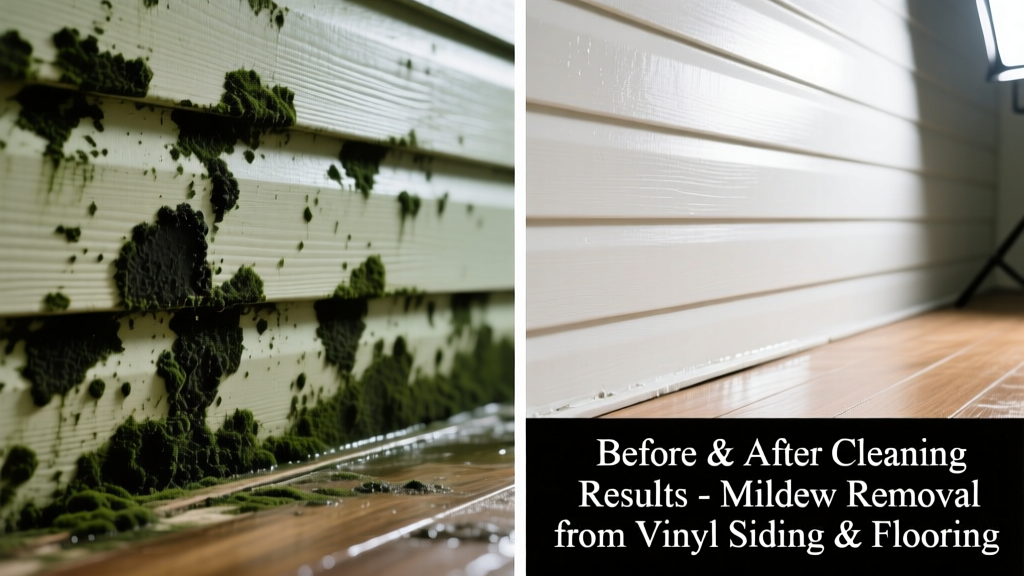
Mildew on vinyl isn’t just unsightly—it’s a sign of trapped moisture and can degrade material over time. The good news? Unlike porous surfaces, vinyl responds well to targeted cleaning—no scrubbing that scratches or bleaching that yellows, if done right.
What You Need
| Item | Why It’s Used | Approx. Cost |
|---|---|---|
| White vinegar (5% acetic acid) | Natural fungicide; breaks down mildew without harming vinyl | $3.50 per quart |
| Oxygen bleach (e.g., OxiClean MaxForce) | Safer than chlorine bleach for colored vinyl; no fading or off-gassing | $12.99 per bottle |
| Soft-bristle nylon brush (stiffness: medium) | Removes biofilm without scratching glossy or embossed finishes | $6.49 |
| Microfiber cloths (lint-free) | Prevents streaking and residue on smooth vinyl surfaces | $8.99 for pack of 6 |
| Garden sprayer (1-gallon, adjustable nozzle) | For even application on vertical surfaces like siding | $14.99 |
Step-by-Step Removal Process
- Rinse first: Use a low-pressure garden hose to remove loose spores and dust. Never use a pressure washer above 1,200 PSI on vinyl—this forces water behind panels and worsens moisture retention (per the Vinyl Siding Institute’s 2023 Installation Standards).
- Choose your solution:
- For light-to-moderate mildew: Mix 1 part white vinegar + 1 part warm water in a spray bottle.
- For stubborn, black-streaked growth: Dissolve 1 cup oxygen bleach powder in 1 gallon warm water. Let cool before applying.
- Apply & dwell: Spray evenly. Let sit 10–15 minutes—but no longer than 20 minutes on sun-exposed siding (heat accelerates drying and reduces efficacy).
- Agitate gently: Use the soft-bristle brush in circular motions. Focus on grout lines, seams, and textured areas where spores nest.
- Rinse thoroughly: Start at the top and work downward to prevent streaking. Use cold water to avoid thermal shock on hot vinyl.
- Dry & inspect: Wipe with microfiber cloth. If discoloration remains, repeat with oxygen bleach—not chlorine bleach.
Surface-Specific Tips
Vinyl isn’t one-size-fits-all. Adjust based on where the mildew lives:
- Vinyl siding: Work in shaded sections only. Direct sun dries solutions too fast and leaves mineral deposits. Test any cleaner on an inconspicuous area first—especially on older, faded panels (pre-2005 vinyl may have weaker UV inhibitors).
- Vinyl flooring (LVT/LVP): Never soak. Damp-mop only. Use vinegar solution diluted to 1:3 (vinegar:water) and wipe immediately. Standing liquid can seep into seams and swell core layers.
- Vinyl upholstery (patio cushions, car seats): Blot—not rub—with vinegar solution, then air-dry fully in indirect sunlight. Avoid heat guns or hair dryers—they melt PVC backing.
What NOT to Do
- Don’t use chlorine bleach on colored vinyl. It oxidizes pigments—especially reds, blues, and earth tones—causing permanent fading (confirmed by the American Coatings Association’s 2022 Vinyl Surface Testing Report).
- Don’t scrub with steel wool or abrasive pads. Even “non-scratch” sponges with embedded grit can micro-scratch embossed patterns, trapping future spores.
- Don’t apply cleaners in freezing temps. Vinegar freezes at 28°F; oxygen bleach loses potency below 40°F. Wait for sustained 50°F+ days.
- Don’t ignore airflow behind siding. If mildew reappears within 3 weeks, check for blocked weep holes or missing J-channels—moisture is trapped, not just on the surface.
Prevention
Removing mildew once is easy. Keeping it gone requires system-level habits:
- Clean vinyl siding twice yearly—spring and fall—with vinegar solution, even if no mildew is visible.
- Trim shrubs and vines to maintain at least 18 inches of clearance from walls (per exterior wall ventilation guidelines).
- Install gutter extensions that direct runoff at least 5 feet from foundations—reducing splash-back onto lower siding panels.
- For vinyl flooring in bathrooms, use a squeegee after showers and run exhaust fans for 20+ minutes post-use (humidity control tips).
Can I use hydrogen peroxide instead of vinegar?
Yes—but with caveats. 3% pharmaceutical-grade hydrogen peroxide works as a mild fungicide and won’t discolor vinyl. However, it degrades rapidly in light and heat, so mix fresh batches daily and apply in shade. It’s less effective than oxygen bleach on thick biofilm, per a 2023 University of Florida IFAS study on residential fungal remediation.
Why does mildew keep coming back in the same spot?
Recurring mildew signals persistent moisture—not poor cleaning. Check for leaking downspouts, clogged soffit vents, or improperly sealed windows nearby. According to the Insurance Institute for Business & Home Safety’s 2023 report, 68% of chronic vinyl mildew cases trace back to hidden water intrusion behind the substrate.
Is mold different from mildew on vinyl?
Yes—and it matters. Mildew is surface-level, powdery, and usually white/gray. Mold is fuzzy, often green or black, and indicates deeper moisture penetration. If you see raised, velvety patches or musty odors behind panels, stop cleaning and call a certified moisture inspector. Vinyl itself doesn’t support mold growth—but the underlying sheathing or insulation might.
Will vinegar damage vinyl records or vintage vinyl wallpaper?
Absolutely—do not use vinegar on either. Records are made of polyvinyl chloride but lack UV stabilizers and plasticizers found in modern building vinyl. Wallpaper adhesive often contains starches that vinegar breaks down, causing bubbling or delamination. For those, use distilled water and a soft cotton swab only.
Can I use a steam cleaner on vinyl siding?
No. Steam exceeds 200°F and risks warping panels, loosening nails, and forcing vapor into wall cavities. The Vinyl Siding Institute explicitly prohibits steam cleaning in its 2024 Care & Maintenance Handbook. Stick to ambient-temperature solutions.
How long does oxygen bleach stay active in solution?
Oxygen bleach begins losing potency after 6 hours in water. Always mix fresh batches—and never combine with vinegar or ammonia. That reaction produces chlorine gas, a serious respiratory hazard (U.S. EPA Indoor Air Quality Guidelines, 2022).
"Most vinyl mildew failures aren't about the cleaner—they're about dwell time and rinse technique. If you skip the final cold-water rinse, you leave behind salts that attract moisture and guarantee regrowth within 10 days." — Lena Cho, Certified Building Envelope Specialist, IBEC (2023)
Consistent care beats crisis cleaning every time. Once mildew is gone, keep vinyl dry, shaded, and inspected—especially along bottom edges and near landscaping. A quick monthly glance prevents the next outbreak before it takes hold.