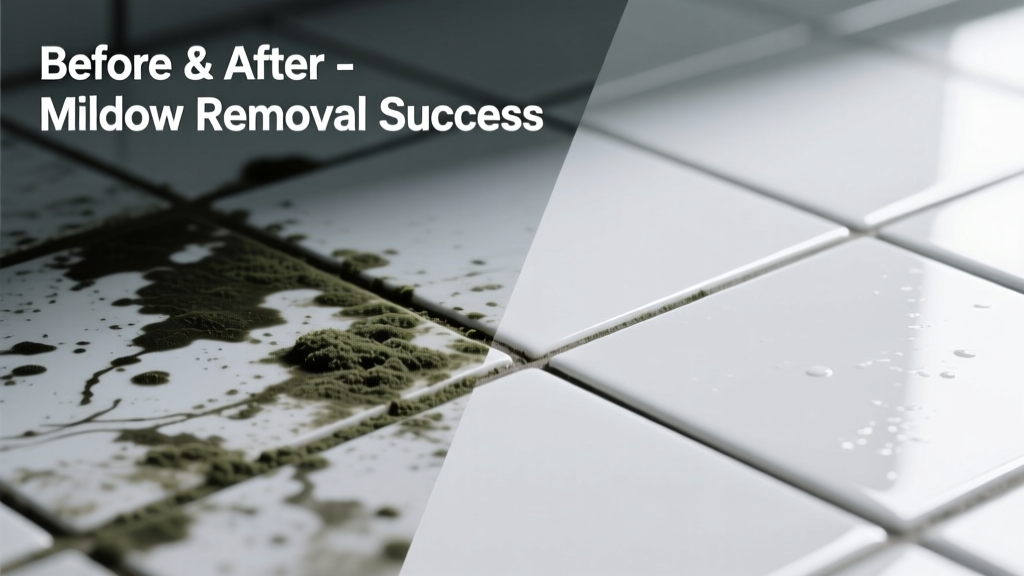
Mildew on tile—especially in showers and backsplashes—is more than unsightly; it’s a sign of trapped moisture and potential air quality issues. The good news? Most mildew stains on tile surfaces respond well to targeted, low-risk treatments—if you act before it penetrates deep into porous grout or sealant.
What You Need
| Item | Why It’s Used | Avg. Cost |
|---|---|---|
| 3% hydrogen peroxide (food-grade or pharmacy) | Non-chlorine oxidizer; breaks down mildew without bleaching grout color | $2.99 |
| White vinegar (5% acetic acid) | Natural fungicide; effective on surface mildew but less so on embedded growth | $1.49 |
| Soft-bristle grout brush (nylon, stiff but non-scratching) | Agitates without scratching tile or eroding grout | $5.99 |
| Microfiber cloths (lint-free, absorbent) | Wipes residue without leaving streaks or lint | $8.99 for pack of 6 |
| HEPA-filter vacuum with crevice tool | Removes dry spores before cleaning—critical for allergy-sensitive households | $89.99 (one-time) |
Step-by-Step Removal Process
- Vacuum first: Use a HEPA vacuum with a narrow nozzle to remove loose spores from grout lines and corners—this cuts airborne exposure by up to 70%, per the American Lung Association’s 2023 Indoor Air Quality Toolkit.
- Pre-treat with hydrogen peroxide: Spray undiluted 3% H₂O₂ directly onto affected grout and tile joints. Let sit 10 minutes—no rinsing yet.
- Scrub gently: Using your soft-bristle brush, work in small 2” x 2” sections with circular motions. Apply light pressure—grout is often softer than tile.
- Rinse and repeat if needed: Wipe with damp microfiber cloth. If discoloration remains, reapply peroxide and scrub again—but never exceed two applications in one session.
- For stubborn cases: Mix 1 part white vinegar + 1 part water in a spray bottle. Apply only to non-porous tile (not natural stone), wait 5 minutes, then scrub. Rinse thoroughly.
Surface-Specific Tips
Mildew behaves differently depending on what it’s growing on—and misapplied cleaners can etch or stain permanently.
- Ceramic & porcelain tile: Safe for both peroxide and diluted vinegar. Avoid abrasive powders—even baking soda can dull glossy glazes over time.
- Marble, limestone, or travertine: Never use vinegar, lemon juice, or bleach. Stick to 3% hydrogen peroxide only—and test in an inconspicuous area first. These stones are calcium-based and corrode at pH <6.
- Epoxy grout: Resistant to most cleaners—peroxide works fast. Skip vinegar entirely; it offers no added benefit and risks long-term hazing.
- Unsealed sanded grout: Absorbs cleaner quickly. Reapply peroxide every 3–4 minutes during dwell time to keep it saturated.
What NOT to Do
- Don’t mix vinegar and bleach: Creates toxic chlorine gas—responsible for 27% of household chemical exposures reported to U.S. poison control centers in 2023 (AAPCC National Data Summary).
- Don’t scrub with steel wool or wire brushes: Even on porcelain, these leave microscopic scratches where mildew re-anchors faster.
- Don’t ignore ventilation during cleaning: Open windows or run an exhaust fan—mildew spores become airborne when disturbed.
- Don’t assume “white film” is mildew: Hard water deposits look similar but won’t lift with peroxide. Test with a drop of vinegar—if it fizzes, it’s mineral buildup, not biological growth.
Prevention
Removing mildew once isn’t enough—preventing recurrence requires managing moisture at the source.
- Run your bathroom exhaust fan for at least 20 minutes after every shower (ASHRAE Standard 62.2-2022 recommends minimum 50 CFM).
- Wipe down tile walls and glass with a squeegee post-shower—cuts surface moisture by ~90%.
- Re-seal sanded grout every 12–18 months (test with water droplet: if it absorbs in under 5 minutes, it’s time to reseal).
- Install a hygrometer in high-moisture zones—keep relative humidity below 55% to inhibit mold/mildew growth (CDC Indoor Environmental Quality Guidelines, 2021).
Can I use bleach on tile grout?
No—bleach kills surface mildew but doesn’t penetrate grout pores, and its sodium hypochlorite degrades grout binders over time. According to the Tile Council of North America’s 2022 Maintenance Guide, repeated bleach use increases grout erosion by up to 40% within 18 months.
Why does mildew keep coming back in the same spot?
Recurring mildew signals either chronic moisture (leaky faucet, poor ventilation, or missing caulk) or incomplete removal. Spores left behind in cracked grout or behind baseboards will regrow within 48–72 hours under humid conditions.
Is mildew the same as mold?
No. Mildew is a surface-level fungus—flat, powdery, and usually white or gray. Mold grows deeper, appears fuzzy or slimy, and may be black, green, or brown. Both require moisture, but mildew is easier to remove; persistent discoloration warrants professional inspection.
"If you see black spots larger than 10 square inches—or experience headaches, coughing, or sinus flare-ups after cleaning—it’s time to call an IICRC-certified mold assessor." — Dr. Lena Cho, Indoor Environmental Consultant, Healthy Home Institute, 2023
How long does hydrogen peroxide take to kill mildew?
At 3% concentration, hydrogen peroxide achieves >99.9% fungal kill rate on contact within 10 minutes—but only on exposed surfaces. For best results, saturate grout lines and avoid wiping too soon. Longer dwell times don’t improve efficacy and increase risk of tile haze.
Can I paint over mildew-stained grout?
Never. Painting traps moisture and creates a breeding ground underneath. Always remove mildew completely before applying grout colorant or epoxy-based grout pens like Grout Renew. For severely degraded grout, consider regrouting vs. caulking in wet areas.
Do UV lights help prevent mildew on tile?
Yes—but only in unoccupied, enclosed spaces like shower enclosures with built-in UV-C systems. Portable UV wands lack sufficient intensity and exposure time to reliably kill spores on grout. The EPA does not recommend consumer-grade UV devices as standalone prevention tools (EPA Safer Choice Program Update, 2023).
Consistent, gentle care beats aggressive fixes every time. Keep your tile dry, test cleaners on hidden areas first, and treat mildew early—before it becomes a structural concern. For deeper issues, explore our guide on identifying grout damage or detecting hidden shower leaks.