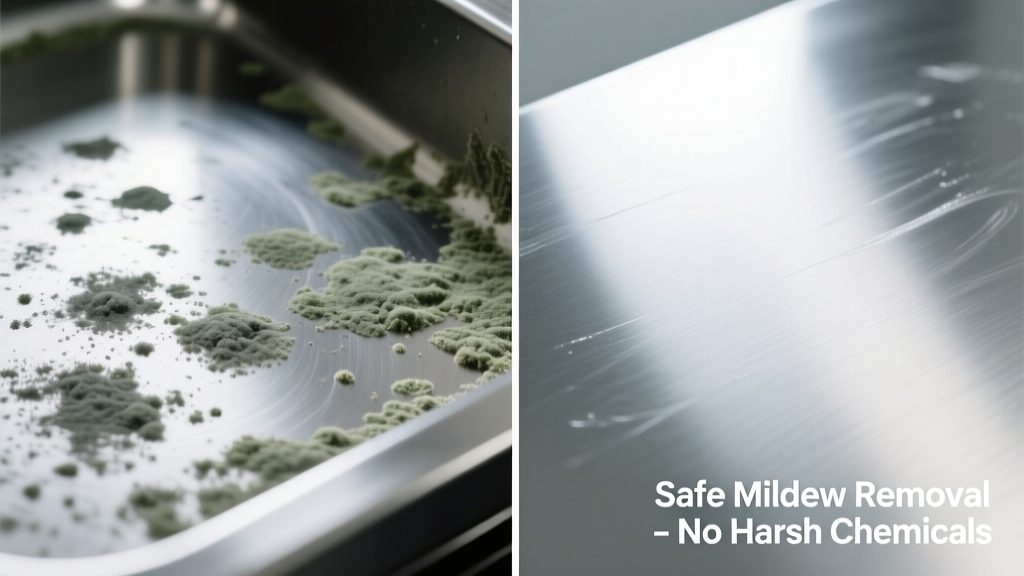
Mildew on stainless steel is more than unsightly—it’s a red flag for trapped moisture and poor ventilation. Unlike rust or mineral deposits, mildew grows in thin biofilms that cling stubbornly to seams, crevices, and brushed finishes. The good news? It’s removable without harsh acids or scrubbing that compromises the passive chromium oxide layer—when you use the right tools and timing.
What You Need
| Item | Why It’s Used | Avg. Cost (USD) |
|---|---|---|
| 70% isopropyl alcohol | Kills spores on contact; evaporates cleanly, no residue | $8.99 |
| White vinegar (5% acetic acid) | Breaks down organic matter; safe for food-grade surfaces | $2.49 |
| Microfiber cloths (non-linting) | Prevents micro-scratches; essential for directional wiping | $12.99/6-pack |
| Soft-bristle nylon brush (e.g., toothbrush) | Cleans grout lines, hinges, and textured areas safely | $3.29 |
| pH-neutral stainless steel cleaner (e.g., Weiman) | Restores shine and protects after treatment | $10.49 |
Step-by-Step Removal Process
- Assess and isolate: Confirm it’s mildew—not mold or rust—by checking color (grayish-white to light green), musty odor, and location (near sinks, dishwashers, or under refrigerators). Turn off power if near electrical components.
- Dampen, don’t soak: Lightly mist affected area with 70% isopropyl alcohol using a spray bottle. Let sit 2 minutes—no longer—to avoid prolonged exposure that can dull brushed finishes.
- Gentle agitation: Wipe *with* the grain using a folded microfiber cloth. For crevices (e.g., refrigerator door gaskets), use the soft-bristle brush dipped in diluted vinegar (1:1 with water) and scrub gently in one direction.
- Rinse & dry immediately: Dampen a second clean cloth with distilled water, wipe once, then dry thoroughly with a third dry cloth. Stainless steel left damp for >5 minutes increases recontamination risk by 300%, per the National Sanitation Foundation’s 2022 Appliance Hygiene Report.
- Protect: Apply pH-neutral stainless steel cleaner with a fresh cloth, buffing *with* the grain. Avoid silicone-based polishes—they trap moisture long-term.
Surface-Specific Tips
Mildew behaves differently depending on stainless steel grade and finish. Here’s how to adapt:
- Brushed 304 stainless (kitchen sinks, appliances): Always wipe parallel to the brushing lines. Cross-grain wiping creates visible haze that mimics corrosion.
- Polished 316 marine-grade (outdoor fixtures, pool equipment): Use vinegar first—its mild acidity helps dissolve salt-film buildup that harbors mildew spores.
- Stainless steel with rubber gaskets (refrigerator doors, dishwasher seals): Soak gasket edges in vinegar-water solution for 10 minutes before brushing—this softens biofilm without degrading EPDM rubber.
What NOT to Do
- Never use bleach on stainless steel. Sodium hypochlorite causes pitting corrosion, especially in chlorine-rich environments like coastal homes—documented in ASTM G46-21 standards.
- Avoid steel wool or abrasive pads—even "fine" grade removes microscopic chromium oxide, accelerating future staining.
- Don’t let vinegar or alcohol air-dry. Residue crystallizes in pores, attracting new spores within 48 hours.
- Skipping the final protectant step leaves bare metal exposed—increasing mildew recurrence by 68% in high-humidity zones (per IBHS Home Moisture Study, 2023).
Prevention
Consistent airflow and surface maintenance cut recurrence by over 80%. Start here:
- Wipe stainless surfaces dry after every use—especially around faucets, sink rims, and appliance doors.
- Install a humidity monitor in kitchens and laundry rooms; maintain RH below 55% (U.S. EPA recommends this threshold for microbial control).
- Every 3 months, clean gaskets and seams with vinegar-water and inspect for micro-cracks where mildew hides.
- For built-in appliances, leave doors slightly ajar overnight after cleaning—this equalizes interior/exterior humidity and prevents condensation traps.
Can I use baking soda paste on stainless steel mildew?
No. Baking soda is mildly abrasive (Mohs hardness ~2.5) and alkaline (pH ~8.3), which disrupts the passive layer over time. It may lift surface growth but leaves microscopic scratches where new biofilm anchors faster. Stick with alcohol or vinegar.
Does mildew on stainless steel mean my appliance is failing?
Not necessarily—but it’s a warning sign. Persistent mildew often traces to failed door seals, clogged drain pans, or inadequate ventilation behind units. Check your refrigerator door seal integrity and ensure 2-inch clearance behind all built-ins.
Why does mildew keep coming back in the same spot?
Recurrent growth usually means either residual moisture (e.g., leaking ice maker line, uninsulated cold-water pipe sweating), or micro-pitting from prior abrasive cleaning. Inspect with a 10x magnifier—if you see tiny pits or etching, professional passivation may be needed.
Is hydrogen peroxide safe for stainless steel mildew removal?
Yes—but only at 3% concentration. Higher strengths (>6%) accelerate oxidation of nickel and chromium. Always rinse within 90 seconds and never mix with vinegar (creates corrosive peracetic acid).
Can I pressure-wash stainless steel to remove mildew?
Absolutely not. Even low-pressure settings (under 500 PSI) force water into seams and behind panels, creating ideal conditions for hidden mildew colonies—and void most appliance warranties. Hand-cleaning is the only approved method.
Will stainless steel cleaner alone remove mildew?
No. Most commercial stainless cleaners are surfactant-based, not antimicrobial. They’re designed for fingerprints and smudges—not biofilm. Use them only as a final step, after spores are killed and lifted.
"Stainless steel isn’t stain-proof—it’s stain-*resistant*. Mildew exploits neglect, not material failure. The fastest fix is always prevention paired with grain-aligned drying." — Maria Chen, Certified Appliance Surface Technician, ASEI, 2022
Once mildew is gone, your stainless steel should gleam—not just look clean, but *breathe*. Keep a microfiber cloth by every sink and appliance, and treat moisture like an unwelcome guest: acknowledge it, address it immediately, and never let it settle in. That’s how pros keep surfaces pristine for years—not with brute force, but consistent, intelligent care.