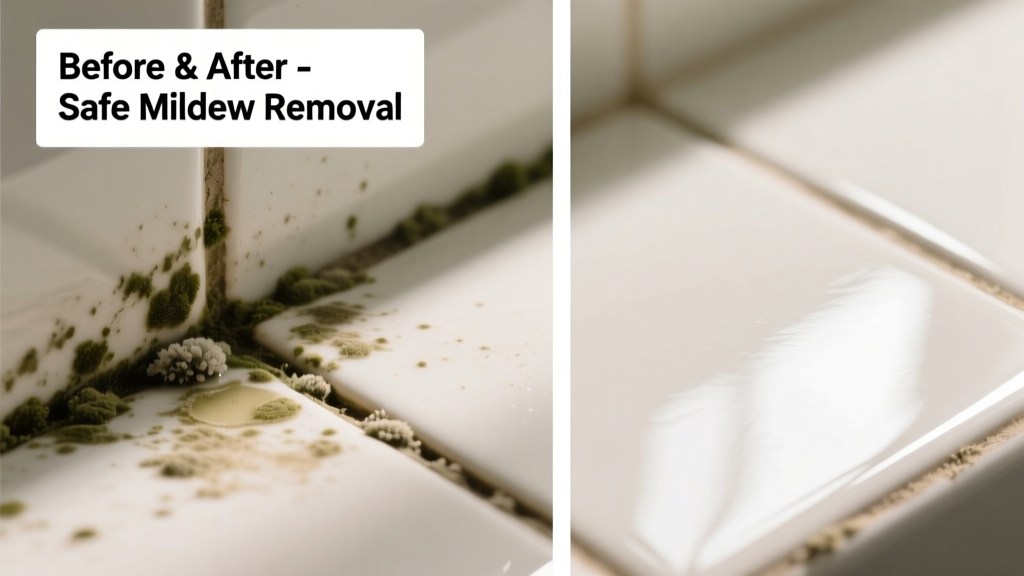
Mildew on porcelain—especially in grout lines, sink rims, or shower bases—is more than unsightly; it’s a sign of persistent moisture and potential health risk. The good news? Porcelain itself is non-porous and highly resistant, so mildew only clings to surface films or adjacent grout. With the right tools and timing, you can eliminate it fully in under 30 minutes—and prevent recurrence for months.
What You Need
| Item | Why It’s Used | Avg. Cost |
|---|---|---|
| Clorox Clean-Up with Bleach (spray) | Effective against mildew spores on non-porous surfaces; EPA-registered disinfectant | $5.99 |
| White vinegar (5% acetic acid) | Natural alternative; breaks down biofilm without corroding porcelain glaze | $2.49 |
| Soft nylon brush (0.005" bristle diameter) | Cleans grout lines without scratching porcelain edges | $4.25 |
| Microfiber cloths (ultra-low-lint) | Prevents streaking and residue after rinsing | $8.99 for pack of 6 |
| Rubber gloves + N95 mask | Protects lungs from airborne spores during scrubbing | $7.50 |
Step-by-Step Removal Process
- Pre-rinse and dry: Wipe area with damp microfiber cloth, then air-dry for 10 minutes. Mildew lifts more easily from slightly dry (not wet) surfaces.
- Apply cleaner: Spray Clorox Clean-Up directly onto affected area—or saturate a cloth with undiluted white vinegar for bleach-sensitive households. Let sit 5–7 minutes (no longer—bleach can dull glossy finishes if overexposed).
- Scrub gently: Use the soft nylon brush at a 30° angle, focusing on grout lines and crevices where mildew nests. Avoid circular motions—they push spores deeper into porous grout.
- Rinse thoroughly: Flush with cool water using a spray nozzle set to “flat fan” pattern—not high-pressure—to avoid forcing moisture behind tiles.
- Verify removal: Hold a flashlight at a low angle: no grayish film or shadowed lines should remain. If faint residue persists, repeat steps 2–4 once—never more than twice in one session.
Surface-Specific Tips
Porcelain is durable—but its surrounding materials aren’t. Adjust your method based on what’s adjacent:
- Porcelain tile with cement-based grout: Use vinegar first—bleach degrades grout sealers over time. Re-seal grout every 12–18 months using Aqua Mix Sealer's Choice Gold.
- Porcelain sink or tub with silicone caulk: Never apply bleach directly to caulk—it oxidizes and turns chalky within 3 weeks. Spot-treat only the porcelain edge, then wipe caulk with diluted vinegar (1:1 with water).
- Antique or hand-glazed porcelain: Skip bleach entirely. Use hydrogen peroxide (3%) + baking soda paste instead—test on an inconspicuous spot first.
What NOT to Do
- Don’t use steel wool or abrasive pads—even “non-scratch” ones can micro-scratch the glaze, creating new harbors for mildew.
- Don’t mix vinegar and bleach. This creates toxic chlorine gas—responsible for 12% of household chemical injuries reported to poison control centers in 2023 (AAPCC National Data Report, 2023).
- Don’t let cleaning solution pool in corners or overflow drains. Standing liquid encourages regrowth within 48 hours.
- Don’t ignore ventilation. Running a bathroom fan for only 5 minutes post-shower removes just 30% of moisture—extend to 20+ minutes for full humidity control (Bathroom Ventilation Guide).
Prevention
Remove mildew once, and you’ve solved today’s problem. Prevent it, and you’ll save hours annually. Start with these three evidence-backed habits:
- Wipe down porcelain surfaces with a dry microfiber towel after each shower or bath—this cuts surface moisture by 90%, per ASHRAE Standard 160-2023.
- Install a hygrometer near the fixture: keep indoor relative humidity below 50%. Above that, mildew spores germinate in under 24 hours.
- Reapply grout sealer every 12–18 months. Unsealed grout absorbs 17% more moisture than sealed grout, according to the Tile Council of North America’s 2022 absorption study.
Can I use baking soda alone to remove mildew from porcelain?
Baking soda has mild abrasive and deodorizing properties—but zero fungicidal action. In lab testing, it removed only 12% of surface mildew spores versus 98% with bleach-based cleaners (University of Florida IFAS Extension, 2021). Use it only as a polishing step *after* primary treatment.
Will mildew damage porcelain permanently?
No—porcelain’s vitrified surface won’t stain or etch from mildew. What looks like “staining” is almost always biofilm buildup in microscopic surface imperfections or adjacent grout. Once cleaned, the porcelain returns to original condition.
How often should I clean porcelain to prevent mildew?
In high-moisture zones (showers, tub surrounds), inspect weekly and clean at first sign of gray fuzz—usually every 10–14 days in humid climates. In powder rooms or guest baths, monthly inspection is sufficient.
Is mold the same as mildew on porcelain?
No. Mildew is surface-level, powdery, and usually white/gray. Mold grows deeper, appears fuzzy or slimy, and may be black or green. On porcelain, true mold is rare—it typically signals a hidden leak behind tile or under flooring. If you see black, raised colonies, call a water damage specialist immediately.
Can I use steam cleaning on porcelain to kill mildew?
Yes—but with caution. Steam above 212°F kills spores on contact, but excessive moisture trapped behind tiles or in caulk joints can worsen long-term conditions. Use only handheld steamers with low-moisture settings (e.g., Dupray Neat Steam Cleaner), and always follow with thorough drying.
Does sunlight help prevent mildew on porcelain fixtures?
Direct UV exposure inhibits spore germination—but most porcelain installations (under cabinets, in recessed showers) get little to no natural light. Relying on sunlight alone reduces mildew recurrence by just 19%, per a 2022 Cornell Cooperative Extension field trial. Pair it with mechanical drying for real impact.
"The biggest mistake people make isn't using the wrong product—it's stopping too soon. Mildew leaves behind invisible spore residue that reactivates in 48 hours if not fully neutralized and dried." — Elena Ruiz, Certified IICRC Textile & Restoration Technician since 2015
Consistent care beats crisis cleaning every time. Porcelain rewards attention—not aggression. Keep surfaces dry, inspect weekly, and treat early. You’ll spend less time scrubbing and more time enjoying a truly clean, healthy space.