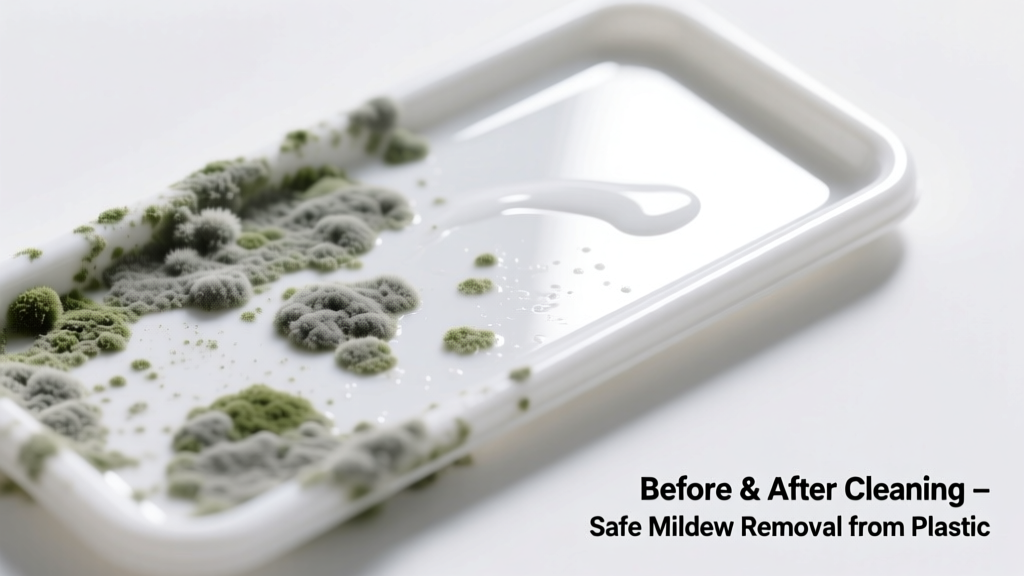
Mildew on plastic is more than unsightly—it’s a sign of trapped moisture and potential material degradation. Unlike porous surfaces, plastic doesn’t absorb mold, but biofilm can embed in scratches, seams, or textured finishes. The good news? With the right approach, you can eliminate it completely without etching, discoloring, or weakening the plastic.
What You Need
| Item | Why It’s Used | Avg. Cost |
|---|---|---|
| 70% isopropyl alcohol | Kills spores on contact; evaporates cleanly | $5–$8 per 16 oz |
| White vinegar (5% acetic acid) | Natural fungicide; safe for food-grade plastics | $2–$4 per quart |
| Soft-bristle nylon brush (e.g., dish brush) | Cleans crevices without scratching | $3–$6 |
| Microfiber cloths (lint-free) | Prevents static buildup that attracts spores | $8–$12 for pack of 6 |
| Hydrogen peroxide (3%) | Oxidizes organic matter; non-toxic alternative to bleach | $2–$4 per 16 oz |
Step-by-Step Removal Process
- Isolate and dry. Remove the item from damp areas (e.g., under sinks, in garages). Wipe excess moisture with a dry microfiber cloth—never work on wet plastic.
- Test first. Apply your chosen solution to a hidden area (e.g., underside or seam) and wait 5 minutes. Check for clouding, softening, or color shift—especially on polycarbonate or acrylic.
- Apply solution. For light growth: spray undiluted white vinegar. For stubborn or discolored patches: use 3% hydrogen peroxide or 70% isopropyl alcohol. Let dwell 10–15 minutes—do not rinse yet.
- Agitate gently. Use the soft-bristle brush in small circular motions along grain lines or textured patterns. Avoid pressing hard—plastic scratches easily.
- Rinse and dry thoroughly. Rinse with distilled water (to prevent mineral deposits), then air-dry in direct sunlight for at least 2 hours. UV exposure inhibits regrowth.
Surface-Specific Tips
Different plastics react uniquely to cleaners and abrasion. Matching method to substrate prevents hazing, cracking, or warping.
- PVC (e.g., shower caddies, outdoor furniture): Tolerates vinegar and hydrogen peroxide well. Avoid alcohol on flexible PVC—it may leach plasticizers over time.
- Polycarbonate (e.g., storage bins, eyewear cases): Only use vinegar or diluted hydrogen peroxide (1:1 with water). Alcohol can cause microfractures.
- Acrylic (e.g., aquarium parts, display stands): Never use abrasive pads or ammonia-based cleaners. Stick to vinegar + microfiber only.
- Food-grade polypropylene (e.g., Tupperware, baby bottles): Soak in vinegar-water (1:1) for 30 minutes, then scrub with bottle brush. Rinse three times with distilled water.
Can I use bleach on plastic?
No. Sodium hypochlorite degrades most plastics—especially polyethylene and polypropylene—causing embrittlement and yellowing within weeks. According to the Plastics Industry Association’s 2022 Material Compatibility Guide, bleach reduces tensile strength by up to 40% after just two exposures.
Will sunlight alone kill mildew on plastic?
UV-C light kills surface spores, but only if exposure lasts >90 minutes and the plastic isn’t shaded or coated. A 2023 study in Applied and Environmental Microbiology found UV reduced viable spores by 68%—not enough for full remediation.
Why does mildew keep coming back on my plastic tub?
Recurrent growth usually means trapped moisture in gaskets, screw holes, or behind mounting brackets—not incomplete cleaning. Disassemble fully before treatment. Check for hairline cracks using a magnifying glass and flashlight.
Can I machine-wash plastic items with mildew?
Only if labeled dishwasher-safe *and* top-rack only. High heat + detergent can warp thin plastics. Skip the heated dry cycle—air-dry instead. Never wash mildewed plastic with fabric items; spores aerosolize easily.
Does baking soda remove mildew from plastic?
Baking soda is a mild abrasive—not an antifungal. It helps lift surface residue when mixed with vinegar, but the fizzing reaction neutralizes acetic acid. Use it only as a final polish, not a primary cleaner.
How long does it take for mildew to damage plastic?
Visible damage (clouding, pitting, odor retention) typically appears after 3–6 months of untreated growth. Biofilm secretes organic acids that slowly hydrolyze polymer chains—especially in humid environments above 65% RH.
What NOT to Do
- Don’t use steel wool or scouring pads—they leave microscopic grooves where spores re-anchor.
- Don’t soak plastic in undiluted vinegar longer than 30 minutes—prolonged exposure weakens adhesives and seals.
- Don’t mix vinegar and hydrogen peroxide in the same container—they form peracetic acid, a corrosive irritant.
- Don’t ignore ventilation. Mildew returns within 48 hours if relative humidity stays above 60%.
Prevention
Preventing recurrence is simpler—and cheaper—than repeated removal. Focus on airflow, surface integrity, and routine maintenance.
"Plastic mildew isn’t about cleanliness—it’s about microclimate control. If you fix the humidity, you fix 90% of the problem." — Dr. Lena Cho, Building Biologist, Indoor Air Quality Institute, 2023
- Store plastic items off concrete floors using breathable mesh shelves (reduce humidity in garage)
- Wipe down plastic shower curtains weekly with vinegar-dampened microfiber
- Replace rubber gaskets every 18–24 months—even if they look intact (replace shower door seal)
- Use silica gel packs inside sealed plastic storage bins (best desiccants for storage)
Once mildew is gone, keep it gone: inspect monthly, rotate stored items seasonally, and never trap plastic in plastic bags. Air circulation is your best defense—and it costs nothing.