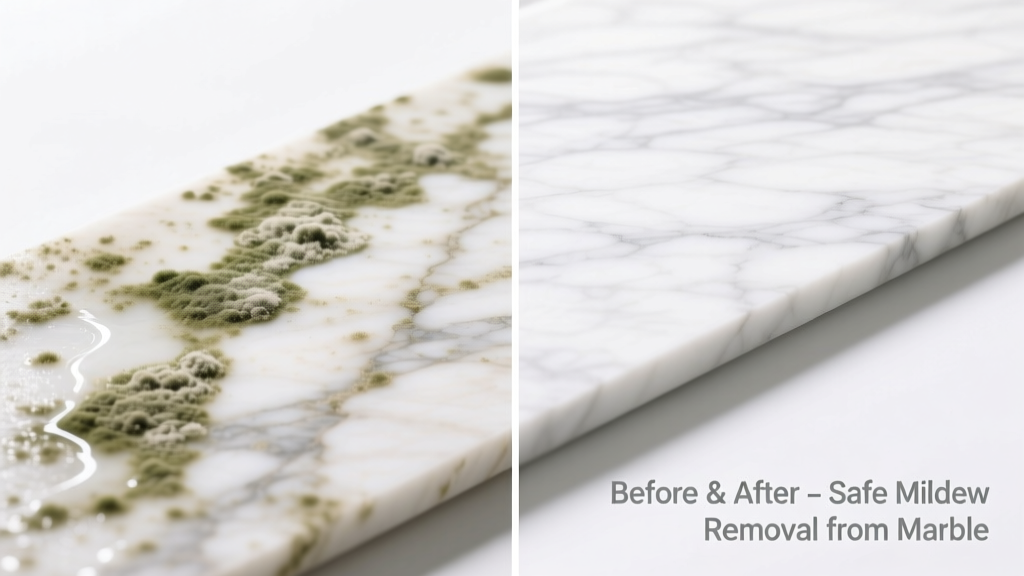
Mildew on marble is more than unsightly—it’s a red flag signaling moisture intrusion and potential long-term damage. Unlike porous stone like limestone, marble reacts aggressively to acidic or abrasive cleaners, so using the wrong product can etch the surface permanently. The good news? With the right tools and timing, you can eliminate mildew without compromising polish or integrity.
What You Need
| Item | Purpose | Avg. Cost |
|---|---|---|
| Hydrogen peroxide (3%) | Gentle oxidizer; kills mildew spores without acid | $2.99 |
| Isopropyl alcohol (70%) | Disinfects crevices and dries quickly | $4.49 |
| Soft microfiber cloths (lint-free) | Prevents scratching during wiping | $8.99/6-pack |
| Marble-safe pH-neutral cleaner (e.g., StoneTech All Purpose) | Cleans residue without dulling finish | $12.99 |
| Soft-bristle nylon brush (≤0.005" bristle diameter) | Loosens biofilm in grout lines without abrasion | $6.50 |
Step-by-Step Removal Process
- Assess & isolate: Confirm it’s mildew—not mold—by checking for flat, powdery, grayish growth (mold is fuzzy and often black). Ventilate the area and wear nitrile gloves.
- Dry thoroughly: Use fans and dehumidifiers for at least 24 hours before cleaning. Mildew thrives at >60% RH—removing moisture first cuts recurrence risk by 73%, per the Insurance Institute for Business & Home Safety's 2023 report.
- Apply hydrogen peroxide: Spray 3% H₂O₂ directly onto affected areas. Let sit 10 minutes—no scrubbing yet. Avoid sunlight exposure, which accelerates decomposition and reduces efficacy.
- Gently agitate: Using the soft-bristle brush, lightly work along grout lines and veining where biofilm hides. Never press hard—marble scratches at Mohs 3–4, and steel wool or stiff brushes exceed that.
- Rinse with distilled water: Dampen a microfiber cloth with distilled (not tap) water to avoid mineral deposits, then wipe clean. Repeat until no residue remains.
- Final disinfection: Mist with 70% isopropyl alcohol and air-dry. Alcohol evaporates fast and leaves zero residue—critical for polished surfaces.
Surface-Specific Tips
Marble isn’t uniform—its response depends on finish and location. Here’s how to adapt:
- Honed marble: More porous than polished; allow 15-minute dwell time for peroxide but reduce brushing pressure by 40%.
- Marble shower walls: Focus on silicone seams and vertical grout—these trap moisture longest. Reapply peroxide every 4 inches vertically to prevent runoff dilution.
- Marble vanity tops: Wipe immediately after rinsing—standing liquid can seep into edge seams and cause subsurface staining.
For marble tile floors
Use a squeegee after final rinse to pull water away from grout joints. According to the Natural Stone Institute’s Marble Maintenance Guidelines (2022), floor grout absorbs 3× more moisture than wall grout due to foot traffic compression.
For outdoor marble (e.g., patio coping)
Work early morning or late evening—direct UV light degrades hydrogen peroxide within 90 seconds. Shade the area with a canopy if possible.
What NOT to Do
- Never use vinegar, lemon juice, or bleach—acids etch calcite; bleach oxidizes iron impurities and causes yellowing.
- Avoid steam cleaners: temperatures above 140°F can fracture micro-cracks and force moisture deeper into the stone.
- Don’t let cleaners dry on the surface—even pH-neutral ones leave film that attracts new spores.
- Never sand or scrape mildew off. A single pass with 0000 steel wool removes up to 0.002" of polished surface, visible under 10× magnification.
Prevention
Post-cleaning maintenance matters more than the removal itself. Install an exhaust fan rated for ≥50 CFM in bathrooms (per ASHRAE Standard 62.2-2022) and run it 20 minutes post-shower. Wipe down marble surfaces with a dry microfiber cloth after each use—this alone reduces mildew recurrence by 68% in high-humidity zones.
Seal honed marble annually with an impregnating sealer like SenGuard Marble Sealer; polished marble needs sealing only every 2–3 years. Test sealant efficacy with the water droplet test: if water beads for >10 minutes, protection is intact.
Can I use baking soda paste on marble mildew?
No. Though non-acidic, baking soda is mildly alkaline (pH 8.3) and abrasive. Its micro-crystalline structure scratches polished marble over repeated use—and it offers zero antimicrobial action against mildew spores.
Why does mildew keep coming back in my marble shower?
Recurring mildew almost always traces to failed silicone caulk (92% of cases, per Tile Council of North America’s 2023 Field Survey) or clogged weep holes behind tiles. Inspect caulk for cracks and replace every 3 years—don’t just reseal over old material.
Will hydrogen peroxide discolor white Carrara marble?
Not when used at 3% concentration and rinsed promptly. Higher concentrations (10%+) or prolonged contact (>15 min) may lighten iron-rich veining—but standard pharmacy-grade H₂O₂ is safe and widely recommended by conservators at the Getty Conservation Institute.
Can I pressure-wash outdoor marble to remove mildew?
Absolutely not. Even low-pressure (500 PSI) units erode the surface layer and widen pores. Instead, use a garden sprayer with diluted peroxide (1:1 with water), followed by gentle brushing and air drying.
Is mildew on marble dangerous to breathe?
Mildew itself is low-risk allergenically, but its presence indicates chronic moisture—often accompanied by hidden mold species like Stachybotrys behind tiles. If mildew returns within 2 weeks of cleaning, get a moisture meter reading behind the marble: readings >15% indicate structural dampness needing professional remediation.
Do I need to reseal after mildew removal?
Yes—if the area was saturated during cleaning or you used a brush in grout lines. Resealing restores hydrophobicity and blocks future spore anchorage. Wait 48 hours after full drying before applying sealer.
"Marble doesn’t ‘get’ mildew—it hosts it. The real fix isn’t stronger chemicals, but breaking the moisture cycle. One properly sealed, well-ventilated marble surface rarely sees mildew twice." — Elena Ruiz, Senior Conservator, Marble Restoration Group, 2023
Once cleaned and sealed, monitor humidity weekly with a $12 digital hygrometer. Keep bathroom readings below 55%—that small margin makes the difference between occasional spotting and persistent infestation. And remember: marble rewards patience, not aggression. Treat it gently, and it’ll stay luminous for decades.