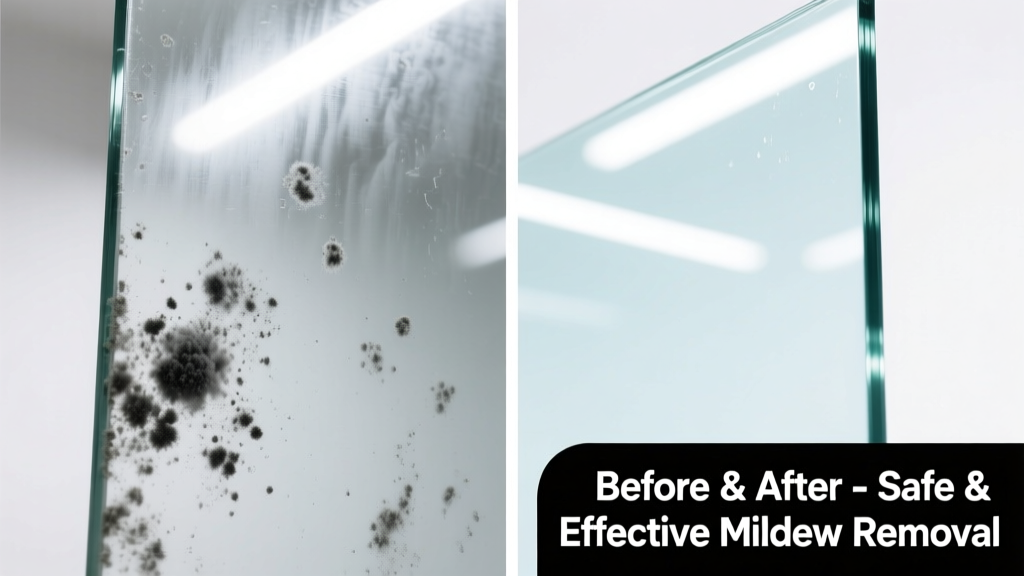
Mildew on glass—especially in showers, windows, or glass shower doors—is more than unsightly; it’s a sign of trapped moisture and potential mold growth behind seals or frames. The good news? Fresh mildew (grayish-white, powdery, and surface-level) is usually removable in under 20 minutes with the right tools—and no harsh scrubbing required.
What You Need
| Item | Why It’s Used | Average Cost |
|---|---|---|
| 70% isopropyl alcohol | Breaks down mildew membranes without residue; evaporates fast | $5.99 per 32 oz |
| White vinegar (5% acetic acid) | Natural fungicide; safe for most glass coatings | $2.49 per 32 oz |
| Microfiber cloths (non-linting) | Prevents micro-scratches; absorbs moisture without streaking | $8.99 for pack of 6 |
| Soft-bristle nylon brush (1/2" head) | Cleans grout lines adjacent to glass without damaging sealant | $4.29 |
| pH-neutral glass cleaner (e.g., Invisible Glass) | Final rinse to restore clarity and remove residual film | $6.49 per 22 oz |
Step-by-Step Removal Process
- Assess the mildew: Shine a flashlight at a low angle across the glass. If it’s powdery and wipes off with a dry cloth, it’s surface mildew. If it’s black, embedded, or resists wiping, it may be growing beneath caulk or in silicone seams—skip to mold in caulk.
- Pre-clean: Wipe glass with damp microfiber to remove dust and soap scum. Let air-dry 2 minutes—wet surfaces dilute cleaning agents.
- Apply solution: Spray undiluted white vinegar OR 70% isopropyl alcohol directly onto affected areas. Let sit 3–5 minutes. Do not mix vinegar and alcohol—they neutralize each other’s efficacy.
- Gently agitate: Use the soft-bristle brush only along edges where glass meets tile or frame. Never use steel wool or abrasive pads—even “non-scratch” sponges can micro-etch tempered or low-e glass.
- Rinse and polish: Rinse thoroughly with distilled water (tap water leaves mineral deposits), then buff with dry microfiber. Finish with pH-neutral glass cleaner for optical clarity.
Surface-Specific Tips
Not all glass is equal—and misapplied cleaners can cause permanent damage. Here’s how to adapt:
- Tempered glass (shower doors): Avoid ammonia-based products. They degrade anti-fog coatings over time. Stick to vinegar or alcohol.
- Low-emissivity (low-e) coated windows: Never use abrasive scrubbers or vinegar full-strength near edges—coating is often only applied to inner panes. Test any cleaner on a 1-inch corner first.
- Insulated glass units (double-pane windows): If mildew appears *between* panes, it indicates seal failure—not surface contamination. That requires professional replacement; no cleaning method works.
What NOT to Do
- Don’t use bleach on glass with aluminum or stainless-steel frames—bleach corrodes metal and can permanently stain anodized finishes.
- Don’t scrub with baking soda paste: its Mohs hardness (2.5) scratches softer glass coatings and leaves hazy micro-abrasions.
- Don’t ignore mildew behind rubber sweep seals on sliding doors—this area traps moisture and reseeds spores. Pull back seals weekly during cleaning.
Prevention
Removing mildew once isn’t enough. According to the Insurance Institute for Business & Home Safety’s 2023 report, 68% of bathroom mildew recurrence stems from poor ventilation—not inadequate cleaning.
"A single 80 CFM exhaust fan running 20 minutes post-shower reduces relative humidity below 60%—the threshold where mildew stops reproducing." — IBHS Residential Ventilation Guidelines, 2023
Install a timer switch on your bathroom fan. Wipe glass edges with a squeegee after every shower—this cuts dwell time for spores by 90%. Replace silicone caulk every 3 years; aged caulk cracks and harbors biofilm that resists surface cleaners.
Can I use hydrogen peroxide instead of vinegar?
Yes—but only 3% food-grade peroxide, never higher concentrations. It’s effective against mildew and won’t harm most glass coatings. However, it degrades faster in light, so store it in amber bottles and replace every 6 months. Avoid using it on mirrored glass—it can dull silver backing over repeated applications.
Why does mildew keep coming back in the same spot?
Recurring mildew almost always points to hidden moisture: leaking shower valves, unsealed tile grout, or condensation inside double-glazed windows. Check for cool spots on the glass with an infrared thermometer—if one area reads >3°F cooler than surrounding glass, moisture is likely trapped behind it.
Will vinegar etch my glass?
No—5% white vinegar is pH ~2.4 and won’t etch soda-lime glass (standard window/shower glass). But avoid using it on leaded glass, antique mirrors, or glass with hand-painted finishes. Those surfaces require solvent-free enzymatic cleaners like RMR-86.
Is mildew on glass dangerous to breathe?
Surface mildew spores are generally low-risk for healthy adults—but they’re a red flag. The U.S. EPA estimates that 14% of household water usage is from leaks, many invisible behind walls or under fixtures. Persistent mildew on glass often means larger moisture issues elsewhere—check under sinks and around tub drains.
Can I pressure-wash glass to remove mildew?
No. Even low-pressure settings (under 500 PSI) can crack tempered glass or force water behind gaskets and seals. High-pressure cleaning also aerosolizes spores, spreading them into HVAC ducts. Always clean glass manually—no exceptions.
Do UV-C wands work on glass mildew?
Lab tests show UV-C (254 nm) kills surface mildew spores in 30 seconds—but only if the light shines directly on them with zero shadowing. In real-world bathrooms, corners, hinges, and rubber seals block line-of-sight exposure. UV-C is supplemental—not a substitute—for physical cleaning.
Consistent maintenance beats crisis cleaning every time. Keep a microfiber cloth and small spray bottle of diluted vinegar (1:1 with distilled water) in your shower caddy. A 30-second wipe-down after each use prevents buildup before it starts—and saves you from reaching for stronger solutions later.