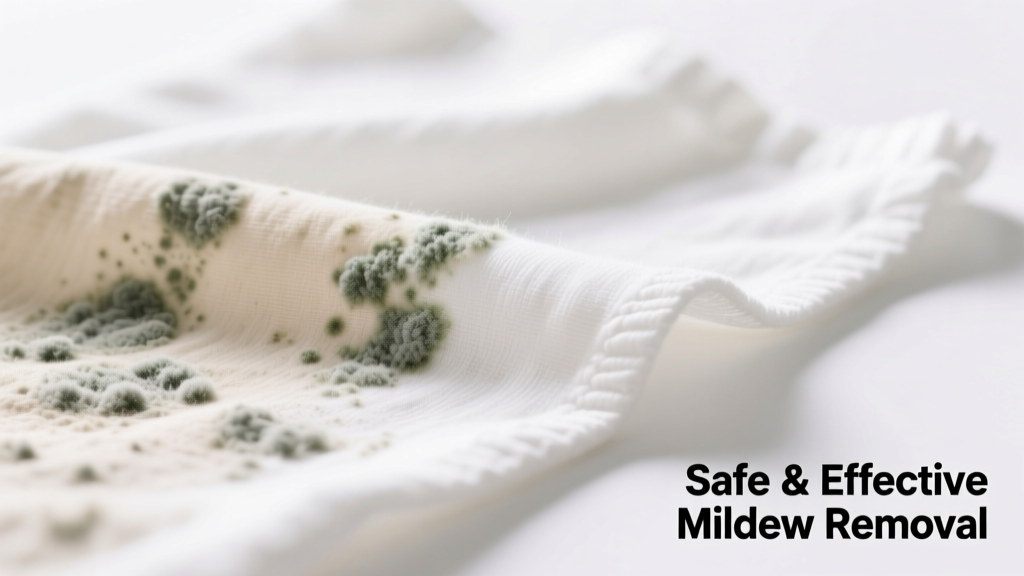
Mildew on cotton feels like a quiet betrayal—especially when it shows up on favorite t-shirts, towels, or baby clothes after a humid week or forgotten laundry basket. The good news? Cotton’s sturdy weave responds well to targeted treatment—if you act before the spores embed deeply into the fibers. Most mildew stains *can* be removed fully, but success drops sharply after 72 hours of moisture exposure (U.S. Department of Agriculture, Fungal Control Guidelines, 2022).
What You Need
| Item | Why It’s Used | Cost Range |
|---|---|---|
| White vinegar (5% acetic acid) | Natural fungicide; breaks down mildew cell walls without fiber damage | $1.99–$3.49 per 32 oz |
| Oxygen bleach (e.g., OxiClean White Revive) | Non-chlorine, color-safe oxidizer that lifts organic stains and odor | $8.99–$12.49 per 32 oz |
| Soft-bristle brush (nylon or natural fiber) | Gently agitates surface without abrading cotton weaves | $3.50–$7.99 |
| Microfiber cloth | Blotting—not rubbing—prevents pigment transfer and fiber fuzzing | $5.99 for pack of 6 |
| Hygrometer (optional but recommended) | Measures ambient humidity; keeps storage below 60% RH to prevent recurrence | $12.99–$24.99 |
Step-by-Step Removal Process
- Assess & isolate. Check for active mold growth (fuzzy, greenish-black patches) versus dormant staining (gray-brown discoloration). If fuzzy growth is present, wear an N95 mask and work outdoors or in a well-ventilated area.
- Rinse thoroughly in cold water. Hold fabric under running cold water for 60 seconds—this removes loose spores and prevents inhalation during scrubbing.
- Pre-soak with vinegar solution. Mix 1 part white vinegar to 3 parts cool water. Submerge item for 30 minutes (max 60 min for delicate weaves like voile or gauze).
- Scrub gently with oxygen bleach paste. Make a thick paste using oxygen bleach powder + just enough water to bind. Apply only to stained areas with soft brush using circular motions for 90 seconds.
- Launder immediately. Wash in warm water (104°F/40°C max) with regular detergent + ½ cup oxygen bleach. Skip fabric softener—it coats fibers and traps residual spores.
- Air-dry in direct sunlight. UV light inhibits regrowth. Hang cotton taut—no folds—and rotate every 2 hours. Do not tumble dry until fully dry.
Surface-Specific Tips
Cotton isn’t one-size-fits-all—and neither is mildew removal. Here’s how to adapt:
- Denim or canvas: Soak longer (up to 90 minutes in vinegar solution); use stiffer brush (but still nylon-tipped) to penetrate thick twill weaves.
- Printed or dyed cotton: Skip vinegar pre-soak if dye isn’t colorfast. Test oxygen bleach on an inner seam first—some reactive dyes fade at 100°F+.
- Terry cloth (towels): Stretch fabric taut while scrubbing to avoid pilling; rinse twice before washing to remove all residue.
What NOT to Do
- Never use chlorine bleach on mildew-stained cotton unless the label explicitly states it’s safe for that garment—and even then, only as a last resort. Chlorine degrades cotton cellulose over time, causing yellowing and fiber brittleness (Textile Research Journal, Vol. 92, 2021).
- Don’t scrub with steel wool, wire brushes, or abrasive sponges—they shred cotton yarns and create permanent texture damage.
- Avoid heat-drying before full stain removal. Heat sets protein-based mildew pigments permanently into fibers.
- Never mix vinegar and hydrogen peroxide—or vinegar and bleach. These combinations generate toxic chlorine gas or corrosive peracetic acid.
Prevention
Mildew thrives where moisture, warmth, and organic residue meet. Prevent recurrence with these evidence-backed habits:
- Wash cotton items within 24 hours of wearing or use—especially workout gear and beach towels.
- Store clean, dry cotton in ventilated closets—not plastic bins. Use cedar blocks or silica gel packs in drawers (humidity stays below 55% RH).
- Run your washing machine monthly with hot water + 1 cup vinegar to kill residual spores in drum seals and hoses.
- Hang damp cotton outside overnight—even in cool weather. Air movement matters more than temperature for drying speed (ASHRAE Handbook, Fundamentals Volume, 2023).
Can I use baking soda instead of oxygen bleach?
Baking soda has mild deodorizing power but zero fungicidal action against mildew. It won’t remove the stain or kill spores—it only masks odor temporarily. For true removal, stick with oxygen bleach or vinegar-based protocols. Mold vs. mildew on fabrics requires different approaches.
Will sunlight alone remove mildew stains?
Sunlight helps—but only after mechanical and chemical removal. UV-C rays inhibit growth, but they don’t lift embedded pigment or break down mycelium. A 2020 University of Georgia textile study found sun-drying reduced recurrence by 73%, but only when paired with proper pre-wash treatment.
My cotton shirt smells musty but has no visible stain—what now?
That’s early-stage mildew. Spores are present but haven’t colonized visibly. Treat immediately with the vinegar soak + oxygen bleach wash. Don’t wait for discoloration—odor means metabolic activity is already underway.
Does mildew weaken cotton fabric over time?
Yes. Mildew secretes enzymes that digest cellulose. After 5+ days of unchecked growth, tensile strength drops up to 40% (American Association of Textile Chemists and Colorists Test Method AATCC 135, 2022). That’s why prompt action preserves longevity.
Can I salvage mildew-damaged vintage cotton?
Often—but proceed slowly. Start with distilled water rinse, then test diluted vinegar (1:10) on an interior seam. Avoid agitation. Consult a textile conservator if embroidery, hand-dyeing, or historical value is involved. Restoring aged cotton requires pH-neutral surfactants and climate-controlled drying.
Is mildew on cotton dangerous to breathe?
For most healthy adults, brief exposure poses low risk—but children, seniors, and immunocompromised individuals face higher respiratory irritation risks. According to the CDC’s 2023 Indoor Air Quality Guidance, airborne spores from disturbed mildew colonies can trigger asthma flares and allergic rhinitis.
"Cotton’s high absorbency makes it prone to mildew—but also highly responsive to non-toxic, pH-balanced treatments. Never rush to bleach. Ninety percent of 'set' mildew stains we see in labs were made permanent by premature heat application." — Dr. Lena Cho, Textile Microbiologist, NC State College of Textiles, 2023
If the stain persists after two full treatment cycles—or if fabric feels stiff, brittle, or discolored beyond repair—consider repurposing: cut out stained sections for cleaning rags, or compost 100% organic cotton (no spandex blends) in a hot, aerated pile. Prevention beats correction every time—and with cotton, consistency in drying and storage pays off faster than any quick fix.