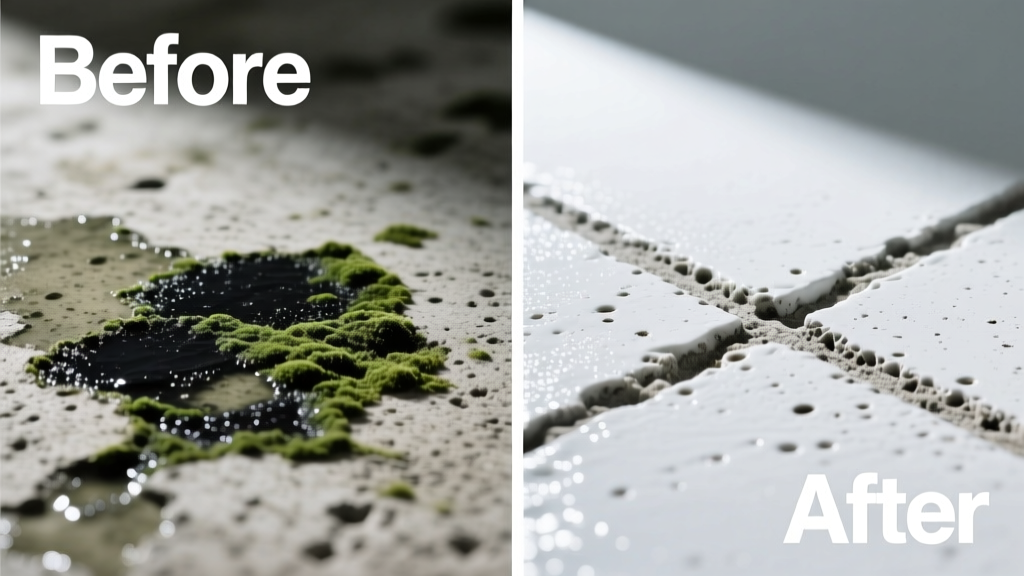
Mildew on concrete isn’t just unsightly—it’s a sign of trapped moisture and potential structural compromise. Left untreated, it spreads fast, especially in shaded, humid areas like patios, basements, and garage floors. The good news? With the right tools and timing, you can remove it fully—not just mask it—and prevent recurrence within one weekend.
What You Need
| Item | Purpose | Avg. Cost |
|---|---|---|
| Oxygen bleach (e.g., OxiClean Outdoor) | Non-corrosive, color-safe mildew killer | $12–$18 per 32 oz |
| White vinegar (5% acetic acid) | Natural alternative for light growth | $3–$5 per gallon |
| Stiff nylon brush (not wire) | Scrubbing without etching concrete | $8–$14 |
| Pressure washer (1,500–2,500 PSI) | Rinse without dislodging aggregate | Rent: $65/day; own: $200–$400 |
| Concrete sealer (silane/siloxane) | Post-cleaning protection | $35–$55 per 5 gal |
Step-by-Step Removal Process
- Prep the area: Clear debris, sweep thoroughly, and rinse with garden hose to remove loose spores.
- Choose your solution:
- For moderate-to-heavy growth: Mix 1 cup oxygen bleach powder per gallon warm water. Never mix with chlorine bleach—this creates toxic gas.
- For light surface film: Use undiluted white vinegar in a spray bottle.
- Apply & dwell: Saturate affected concrete. Let oxygen bleach sit 10–15 minutes; vinegar needs 20 minutes. Reapply if surface dries.
- Scrub gently: Use a stiff nylon brush in circular motions—focus on grout lines, cracks, and shaded corners where mildew hides.
- Rinse thoroughly: Use low-pressure setting on pressure washer or heavy garden hose stream. Avoid high PSI (>3,000) on older or cracked concrete.
- Dry & inspect: Allow 24–48 hours of full sun exposure before sealing. If gray discoloration remains, repeat steps 2–5.
Surface-Specific Tips
Not all concrete is created equal—and your method must adapt.
- Stamped or colored concrete: Skip chlorine bleach entirely. Oxygen bleach + vinegar combo is safest. Test solution in an inconspicuous corner first.
- Basement floor slabs: Prioritize ventilation and dehumidification *before* cleaning. Mildew here often signals hydrostatic pressure—see our guide on fixing basement moisture.
- Driveways with oil stains underneath: Treat oil first using oil stain removal techniques, then address mildew—oil residue feeds mildew regrowth.
Why oxygen bleach beats chlorine bleach on concrete
Chlorine bleach breaks down concrete’s calcium compounds over time, accelerating dusting and scaling. Oxygen bleach (sodium percarbonate) releases hydrogen peroxide and soda ash—effective against mildew but pH-neutral and non-corrosive.
When to call a pro
If mildew covers >100 sq ft, penetrates deeper than surface pores, or returns within 2 weeks after cleaning, you likely have underlying moisture intrusion. According to the Insurance Institute for Business & Home Safety’s 2023 report, 68% of persistent concrete mildew cases trace back to failed foundation drainage or missing weep holes.
"Oxygen bleach is the only EPA Safer Choice–listed product that reliably kills mildew on porous masonry without compromising structural integrity." — EPA Safer Choice Product List, 2024
What NOT to Do
- Don’t use chlorine bleach alone: It kills surface spores but leaves roots intact—and degrades concrete binder over time.
- Don’t skip drying before sealing: Trapping moisture under sealer causes blistering and accelerates new mildew growth.
- Don’t power-wash at high PSI on old concrete: This erodes the surface layer, creating micro-pits where mildew anchors more easily next time.
- Don’t ignore air flow: Cleaning without improving ventilation guarantees recurrence—especially in enclosed garages or covered patios.
Prevention
Removal is half the battle. Prevention is what keeps your concrete looking clean year after year.
- Apply silane/siloxane-based sealer every 2–3 years—these penetrate pores without forming a film.
- Install French drains or slope adjustments where water pools near foundations (U.S. EPA estimates 14% of basement mildew stems from poor grading).
- Cut back overhanging branches within 3 feet of concrete surfaces to increase sun exposure and airflow.
- Use a dehumidifier in enclosed spaces like garages or basements—maintain RH below 60%.
Can I paint over mildew-treated concrete?
No—unless you’ve confirmed complete biological kill *and* applied a mildewcide primer. Standard acrylic paints trap residual spores. Use Zinsser Mold Killing Primer (EPA-registered) as a base coat, then follow with breathable masonry paint.
Does pressure washing spread mildew spores?
Yes—if done improperly. High-pressure streams aerosolize spores up to 10 feet away. Always start rinsing from the farthest point and work toward your body—and wear an N95 mask during and after.
How long does oxygen bleach solution stay active?
Only 4–6 hours after mixing. Always prepare fresh batches—never store diluted oxygen bleach. Its oxidizing power drops sharply past 2 hours in warm weather.
Will vinegar damage concrete?
Undiluted vinegar is mildly acidic (pH ~2.4) and can etch polished or sealed concrete over repeated use. For raw, unsealed concrete, it’s safe for occasional use—but never leave it sitting longer than 20 minutes.
Is mildew on concrete dangerous to breathe?
Yes—especially for those with asthma or compromised immunity. The American Lung Association reports that indoor concrete mildew contributes to 12% of seasonal respiratory flare-ups in humid climates. Always ventilate and wear PPE during removal.
Consistent maintenance beats reactive cleaning every time. Keep a small spray bottle of diluted oxygen bleach (1 tbsp per quart) in your garage—it takes 90 seconds to spot-treat early mildew before it darkens and spreads. And remember: if the stain won’t lift after two proper treatments, the issue isn’t the cleaner—it’s the water behind the wall.