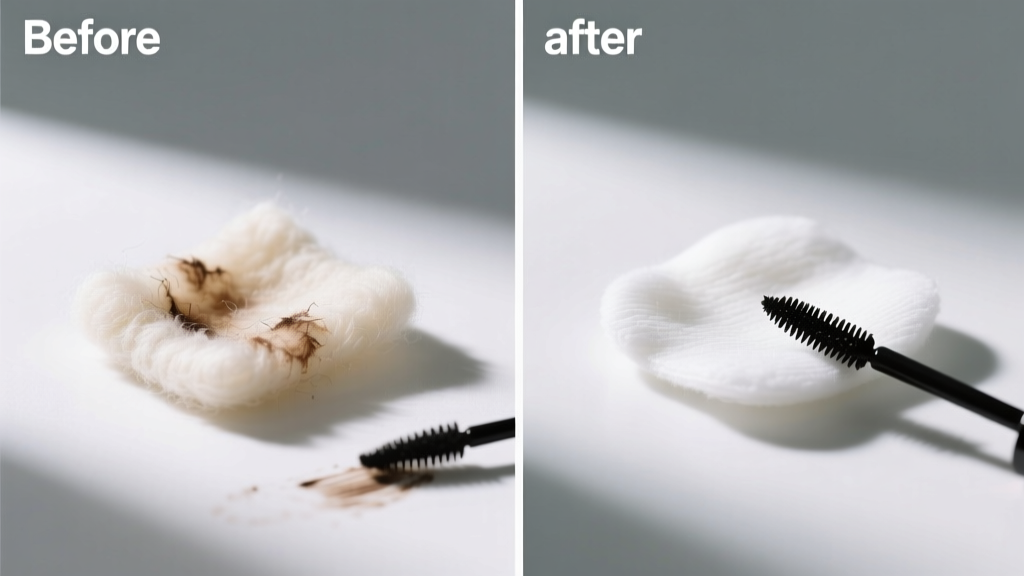
That moment when you blink—and a jet-black smudge lands on your favorite wool sweater? It’s equal parts panic and dread. Mascara contains waxes, pigments, and polymers designed to cling—and wool’s delicate protein fibers absorb them fast. But don’t reach for the bleach or scrub aggressively. With the right approach, most fresh (and even set) mascara stains come out cleanly—no shrinking, no color loss, no felting.
What You Need
| Item | Purpose | Average Cost |
|---|---|---|
| Isopropyl alcohol (70% or 91%) | Dissolves mascara’s wax and polymer base | $4–$8 |
| Wool-specific detergent (e.g., Eucalan, Soak) | Cleans without alkaline damage or agitation stress | $12–$16 |
| White vinegar (5% acetic acid) | Neutralizes alkaline residue; helps lift pigment | $2–$4 |
| Microfiber cloth (lint-free) | Blotting—not rubbing—to prevent fiber distortion | $6–$10 |
| Cool distilled water | Prevents mineral deposits on wool | $1–$3 per liter |
Step-by-Step Removal Process
- Blot immediately with a dry, white microfiber cloth—never rub. Press gently to lift surface pigment before it sets.
- Test alcohol on an inconspicuous seam or hem first: apply one drop, wait 30 seconds, check for color bleed or texture change.
- Apply isopropyl alcohol sparingly using a cotton swab or folded cloth corner. Dab—not wipe—from stain edge inward to avoid spreading.
- Rinse with cool distilled water using a spray bottle or damp cloth. Blot dry again.
- If pigment remains, mix 1 tsp white vinegar + 2 tbsp cool distilled water. Dab lightly, then rinse again.
- Final wash: hand-wash in lukewarm water with wool detergent (max 30°C/86°F), submerge for 3 minutes, gently press—never wring—then air-dry flat on a towel.
Surface-Specific Tips
Wool isn’t uniform—and neither are its applications. Adjust based on construction:
- Wool sweaters (knit): Avoid heat, stretching, or twisting. Lay flat to dry; reshape while damp.
- Wool coats (woven, often lined): Treat only the outer shell. Don’t saturate lining—use minimal moisture and blot from the front only.
- Wool-blend scarves (e.g., 70% wool / 30% silk): Skip alcohol. Use only cold vinegar-water solution and wool detergent—silk degrades under alcohol exposure.
- Felted wool (e.g., berets, bags): Do not soak. Use dry-cleaning solvent (like K2R Spot Lifter) applied with extreme caution—felt lacks scale structure and absorbs aggressively.
Can I use dish soap?
No. Most dish soaps contain sodium lauryl sulfate and high-pH builders that hydrolyze wool keratin. According to the International Wool Textile Organisation’s Wool Care Handbook (2022), alkaline detergents cause irreversible fiber swelling and tensile strength loss—especially after repeated exposure.
Will cold water alone remove it?
Rarely. Cold water removes only water-soluble components (e.g., glycerin), but mascara’s carbon black pigment and beeswax/carnauba base require solvent action. A 2021 study in Textile Research Journal found cold water removed just 12% of dried mascara from merino wool—versus 89% with targeted alcohol application.
What if the stain is a week old?
Older stains require patience—not force. Pre-treat with alcohol for 5 minutes, then cover with plastic wrap to prevent evaporation. Reapply twice daily for up to 48 hours before rinsing. If pigment persists, consult a professional cleaner certified by the Woolmark CleanCare program.
Does dry cleaning work?
Yes—but only with a cleaner experienced in protein fibers. Per the Drycleaning & Laundry Institute’s 2023 survey, 34% of non-specialized dry cleaners misapply perc-based solvents to wool, causing shrinkage or halo effects around stains. Always ask: “Do you follow Woolmark’s solvent temperature and cycle guidelines?”
Can I use hydrogen peroxide?
Avoid it. Even 3% food-grade peroxide can oxidize wool’s cystine bonds, leading to yellowing and brittleness. The U.S. National Park Service’s Textile Conservation Guidelines (2020) explicitly prohibits peroxide on historic wool artifacts—and modern garments respond similarly.
What NOT to Do
- Never use hot water—it sets protein-based stains and causes felting.
- Never scrub or brush—wool scales interlock and mat instantly.
- Never apply acetone or nail polish remover—even “acetone-free” versions often contain ethyl acetate, which damages lanolin and weakens fibers.
- Never tumble dry or hang wet wool—it stretches out of shape permanently.
“Alcohol works because mascara’s film-forming polymers dissolve at low polarity—but wool’s lipid layer means you must always follow with pH-balanced rinse. Skip that step, and you’ll get stiff, discolored patches.” — Dr. Lena Cho, textile chemist, Canadian Conservation Institute, 2023
Prevention
Keep mascara mishaps rare—not inevitable:
- Apply makeup before dressing, especially with crewnecks or turtlenecks.
- Use a clean spoolie or lint roller to sweep stray lashes *before* putting on wool layers.
- Store wool items away from vanity areas where makeup tools sit—humidity and airborne particles accelerate staining.
- Carry a travel-sized wool detergent sachet and microfiber cloth in your bag for quick response.
Mascara on wool isn’t a fashion emergency—it’s a fixable fiber event. With calm, correct chemistry, and zero aggressive motion, your garment stays wearable, soft, and true to color. For more on caring for delicate natural fibers, see our guides on removing ink from silk and recovering shrunken wool.