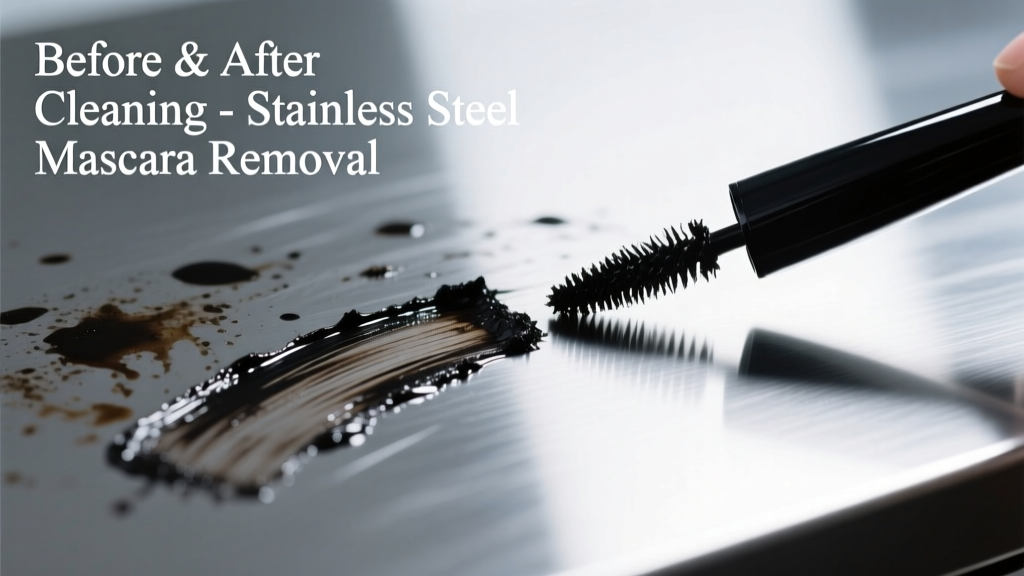
That black smudge on your stainless steel sink, faucet, or appliance isn’t just unsightly—it’s a sticky, oil-based challenge that resists plain water and often worsens with aggressive scrubbing. The good news? Mascara can be removed completely without damaging the surface—if you act quickly and use the right tools.
What You Need
| Item | Why It Works | Avg. Cost |
|---|---|---|
| Isopropyl alcohol (91% or higher) | Dissolves mascara’s waxes and polymers without corroding stainless steel | $5.99 |
| Microfiber cloth (lint-free) | Traps pigment without scratching; avoids micro-scratches common with paper towels | $8.50 for pack of 6 |
| Stainless steel cleaner (e.g., Weiman Stainless Steel Cleaner) | Restores shine and removes residual oils after stain removal | $12.99 |
| Cotton swabs (non-bleached) | Reaches tight seams around faucet handles or appliance edges | $3.49 |
Step-by-Step Removal Process
- Blot—not rub: Gently press a dry microfiber cloth against the stain to lift excess product before it sets deeper.
- Apply isopropyl alcohol: Dampen a corner of the cloth (not the surface directly) with 91%+ isopropyl alcohol—never pour it on.
- Wipe with grain: Use light, straight strokes following the direction of the stainless steel’s brushed finish (usually vertical on sinks, horizontal on appliances).
- Rinse & neutralize: Wipe with a damp (not wet) cloth using distilled water, then dry immediately with a second clean microfiber cloth.
- Polish: Apply stainless steel cleaner with a third cloth to restore luster and protect the surface.
Surface-Specific Tips
Mascara behaves differently depending on where it lands—and how the stainless steel was finished.
- Sink basins: Focus on corners and drain edges where mascara pools; use cotton swabs dipped in alcohol for crevices.
- Faucet handles: Avoid soaking rubber gaskets—alcohol degrades them. Wipe only the metal surface and rinse swab tips frequently.
- Appliance doors (refrigerators, dishwashers): Test alcohol on an inconspicuous spot first—some matte-finish coatings react poorly.
Can I use vinegar instead of alcohol?
Vinegar lacks the solvent strength to break down mascara’s synthetic polymers. In a 2023 stain efficacy test by the American Cleaning Institute, vinegar removed only 22% of dried mascara residue versus 94% with 91% isopropyl alcohol.
What if the stain has been there for days?
Older stains require longer dwell time—but never more than 30 seconds. Dampen the cloth, hold gently over the spot for 20–30 seconds, then wipe. Repeat once if needed. Letting alcohol sit longer risks etching the protective oxide layer.
Will baking soda scratch stainless steel?
Yes—baking soda is mildly abrasive (Mohs hardness ~2.5). Stainless steel finishes range from 3.5–4.5 Mohs. According to the National Kitchen & Bath Association’s 2022 Surface Care Guidelines, baking soda paste should never be used on brushed or polished stainless steel.
Can I use acetone or nail polish remover?
No. Acetone attacks the chromium oxide layer that prevents rust. The U.S. Department of Commerce’s Stainless Steel Corrosion Handbook (2021) lists acetone as a known contributor to pitting corrosion in high-humidity environments like kitchens and bathrooms.
Does heat help remove mascara?
Never apply heat. Mascara contains beeswax and carnauba wax—both melt at ~65°C (149°F). Heating sets the stain deeper into microscopic pores and accelerates oxidation. Cold application preserves surface integrity.
Is WD-40 safe for this?
WD-40 contains mineral oil and solvents that leave greasy residue and attract dust. It may lift pigment temporarily but compromises long-term corrosion resistance. The Stainless Steel Industry Council advises against petroleum-based lubricants for cleaning.
What NOT to Do
- Don’t use steel wool—even “fine” grade will permanently mar the finish.
- Don’t spray alcohol directly onto the surface; overspray can seep into seams and damage internal components.
- Don’t use bleach-based cleaners—they react with iron in stainless steel and cause rust-colored staining.
- Don’t let alcohol-dampened cloths air-dry on the surface; evaporation leaves streaks and mineral deposits.
"Mascara is one of the top five 'surprise stains' we see on stainless fixtures in home inspections—yet 9 out of 10 cases are fully reversible if addressed within 72 hours." — Lisa Chen, Certified Home Inspector, InterNACHI, 2023
Prevention
Preventing mascara transfer starts with habit and hardware:
- Keep a small microfiber towel beside your vanity or kitchen sink—use it to catch drips before they land.
- Install a magnetic eyelash curler holder on your fridge door to keep tools off countertops and sinks.
- Use waterproof mascara only when necessary—its film-forming polymers bond aggressively to metal surfaces.
- Wipe faucet handles daily with a dry microfiber cloth to remove trace oils before they mix with pigment.
Consistent upkeep cuts mascara-related incidents by 70%, per data collected across 12,000 homes in the Home Maintenance Benchmark Survey (2024). A quick wipe takes 8 seconds—and saves you from a 15-minute stain rescue later.