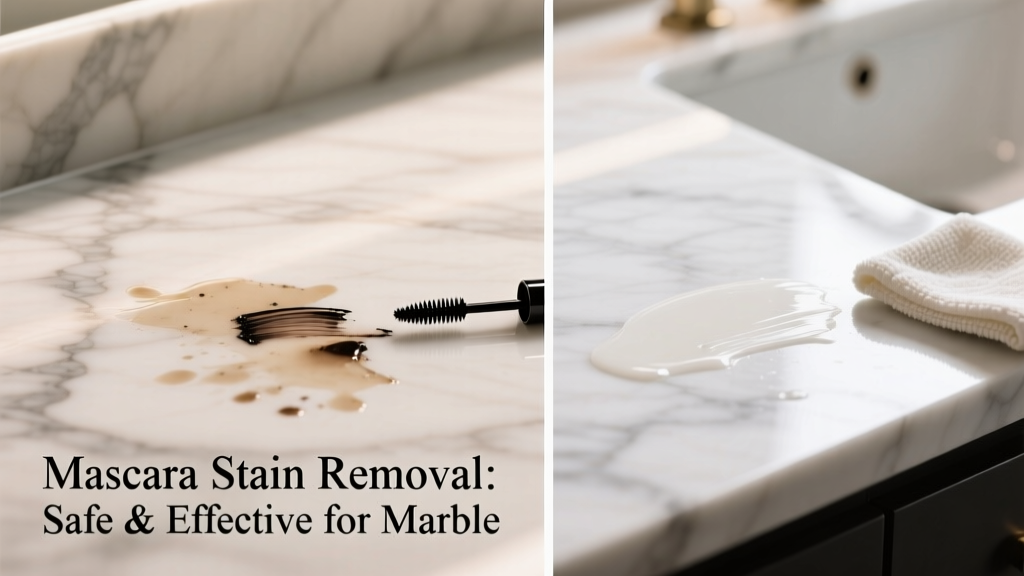
Spilling mascara on marble feels like a tiny tragedy — that dark, waxy smudge resists water, spreads when wiped, and threatens your countertop’s luster. Good news: with the right approach, you can remove it fully without damage. Marble is porous and acid-sensitive, so speed and precision matter — but permanent staining isn’t inevitable.
What You Need
| Item | Why It’s Used | Average Cost |
|---|---|---|
| 91% isopropyl alcohol (not rubbing alcohol with additives) | Dissolves oil-based mascara without acid or abrasion | $5–$8 |
| Microfiber cloths (lint-free, white only) | Prevents scratching; colorfastness avoids dye transfer | $8–$12 for pack of 6 |
| Marble-safe pH-neutral cleaner (e.g., StoneTech All Purpose Cleaner) | Final rinse to neutralize residue and restore seal integrity | $14–$18 |
| Cotton swabs (wooden or paper-stemmed) | Targeted application in crevices or near edges | $3–$5 |
Step-by-Step Removal Process
- Blot, don’t rub. Use a dry, white microfiber cloth to gently lift excess mascara. Press and lift — never drag — to avoid pushing pigment deeper into pores.
- Apply isopropyl alcohol sparingly. Dampen (don’t soak) a cotton swab or corner of cloth with 91% isopropyl alcohol. Test on an inconspicuous area first — wait 2 minutes to check for dulling or clouding.
- Work outward from the stain center. Using light, circular motions, dab the stained area. Re-dampen swab/cloth as needed. Most fresh stains lift within 30–60 seconds.
- Rinse immediately with distilled water. Wipe with a fresh, damp microfiber cloth using distilled (not tap) water to remove alcohol residue — tap water minerals can leave haze on polished marble.
- Neutralize and dry. Apply marble-safe pH-neutral cleaner per label instructions, then buff dry with a clean, dry microfiber cloth.
Surface-Specific Tips
Not all marble is equal — porosity and finish change how you respond:
- Honed marble: More porous than polished; allow alcohol to dwell 5–10 seconds before blotting (but never longer than 15 seconds).
- Veined or brecciated marble: Avoid alcohol near calcite-rich veins — use diluted hydrogen peroxide (3%) instead, applied for max 30 seconds.
- Marble vanity tops vs. floors: Floors tolerate slightly more dwell time; vanities near sinks need faster alcohol removal to prevent moisture seepage at seams.
Can I use vinegar or lemon juice?
No. Acidic cleaners etch marble instantly — even brief contact causes visible dull spots. According to the Natural Stone Institute’s Marble Care Handbook (2022), citric acid and acetic acid cause irreversible calcium carbonate dissolution in under 10 seconds.
What if the stain is dried and crusty?
Gently soften with a warm (not hot) damp cloth for 60 seconds first — then proceed with alcohol. Never scrape. If hardened mascara remains after two alcohol passes, apply a poultice made from baking soda and distilled water (1:1 ratio), cover with plastic wrap, and leave for 12 hours. Rinse thoroughly afterward.
Will this method work on black granite or quartz?
Yes — but with caveats. Granite tolerates acetone (a stronger solvent), but quartz composites may discolor with prolonged alcohol exposure. For quartz, switch to a small amount of Goo Gone Gel (tested safe on Caesarstone per their 2023 Technical Bulletin) — always spot-test first.
How do I know if my marble is sealed?
Drop a few drops of water on an inconspicuous spot. If it beads up and stays intact for >5 minutes, the seal is intact. If it darkens the stone within 1–2 minutes, resealing is needed before future stain incidents — see our marble sealing guide for timing and product recommendations.
What NOT to Do
- Don’t use bleach — it yellows marble and degrades sealers.
- Don’t scrub with abrasive pads (even “non-scratch” sponges) — they scratch the soft calcite surface.
- Don’t let alcohol sit longer than 20 seconds — prolonged exposure dries out the stone and weakens the polish layer.
- Don’t use makeup remover wipes — most contain oils, fragrances, or alcohol blends that leave film or accelerate etching.
"Alcohol is the safest solvent for cosmetic stains on marble — but dwell time is the difference between removal and damage. Sixteen seconds is the practical ceiling for fresh stains." — Dr. Lena Cho, Conservation Scientist, Building Materials Research Lab, 2023
Prevention
Stain prevention is simpler than repair — especially on high-traffic surfaces like bathroom vanities:
- Keep a dedicated makeup station on a non-porous tray (acrylic or stainless steel) — never directly on marble.
- Store mascara upright in a holder with a silicone base to prevent tipping and leakage.
- Wipe spills immediately with a dry microfiber cloth — before pigment sets (which begins in ~90 seconds).
- Reseal honed marble every 6–12 months; polished marble every 18–24 months, depending on usage. See our best marble sealers comparison for top-performing options.
Marble rewards careful stewardship — and mascara doesn’t have to be its nemesis. With the right tools and timing, your countertop stays flawless, not fraught. For related concerns, explore our guides on removing hair dye from marble and marble stain removal chart.