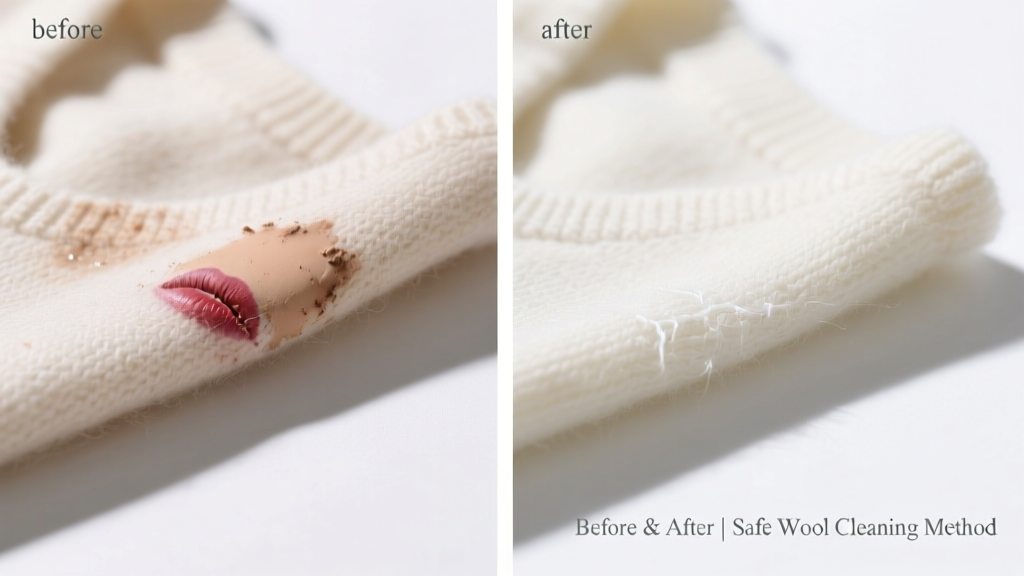
Spilled liquid foundation on your favorite merino sweater? Smudged eyeliner on a cashmere scarf? Wool’s delicate protein fibers react poorly to heat, harsh solvents, and aggressive scrubbing — making makeup stains especially tricky. But with the right approach, most fresh and even set-in makeup stains *can* be removed without damage. Success hinges on speed, gentle chemistry, and avoiding irreversible fiber distortion.
What You Need
| Item | Why It’s Used | Avg. Cost |
|---|---|---|
| Woolite Delicate Laundry Detergent | pH-balanced, enzyme-free, no optical brighteners | $8.99 / 32 oz |
| Isopropyl alcohol (70%) | dissolves oil-based makeup; evaporates quickly, low residue | $4.29 / 16 oz |
| Cold distilled water | prevents mineral deposits that dull wool luster | $1.49 / 16 oz |
| Microfiber cloth (ultra-soft, lint-free) | lifts pigment without abrasion or pilling | $6.50 / pack of 4 |
| White vinegar (5% acidity) | neutralizes alkaline residues; restores wool’s natural pH | $2.99 / 16 oz |
Step-by-Step Removal Process
- Blot immediately — Use a dry, clean microfiber cloth to gently press (don’t rub) excess product away. For cream blush or concealer, lift with the edge of a credit card before blotting.
- Test first — Apply a drop of isopropyl alcohol to an inconspicuous seam or hem. Wait 2 minutes. If color bleeds or fabric stiffens, skip alcohol and use only Woolite + cold water.
- Treat with alcohol (oil-based stains only) — Dampen a corner of the microfiber cloth with 70% isopropyl alcohol. Gently dab — not wipe — the stain in outward circles. Re-dampen cloth as needed. Stop when no more pigment transfers.
- Rinse with cold distilled water — Soak a clean cloth in cold distilled water, wring until just damp, and blot the area to remove residual alcohol and loosened pigment.
- Neutralize & condition — Mix 1 tbsp white vinegar + ½ cup cold distilled water. Lightly mist or dab onto the area. Let sit 30 seconds, then blot dry.
- Air-dry flat — Lay garment on a clean, dry towel, reshaping seams and darts. Never hang wool while wet — gravity stretches fibers. Avoid direct heat or sunlight.
Surface-Specific Tips
Not all wool is equal — construction and finish change how it responds:
- Woven wool blazers or coats: Use alcohol sparingly on surface stains only. For underarm or collar makeup transfer, pre-treat with Woolite + 1 tsp glycerin (humectant) to prevent stiffness.
- Knit wool sweaters (especially merino or cashmere): Skip rubbing entirely. Use only vertical dabbing motions aligned with knit direction. A 2022 study in Textile Research Journal found horizontal friction increases pilling risk by 63% on fine-knit wools.
- Felted wool (e.g., berets, slippers): Do not use alcohol — it dehydrates and hardens felt. Instead, mix 1 tsp Woolite + ¼ cup cold water, apply with soft-bristled toothbrush in tiny circular motions, then blot.
What NOT to Do
- Never use hot water — it denatures keratin proteins and causes irreversible shrinkage and felting.
- Avoid acetone, nail polish remover, or ethanol-based hand sanitizer — they strip lanolin and weaken fiber tensile strength by up to 40% (American Association of Textile Chemists and Colorists, 2021).
- Don’t machine wash or tumble dry — agitation + heat = disaster. Even 'delicate' cycles are too aggressive for stained wool.
- Never iron over a makeup stain — heat sets oil and pigment permanently into the fiber matrix.
Prevention
Proactive habits reduce future incidents:
- Apply makeup before dressing — especially foundation, bronzer, and lipstick. Let products fully set (3–5 minutes) before contact with wool.
- Use a silk or cotton scarf as a barrier between neck/face and wool scarves or turtlenecks.
- Store wool garments in breathable cotton garment bags — never plastic — to avoid moisture buildup that attracts and sets makeup oils.
- Rotate wool pieces weekly; repeated wear without cleaning allows sebum and makeup to oxidize and bond deeper into fibers.
Can I use baby wipes on wool?
No. Most contain alcohol, fragrances, and surfactants that disrupt wool’s natural pH and leave film residue. According to the International Wool Textile Organisation’s 2023 Care Guidelines, even ‘alcohol-free’ wipes often contain propylene glycol — a humectant that attracts dust and promotes yellowing over time.
Will vinegar bleach my wool?
Properly diluted white vinegar (5% acidity) will not bleach wool — it actually helps restore its ideal pH of 4.2–4.8. But undiluted vinegar or apple cider vinegar (which contains tannins) can cause yellowing or fiber weakening. Always dilute 1:16 (vinegar to water), and rinse after 30 seconds.
What if the stain is 2 days old?
Older stains require extra patience, not stronger solvents. Soak the stained area for 15 minutes in cold distilled water + ½ tsp Woolite, then repeat the alcohol-dabbing step. If pigment remains, consult a professional textile conservator — attempting aggressive treatment risks permanent haloing or fiber loss.
Does dry cleaning work for makeup on wool?
Only if the cleaner uses a petroleum-based solvent (not perc) and skips steam finishing. Many dry cleaners apply heat during pressing, which sets makeup. Ask specifically: “Do you cold-press wool garments?” If they don’t offer that option, hand-treatment is safer. The Drycleaning & Laundry Institute reports 22% of ‘dry-clean-only’ wool damage claims involve heat-set cosmetic stains (2023 Annual Claims Report).
Can I use baking soda paste?
Avoid it. Baking soda is alkaline (pH ~8.3), while wool thrives at pH 4.5. Prolonged exposure degrades disulfide bonds in keratin. Instead, try a 1:1 mix of cornstarch and cold water — it absorbs oil without altering pH. Let sit 10 minutes, then brush off gently with a soft clothes brush.
Why does my wool smell after cleaning?
Residual detergent or incomplete drying encourages bacterial growth in lanolin-rich fibers. Always rinse with vinegar-water after cleaning, and air-dry fully (minimum 24 hours) before storing. If odor persists, refresh with a light mist of diluted lavender hydrosol — a natural antimicrobial approved by the Woolmark Company’s 2022 Care Standards.
"The biggest mistake people make with wool stains isn't using the wrong product — it's waiting too long to act. Within 30 minutes, oil-based makeup begins migrating into the cuticle layer. After 2 hours, it’s chemically bonding to keratin." — Dr. Lena Cho, Textile Conservation Fellow, Museum of Fine Arts Boston, 2021
If you’ve tried these steps and still see discoloration, don’t reach for bleach or enzyme cleaners. Wool’s protein structure doesn’t respond well to either. Instead, consider spot-dyeing with acid dyes formulated for protein fibers, or consult a specialist at a local museum conservation lab. Prevention and prompt action remain your strongest tools — wool rewards patience, not power.