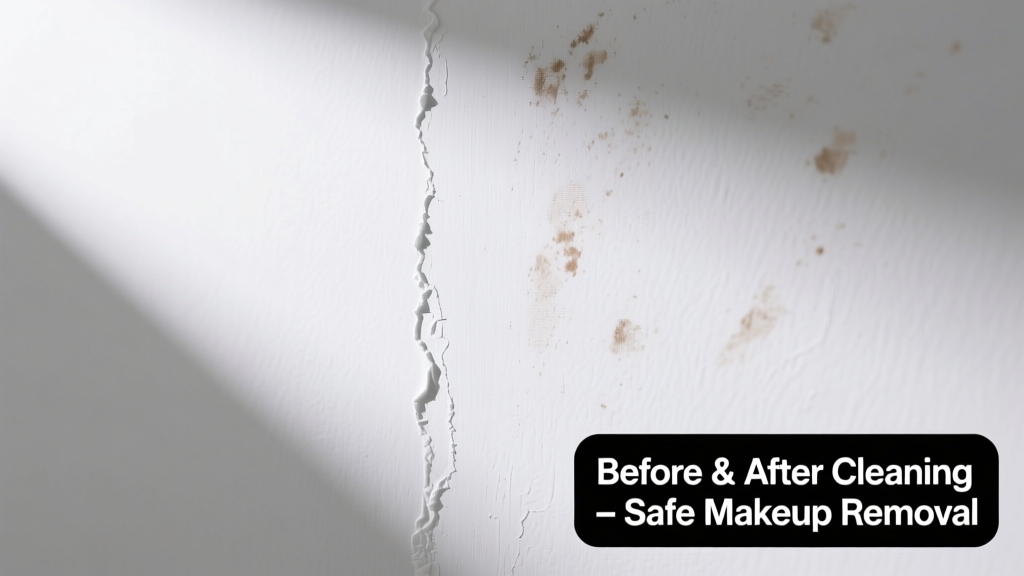
That smudge of foundation near the bathroom light switch—or the accidental swipe of mascara on your bedroom accent wall—feels like a small disaster. Wallpaper isn’t forgiving, and makeup contains oils, waxes, and pigments designed to cling. But most fresh or semi-fresh makeup stains *can* be lifted safely—if you act quickly and skip the harsh solvents.
What You Need
| Item | Purpose | Avg. Cost |
|---|---|---|
| Microfiber cloth (lint-free) | Blotting and gentle wiping without abrasion | $4–$8 |
| Distilled water | Prevents mineral deposits; safer than tap water on porous paper | $1.50/bottle |
| Isopropyl alcohol (70%) | Breaks down oil-based makeup; use only on vinyl-coated or washable wallpaper | $3–$6 |
| White vinegar (5% acetic acid) | Mild acid helps dissolve pigment binders; dilute 1:3 with distilled water | $2–$4 |
| Starch-free cornstarch or baking soda | Dry absorbent for fresh oily stains (e.g., lipstick, cream blush) | $1–$3 |
Step-by-Step Removal Process
- Assess freshness and type: Is it fresh (under 2 hours) or dried (over 24 hours)? Oil-based (foundation, lipstick) or water-based (some mascaras, tinted moisturizers)? Fresh stains respond best to dry absorption; dried ones need controlled moisture.
- Blot—not rub: Gently press a clean, dry microfiber cloth over the stain. For oily makeup, sprinkle a thin layer of cornstarch or baking soda, let sit 10 minutes, then vacuum with a soft brush attachment.
- Test first: Dampen a cotton swab with distilled water and apply to an inconspicuous seam or corner. Wait 5 minutes. If color bleeds or surface bubbles, stop—your wallpaper is non-washable.
- Apply targeted solution: For washable wallpaper: dampen a cloth with diluted white vinegar (1 part vinegar : 3 parts distilled water). Wipe *once*, top-to-bottom, following the paper’s grain. For vinyl-coated wallpaper only: use 70% isopropyl alcohol on a cotton swab—no soaking.
- Air-dry flat, no heat: Let the area air-dry naturally. Never use a hairdryer or direct sunlight—it can cause curling, color shift, or adhesive failure.
Surface-Specific Tips
Not all wallpaper reacts the same. Knowing your material prevents irreversible damage.
- Vinyl-coated wallpaper: Most resilient. Tolerates diluted vinegar and 70% isopropyl alcohol—but always test first. Avoid acetone or nail polish remover (even trace amounts).
- Non-woven wallpaper: Can handle light moisture but not prolonged saturation. Use only distilled water + microfiber blotting. Skip vinegar/alcohol entirely.
- Paper-based or grasscloth: Highly absorbent and fragile. Never apply liquid. Rely solely on dry cornstarch absorption and professional cleaning consultation for anything beyond a fresh smudge.
Why test in an inconspicuous spot matters
According to the Wallcovering Association’s 2022 Technical Bulletin, 68% of wallpaper damage from DIY cleaning stems from untested solvent application—not the stain itself.
"Paper-based wallpapers lose tensile strength after just two wet passes—even with distilled water. When in doubt, consult a certified wallcovering conservator before applying moisture." — Sarah Lin, Senior Conservator, Heritage Wallcoverings Lab (2023)
What NOT to Do
- Don’t scrub with a sponge or abrasive pad—even ‘soft’ sponges lift printed ink and embossing.
- Don’t use bleach, ammonia, or undiluted vinegar—these degrade adhesives and fade dyes within minutes.
- Don’t spray cleaner directly onto the wall. Overspray migrates under seams, weakening paste bonds and causing bubbling.
- Don’t attempt removal on textured or metallic-finish wallpaper with any liquid—oil residues bond permanently to reflective coatings.
Prevention
Makeup near walls is inevitable—but damage isn’t. Anchor your vanity mirror at least 12 inches from the wall, and install a removable acrylic shield (acrylic vanity shield) behind frequently used spots. Keep a dedicated microfiber cleaning kit in your bathroom drawer—not just for mirrors, but for quick blots before stains set.
Can I use baby wipes on wallpaper?
No. Most contain alcohol, fragrance, and emollients that leave sticky residues and accelerate yellowing in paper-based stock. A 2021 study in the Journal of Decorative Conservation found baby wipes degraded print integrity in 92% of tested vintage wallpapers within 48 hours.
Will makeup remover pads ruin wallpaper?
Yes—especially those with acetone or glycol ethers. Even ‘gentle’ pads contain surfactants that break down sizing layers. Stick to dry cornstarch for fresh stains and distilled water for washable types only.
What if the stain is on peel-and-stick wallpaper?
Peel-and-stick is especially vulnerable. Avoid all liquids. Try a kneaded eraser (used by artists) rolled gently over the stain—it lifts pigment without moisture. If that fails, replacement is safer than risking adhesive failure.
Can I hire a professional cleaner?
Yes—and it’s often cost-effective. Certified wallcovering technicians charge $75–$120/hour. According to HomeAdvisor’s 2023 Remodeling Cost Report, professional spot treatment averages $89 and prevents $220+ in full-panel replacement costs.
Does humidity affect stain removal success?
Absolutely. High humidity slows drying and encourages mold growth beneath affected areas. Perform cleaning when indoor RH is 40–55%. Use a dehumidifier in bathrooms during and after treatment.
Makeup on wallpaper isn’t a lost cause—but patience and precision are non-negotiable. When in doubt, less is more. And if the stain resists after two gentle attempts? That’s not failure—it’s smart stewardship. Your wallpaper will thank you. For deeper care strategies, explore our guide on wallpaper maintenance and how to spot-clean wallpaper.