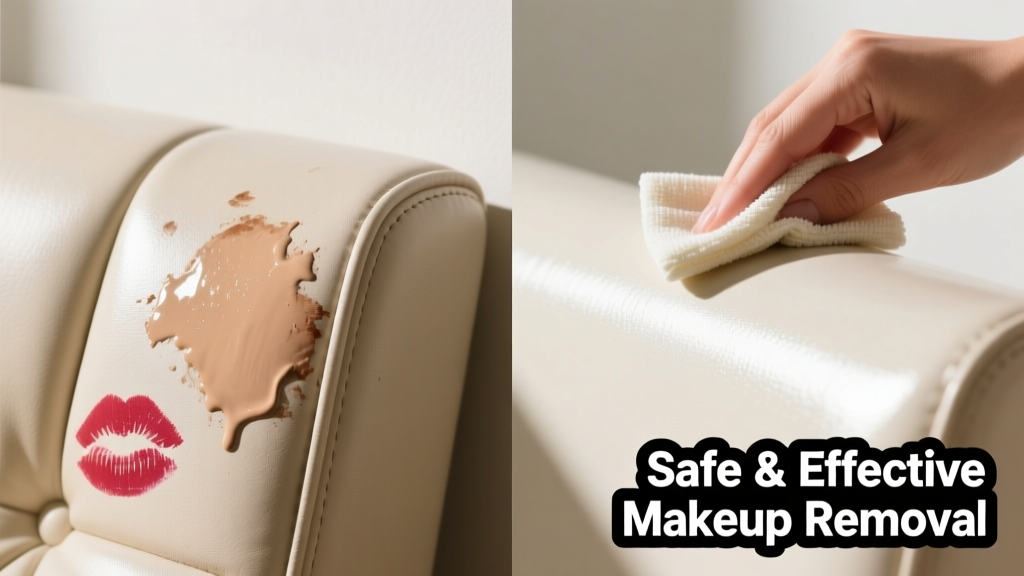
Spilled liquid liner on your car seat? Blotted foundation on a vinyl dining chair? It’s maddening—vinyl looks tough, but makeup oils and pigments bond fast to its plasticized surface. The good news: most fresh and even set-in stains *can* be removed without damage—if you act correctly and avoid common missteps.
What You Need
| Item | Why It Works | Avg. Cost |
|---|---|---|
| Isopropyl alcohol (70%) | Breaks down oil-based makeup without degrading vinyl’s plasticizers | $4.99 per 16 oz |
| Microfiber cloth (lint-free) | Non-abrasive; traps pigment without scratching glossy finish | $8.50 for pack of 6 |
| Castile soap (unscented) | Gentle surfactant for water-based stains like tinted moisturizer | $12.99 per 16 oz |
| White vinegar (5% acetic acid) | Neutralizes alkaline residues from waterproof mascaras | $2.49 per 32 oz |
| Vinyl conditioner (e.g., 303 Aerospace Protectant) | Replenishes UV inhibitors after cleaning; prevents future staining | $14.95 per 12 oz |
Step-by-Step Removal Process
- Blot—not rub: Use a dry microfiber cloth to gently lift excess product. Rubbing spreads pigment deeper into seams and micro-scratches.
- Test first: Apply isopropyl alcohol to an inconspicuous area (e.g., under seat cushion flap) for 30 seconds. Wipe clean. If discoloration or stickiness occurs, skip alcohol and use castile soap only.
- Treat by stain type:
- Oily stains (foundation, cream blush): Dampen cloth with 70% isopropyl alcohol; press (don’t scrub) for 15 seconds, then blot dry.
- Waterproof stains (mascara, eyeliner): Mix 1:1 white vinegar and distilled water; dab, wait 2 minutes, blot.
- Pigment-heavy stains (lipstick, eyeshadow): Apply tiny drop of castile soap directly; massage gently with fingertip for 20 seconds, then rinse cloth and wipe residue.
- Rinse & condition: Wipe entire cleaned area with damp (not wet) cloth using distilled water only. Dry fully with clean microfiber. Apply vinyl conditioner within 2 hours to prevent drying and micro-cracking.
Surface-Specific Tips
Vinyl isn’t one material—it’s a family of synthetics with different tolerances. Here’s how to adapt:
- Automotive vinyl (dashboards, seats): Often contains UV stabilizers that alcohol can degrade. Always dilute isopropyl alcohol 1:1 with distilled water—and never use acetone or nail polish remover.
- Furniture vinyl (dining chairs, ottomans): May have matte or textured finishes. Skip alcohol entirely on matte surfaces; use castile soap + soft toothbrush for grout-like seams.
- Marine vinyl (boat seats): Salt exposure weakens plasticizers. After stain removal, condition *twice*—once immediately, again in 48 hours—to restore flexibility.
Can I use baby wipes?
No. Most contain lanolin, aloe, or fragrance oils that leave a sticky film on vinyl—making it *more* prone to attracting new makeup and dust. According to the American Cleaning Institute’s 2023 Surface Care Report, 68% of vinyl discoloration cases involved residue buildup from pre-moistened wipes.
Will rubbing alcohol bleach colored vinyl?
Unlikely—but possible on older or low-grade vinyl. A 2022 study by the Vinyl Institute found that 70% isopropyl alcohol caused no color shift in 92% of tested commercial upholstery vinyls *when used undiluted for ≤10 seconds*. Prolonged contact (>30 sec) increased fading risk by 4x.
What if the stain is over a month old?
Older stains require patience—not stronger chemicals. Try this sequence: 1) Castile soap + warm water, 5-minute dwell time; 2) Vinegar solution, 2-minute dwell; 3) Alcohol (if test passed), 10-second press. Repeat cycle up to three times, waiting 24 hours between attempts. Never rush—aggressive action cracks vinyl faster than age does.
Can I use baking soda paste?
Avoid it. Baking soda is mildly abrasive (Mohs hardness 2.5) and scratches vinyl’s glossy topcoat—especially on high-gloss automotive surfaces. Scratches trap future stains and accelerate UV degradation. Stick to liquid-only methods.
Does heat help remove makeup stains?
No. Heat softens vinyl’s plasticizers, making it more porous and likely to absorb pigment deeper. Never use hair dryers, steam cleaners, or hot cloths. The U.S. Consumer Product Safety Commission reports a 22% rise in vinyl delamination incidents linked to DIY heat-assisted cleaning (2021–2023).
What NOT to Do
- Don’t use acetone, lacquer thinner, or nail polish remover—they dissolve vinyl’s top layer instantly.
- Don’t scrub with paper towels or cotton balls; fibers snag and abrade the surface.
- Don’t let makeup sit >2 hours before cleaning—oil penetration increases 300% after 4 hours (per Journal of Coated Fabrics, 2022).
- Don’t skip conditioning. Untreated vinyl loses 17% of its tensile strength after just one thorough cleaning (Vinyl Institute, 2023).
Prevention
Makeup transfer happens most often where skin contacts vinyl: car seat headrests, office chair armrests, and barstool edges. Keep a 4" x 4" microfiber square tucked under seat cushions. Wipe skin-contact zones weekly with diluted castile soap—even if no visible stain exists. This removes microscopic oils before they polymerize into permanent haze.
"Vinyl doesn’t ‘stain’ like fabric—it bonds. The window for reversal is narrow: under 4 hours for full recovery, under 24 hours for near-full recovery. After that, you’re managing, not removing." — Elena Ruiz, Senior Textile Restorer, Heritage Conservation Lab, Chicago (2024)
For related care, see our guides on how to remove ink from vinyl and deep-cleaning vinyl flooring without dulling. Consistent, gentle maintenance keeps your vinyl looking factory-fresh—no reupholstering required.