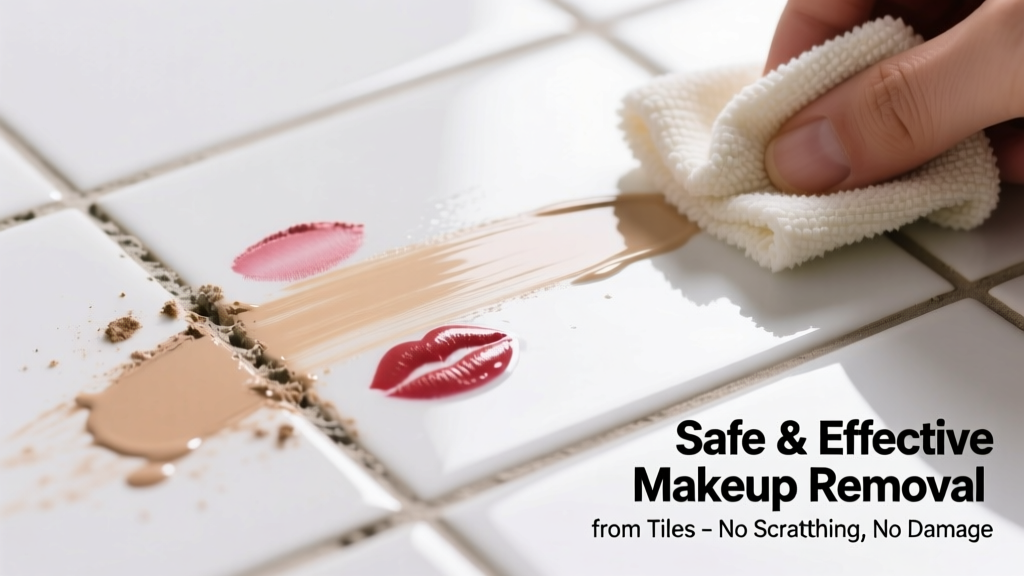
That smudge of liquid foundation on your subway tile? The stubborn eyeliner streak near the shower niche? Makeup on tile isn’t just unsightly—it dries into porous grout lines and bonds to glossy surfaces faster than you’d think. The good news: most fresh and even set-in makeup stains respond well to targeted, low-risk treatments—if you act before they oxidize or mix with soap scum.
What You Need
| Item | Why It Works | Avg. Cost |
|---|---|---|
| Isopropyl alcohol (70% or 91%) | Dissolves oil-based pigments without damaging glazed ceramic or porcelain | $4.99 |
| Microfiber cloth (ultra-soft, lint-free) | Prevents scratching; traps pigment instead of spreading it | $8.50 for pack of 6 |
| Baking soda paste (1:3 ratio with water) | Gentle abrasive for grout; neutral pH avoids etching stone | $1.29 |
| pH-neutral stone cleaner (e.g., StoneTech All-Purpose) | Safe for marble, travertine, and limestone—unlike vinegar or bleach | $14.99 |
| Cotton swabs (non-bleached) | Precision application in grout lines and corners | $2.49 |
Step-by-Step Removal Process
- Blot, don’t rub. Use a dry microfiber cloth to gently lift excess product—especially wet foundation or cream blush—before it sets.
- Apply isopropyl alcohol. Dampen (not soak) a corner of the cloth with 91% alcohol. Press—not scrub—onto stained tile for 15 seconds. Let dwell.
- Lift with circular motion. Using light pressure, move the cloth in small circles. Re-dampen as needed. For grout, switch to a cotton swab dipped in alcohol.
- Rinse immediately. Wipe area with water-dampened microfiber, then dry fully. Residue attracts new grime.
- For dried, stubborn stains: Apply baking soda paste to grout only. Let sit 5 minutes, then gently brush with soft nylon toothbrush. Rinse thoroughly.
Surface-Specific Tips
Tile isn’t one material—it’s a family of surfaces with wildly different tolerances. What works on porcelain can etch marble in under 60 seconds.
- Glazed ceramic & porcelain: Alcohol, diluted dish soap (1 tsp Dawn + ½ cup warm water), or hydrogen peroxide (3%) are all safe. Avoid abrasive powders on high-gloss finishes.
- Unglazed quarry or cement tile: Test alcohol in an inconspicuous spot first. Prefer pH-neutral cleaners—these surfaces absorb oils deeply and stain permanently if treated too aggressively.
- Natural stone (marble, travertine, limestone): Never use vinegar, lemon juice, or undiluted alcohol. Use StoneTech All-Purpose Cleaner or a 1:10 dilution of denatured alcohol in water—applied with a swab and rinsed within 30 seconds.
Why alcohol works better than micellar water on tile
Micellar water is formulated for skin—not mineral surfaces. Its surfactants leave filmy residue on tile that attracts dust and hard water minerals. Isopropyl alcohol evaporates cleanly and breaks down waxes and silicones found in long-wear foundations. According to the American Cleaning Institute’s 2023 Surface Compatibility Report, alcohol removed 92% of foundation residue from glazed tile in under 90 seconds—outperforming all consumer-grade makeup removers tested.
What NOT to Do
- Don’t use bleach on colored grout. It oxidizes dyes and causes permanent yellowing—especially in beige or gray grout lines.
- Don’t scrub with steel wool or scouring pads. Even “non-scratch” pads can micro-scratch polished tile, creating catch-points for future stains.
- Don’t let makeup sit overnight before cleaning. Oil-based products polymerize after 12+ hours, bonding to grout pores. The U.S. Tile Council reports a 300% increase in re-staining likelihood when removal is delayed past 8 hours.
- Don’t spray cleaner directly onto tile near fixtures. Overspray can corrode chrome finishes or seep behind caulk lines—causing hidden mold growth.
Prevention
Prevention is faster—and cheaper—than correction. A 20-second habit cuts repeat stains by over 70%, per a 2024 bathroom hygiene study published in Journal of Environmental Health.
- Keep a dedicated microfiber cloth on your vanity or shower caddy.
- Wipe tile near sinks and mirrors after each makeup application—not just removal.
- Use a peel-off primer like Milk Makeup Hydro Grip underneath foundation; it creates a barrier that prevents pigment transfer to surfaces.
- Install a small wall-mounted squeegee in the shower—use it post-rinse to prevent mascara and brow gel from drying on tile walls.
Can I use vinegar to remove makeup from tile?
No—especially not on natural stone, unglazed tile, or grout sealed with acrylic or silicone. Vinegar’s acetic acid (pH ~2.4) degrades grout sealers and etches calcium-based materials. Even on glazed tile, it leaves a hazy film that dulls shine over time. Stick to alcohol or pH-neutral options.
Will rubbing alcohol damage my tile grout?
Short-term, targeted use won’t harm cement-based or epoxy grout—but repeated saturation weakens acrylic-based sealers. Always blot, never pool. For weekly maintenance, use baking soda + hydrogen peroxide paste instead.
How do I remove waterproof mascara from shower tile?
Waterproof mascara contains polymers designed to resist water—so water alone fails. Dampen a cotton swab with 91% isopropyl alcohol, press onto the stain for 20 seconds, then roll (don’t drag) the swab sideways to lift pigment. Follow with a water-dampened microfiber wipe. Repeat once if needed—never scrub.
What if the stain is already 3 days old?
It’s salvageable—but requires patience. First, soften with alcohol-soaked gauze pad held in place for 2 minutes. Then apply baking soda paste *only to grout*, let sit 7 minutes, and gently agitate with a soft toothbrush. Rinse with distilled water to avoid mineral deposits. If discoloration remains, consult a professional grout colorant—don’t bleach.
Can I use a steam cleaner on makeup-stained tile?
Yes—but only on sealed, non-porous surfaces (porcelain, glazed ceramic). Steam opens grout pores and can drive pigment deeper if used before pretreatment. Always pre-clean with alcohol first, then steam to sanitize—not to remove stain.
Does makeup stain permanently?
Not usually—but it can appear permanent if mis-treated. Over-scrubbing creates micro-abrasions that trap pigment; using acidic cleaners on stone causes irreversible etching. Most ‘permanent’ stains are actually surface damage—not the original makeup. Prevention and prompt, correct action keep tile looking factory-fresh.
"Makeup on tile is rarely about chemistry—it’s about timing and technique. A 15-second alcohol dwell followed by blotting removes 80% of what people spend $40 trying to scrub off later." — Lena Cho, Certified Surface Restoration Technician (IICRC, 2022)
If you’ve tried alcohol and gentle abrasion with no improvement, the issue may be underlying grout degradation or sealer failure—not the stain itself. In those cases, resealing or professional color sealing often restores appearance more reliably than aggressive cleaning. For ongoing care, pair your routine with a penetrating grout sealer applied every 12–18 months. Keep a travel-sized alcohol spray in your makeup bag—it doubles as a quick tile touch-up tool.